Oct 13, 2026
Green Bay Hail Damage Roof Replacement: GAF Timberline HDZ in Barkwood



After a hail or wind storm, the first question most Triad homeowners ask is: will insurance pay for my roof? Sometimes, yes. It depends on your policy, what caused the damage, and what the adjuster finds. This guide walks through how a roof insurance claim works in North Carolina, what you do, what your insurance company does, and where a roofer like us fits in.
One thing up front: you file and manage your claim with your own insurance company. As your roofer, we inspect and document the damage, and we can be there when the adjuster comes out. We don’t file, negotiate or settle claims for anyone, and in North Carolina a roofing contractor shouldn’t.
Please don’t climb on your roof after a storm. From the ground, look for:
If you see any of these, have a professional look at the roof. Our storm damage signs guide has more detail.
A good inspection gives you the facts before you call your insurer. When we do a storm damage roof inspection, we:
Inspections and estimates are free. There’s a charge only if you want a written inspection report and don’t hire us, and that fee is credited toward your repair or replacement if you hire us later.
If water is coming in, cover it. We’re open 24/7, and our trucks carry tarps for emergency roof repair. Take photos before any temporary repair, keep the receipts, and hold off on permanent repairs until your insurer has had a chance to inspect.
You contact your insurer and file the claim, by phone or through their app or website. Have ready:
Write down your claim number and your adjuster’s name and contact information.
Your insurance company sends an adjuster to inspect the roof and decide what’s covered under your policy. (Here’s how we help with storm damage.) If you’d like us there, give us 24 to 48 hours’ notice and we’ll be on site to show the adjuster the damage we documented. The adjuster and your insurance company make the coverage decision.
When the estimate comes, we’ll go over it with you line by line and point out anything that looks missing, like ridge cap, starter, drip edge, ice and water shield, pipe boots, step flashing or decking. If something was missed, you take it back to your insurer and ask them to review it.
Things you’ll see on the estimate:
Insurance covers like kind and quality. If you want more, you can upgrade and pay the difference yourself, for example:
Our roof replacement cost guide shows what each option includes, and financing can cover your deductible or upgrades.
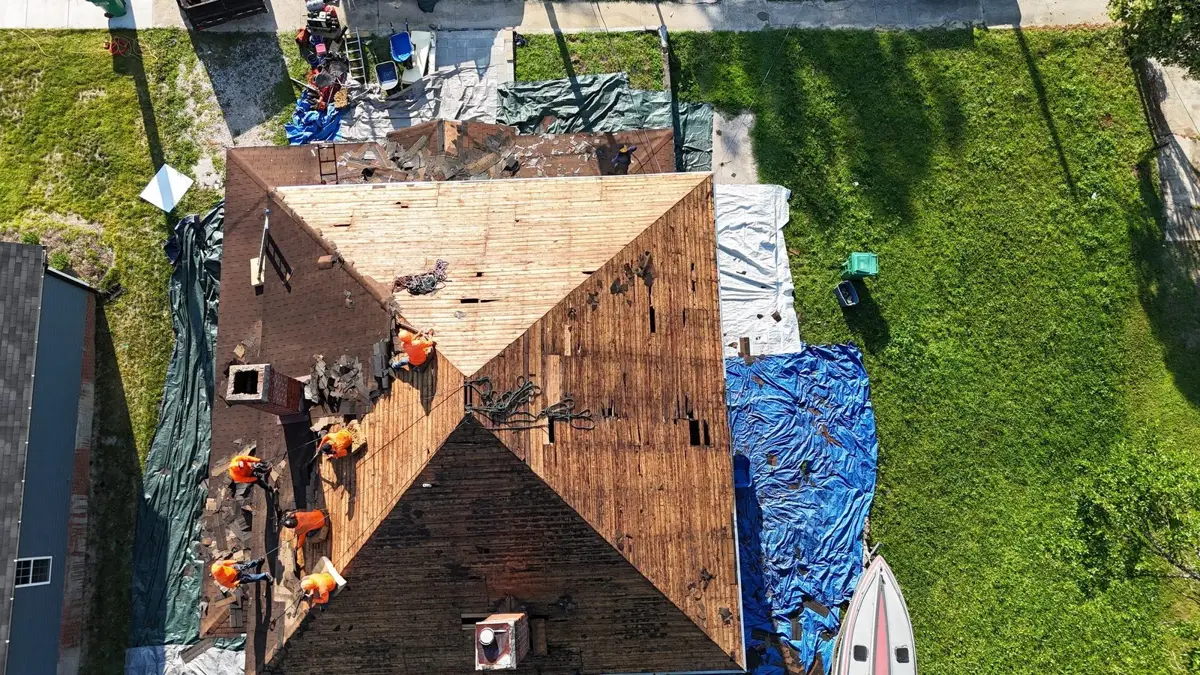
Once the scope is set, we tear off down to the decking, replace any rotten decking (first two sheets of 7/16 OSB free, then $50 a sheet), and install a complete GAF system. Most simple roofs are done in one day. Afterward, your insurer may ask for the final invoice and photos before releasing any recoverable depreciation.
Never let anyone exaggerate damage, create damage, or misstate the cause of a loss, and never agree to have your deductible waived. That’s insurance fraud, and it puts you at risk too. Work with a local roofer you can look up. We’ve been in the Triad since 2012, with 10,000+ projects, and we’re a GAF Master Elite contractor (top 2% of roofing contractors).
We inspect and document storm damage for homeowners in High Point, Greensboro, Winston-Salem, Lexington and the towns around them. Two of our featured jobs started this way: a leak call on West Vandalia Road in Greensboro and a church flat roof on Longview Drive in Winston-Salem. In both cases we documented the damage, explained the process, and the owners worked with their own insurance company.
Call 336-936-5245 for a free storm damage inspection.
It can, when the damage comes from a covered event like hail or wind. It depends on your policy, your deductible and what the adjuster finds. Wear and tear and old age usually aren’t covered.
Hail is a covered peril on most homeowners policies, subject to your deductible and policy terms. Some policies have a separate wind or hail deductible.
You do. You contact your insurance company and file the claim. We inspect and document the damage and can be at the adjuster inspection.
Yes. Give us 24 to 48 hours’ notice and we’ll be there to show the adjuster the damage we documented. Your insurance company makes the coverage decision.
No. We document the damage and go over the insurance estimate with you, pointing out anything that looks missing. You work with your insurer on the claim.
The date of the storm or event that caused the damage. Your insurer will ask for it, and our inspection helps pin it down.
We’ll review it with you and point out anything that looks missing, like ridge cap, starter, drip edge or flashing. You then ask your insurer to review those items.
Yes. Insurance pays for like kind and quality. You can pay the difference for upgrades like a better shingle, extra ice and water shield, lifetime pipe boots or a GAF Golden Pledge warranty.
No. Your deductible is your responsibility under your policy. Financing is available if you need help with it.
Yes. There’s a charge only if you want a written inspection report and don’t hire us, and it’s credited toward your roof if you hire us later.
The deadline depends on your homeowners insurance policy and state law. Check your policy for the required reporting period and notify your insurer as soon as possible after discovering covered roof damage.
Homeowners insurance may cover sudden roof damage caused by covered events such as wind, hail, fire, or falling objects. Coverage varies by policy, so check your exclusions, deductible, and roof-specific provisions before filing.
In many cases, homeowners can choose their own roofing contractor rather than using one selected by the insurer. Check your policy and ask your insurance company about any contractor requirements before signing a contract.
Yes, roof age can affect how much your insurer pays. Some policies use actual cash value or apply roof-specific limitations to older roofs, while others provide replacement cost coverage subject to policy terms.