Oct 13, 2026
Green Bay Hail Damage Roof Replacement: GAF Timberline HDZ in Barkwood



Key Takeaways
|
According to the U.S. Department of Energy, conventional roofs can reach temperatures of 150°F (66°C) or higher in direct sunlight, while reflective cool roofs can remain more than 50°F (28°C) cooler under the same conditions. Excessive rooftop heat can increase cooling costs, place additional strain on HVAC systems, and accelerate deterioration of roofing materials.
This challenge is particularly common for commercial buildings with low-slope roofs, including warehouses, office buildings, retail centers, and industrial facilities. Property owners often need a roofing system that can withstand harsh weather, prevent water intrusion, improve energy efficiency, and deliver long-term value without creating excessive maintenance expenses.
TPO (Thermoplastic Polyolefin) roofing has emerged as a popular solution for addressing these concerns. Known for its reflective surface, durable single-ply membrane, and cost-effective performance, TPO roofing helps protect commercial buildings while supporting energy savings and reliable waterproofing.
This guide explains what TPO roofing is, how it works, its advantages and disadvantages, installation methods, maintenance requirements, costs, and how it compares to other commercial roofing systems.
Before choosing any roofing system, always consider your building type,
local climate, and long-term maintenance costs, not just the initial
installation price.
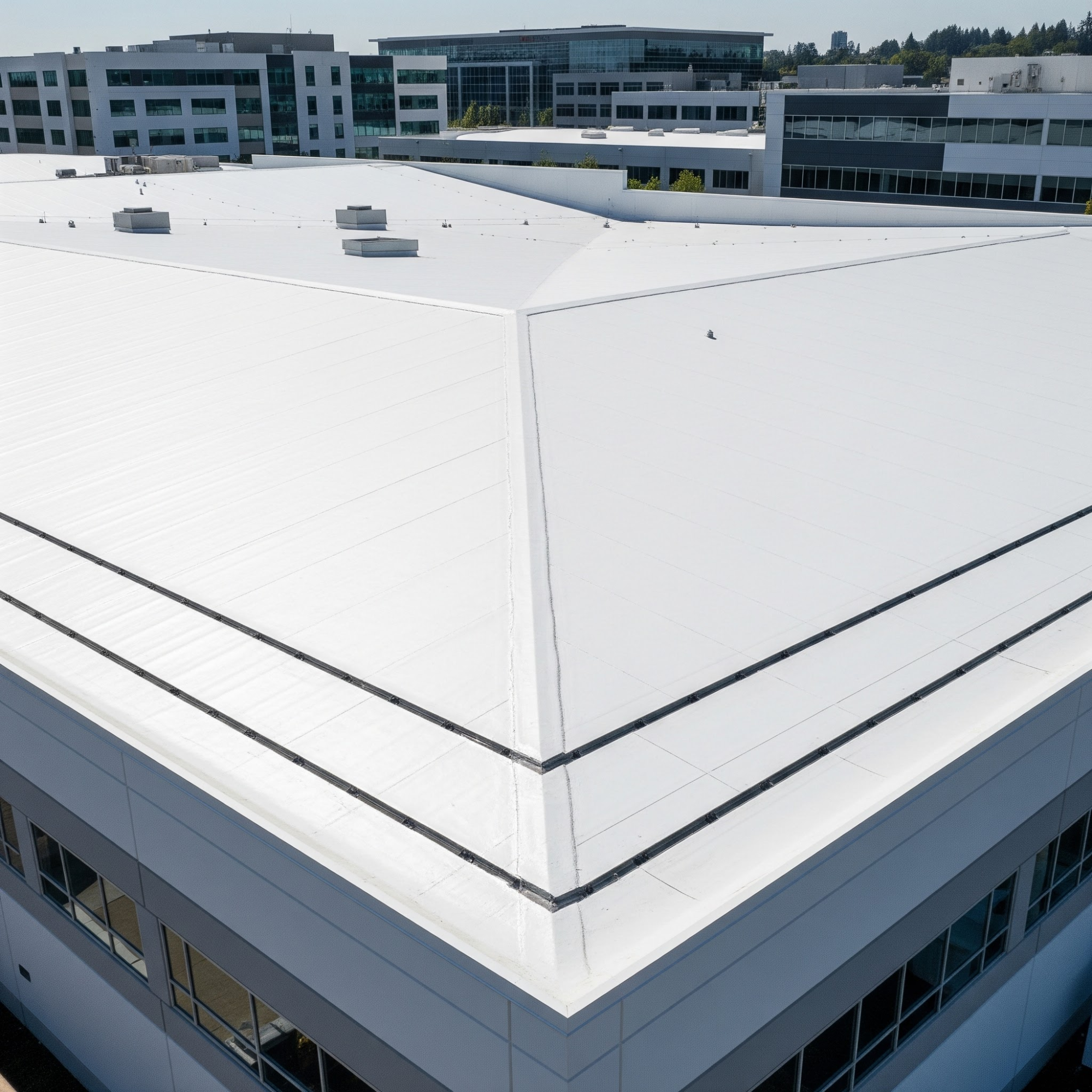
TPO roofing (Thermoplastic Polyolefin) is a single-ply roofing membrane used mainly on commercial and low-slope buildings. It is made from a blend of polypropylene and ethylene-propylene rubber and is installed in large sheets, heat-welded at the seams to form a watertight surface.
TPO roofing is classified as a U.S. Department of Energy “cool roof” system, designed to reduce heat absorption and improve building energy efficiency. According to the U.S. Department of Energy, cool roofing systems like TPO can reduce roof surface temperatures by up to 50°F (28°C) compared to conventional roofing materials. This helps reduce indoor heat gain and cooling energy demand, making TPO a practical, energy-efficient roofing solution for commercial buildings.
| Feature | Details |
| Full Name | Thermoplastic Polyolefin (TPO) |
| Roofing Type | Single-ply membrane roofing |
| Best For | Commercial and low-slope roofs |
| Average Lifespan | 25–30 years |
| Cost | $4.50–$16.00 per sq. ft. installed |
| Key Benefit | Energy-efficient, reflective, and waterproof |
| Installation | Heat-welded sheets |
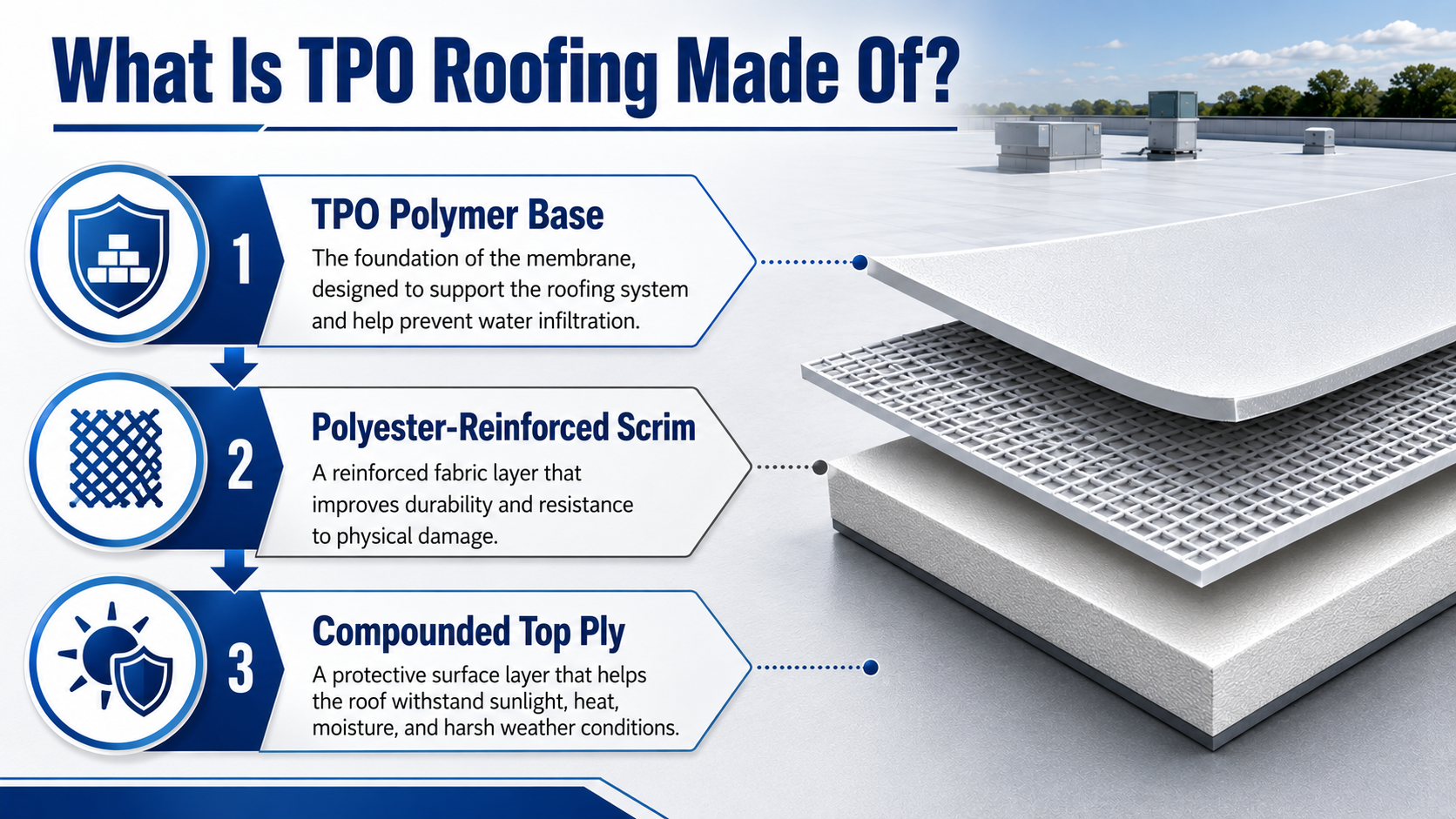
TPO roofing features a multi-layer construction designed to provide structural support, reinforcement, and surface protection.
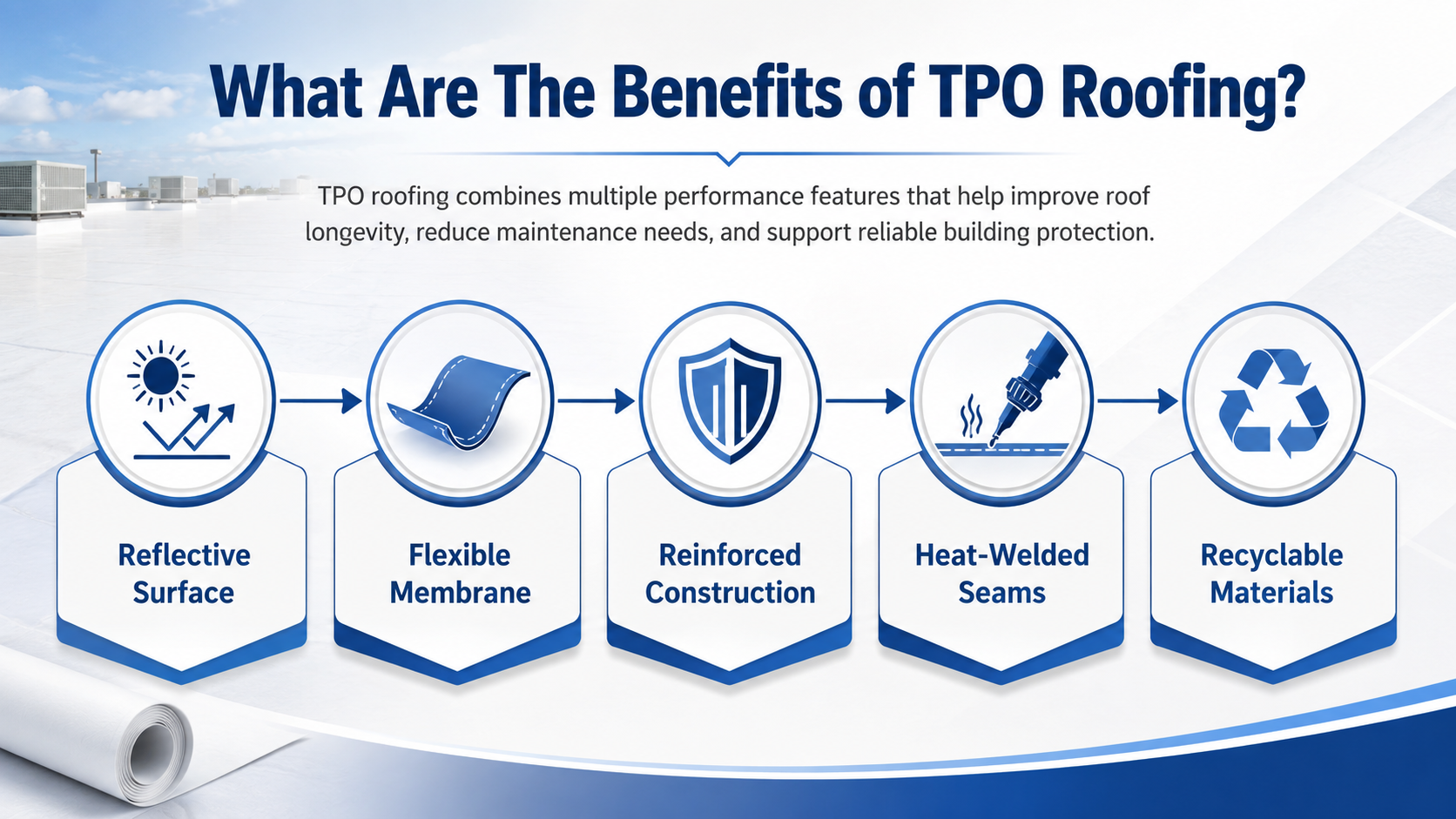
TPO roofing combines multiple performance features that help improve roof longevity, reduce maintenance needs, and support reliable building protection.
| TPO Roofing Feature | Benefit |
| Reflective Surface | Helps lower cooling costs and improve energy efficiency. |
| Flexible Membrane | Accommodates building movement without easily cracking. |
| Reinforced Construction | Increases resistance to tears, punctures, and wear. |
| Heat-Welded Seams | Creates strong membrane connections that support long-term roof performance. |
| Recyclable Materials | Supports environmentally conscious building initiatives. |
TPO (Thermoplastic Polyolefin) roofing average costs $6.00–$10.00 per square foot installed, including both materials and labor. For a standard 2,000-square-foot roof, total project costs generally range from $12,000 to $20,000.
| Cost Component | Average Cost |
| TPO Membrane Materials | $2.50–$4.00 per sq. ft. |
| Labor & Installation | $3.50–$6.00 per sq. ft. |
| Total Installed Cost | $6.00–$10.00 per sq. ft. |
| Roof Size | Estimated Installed Cost |
| 1,000 sq. ft. | $6,000–$10,000 |
| 1,500 sq. ft. | $9,000–$15,000 |
| 2,000 sq. ft. | $12,000–$20,000 |
| 3,000 sq. ft. | $18,000–$30,000 |
| TPO Thickness | Typical Installed Cost |
| 45 Mil | $6.00–$7.50 per sq. ft. |
| 60 Mil | $7.00–$9.00 per sq. ft. |
| 80 Mil | $8.00–$10.00+ per sq. ft. |
| Factor | Impact on Cost |
| Membrane Thickness | Thicker 60-mil and 80-mil membranes cost more than 45-mil options. |
| Installation Method | Fully adhered systems typically have higher installation costs than mechanically attached systems. |
| Roof Complexity | Rooftop equipment, skylights, vents, and multiple penetrations increase labor requirements. |
| Roof Preparation | Removing old roofing materials or repairing the roof deck adds to project costs. |
| Insulation Upgrades | New insulation can add approximately $2.00–$3.50 per sq. ft. to the total cost. |
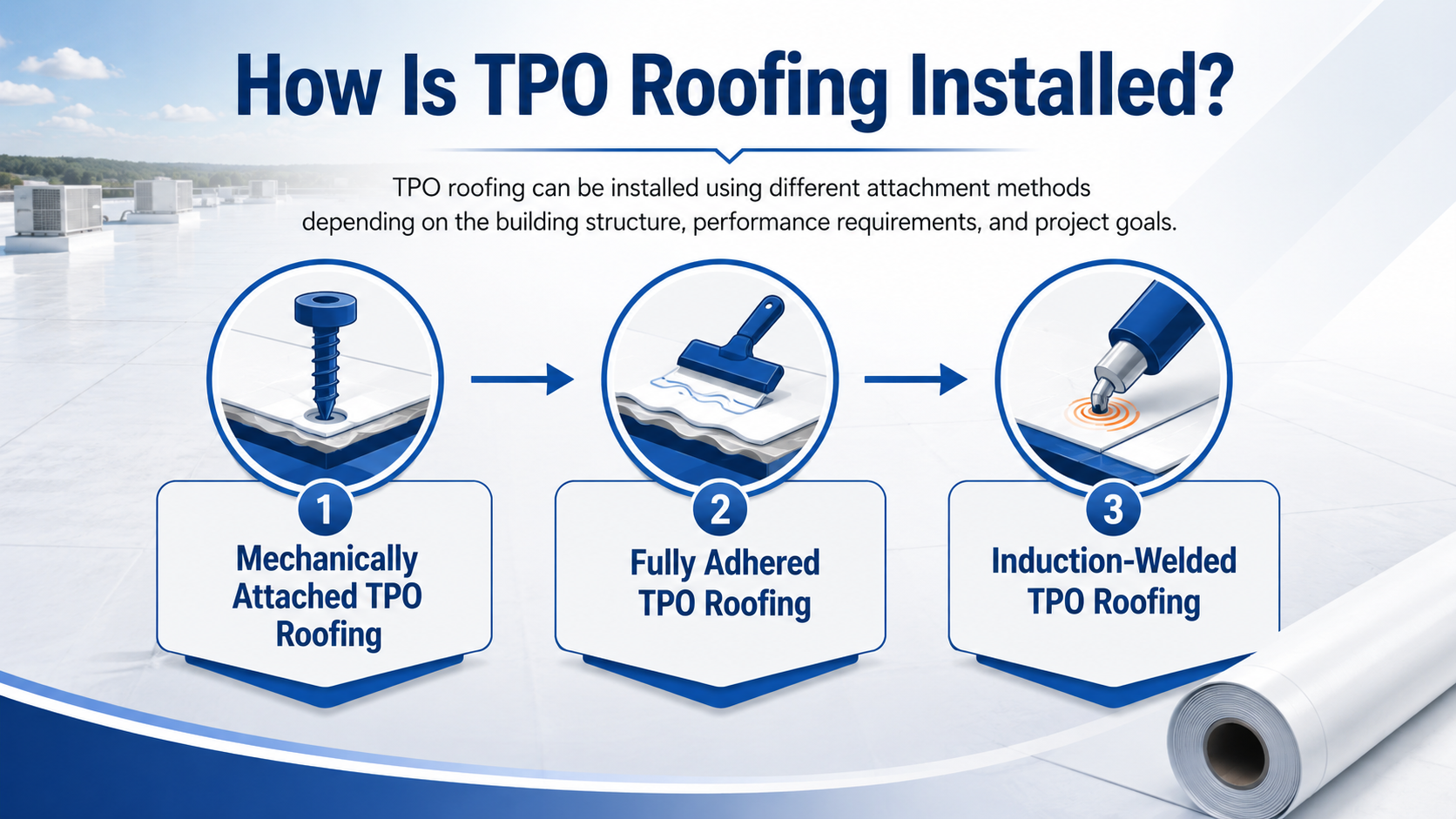
TPO roofing can be installed using different attachment methods, each designed to meet specific building requirements, performance goals, and budget considerations.
This installation method secures the TPO membrane to the roof deck using fasteners and plates. Once attached, the seams are heat-welded to create a durable, watertight barrier. Mechanically attached systems are commonly used on large commercial roofs because they offer reliable performance and efficient installation.
In a fully adhered system, specialized adhesives bond the TPO membrane directly to the roof substrate or insulation layer. This creates a smooth, uniform surface and can improve wind uplift resistance. Fully adhered installations are often preferred for roofs with complex designs or projects requiring a cleaner appearance.
Induction-welded TPO roofing uses specialized technology to bond the membrane to fasteners positioned beneath the roofing surface. This method reduces membrane penetrations while providing strong attachment and excellent wind resistance. It is often selected for projects that prioritize long-term durability and performance.
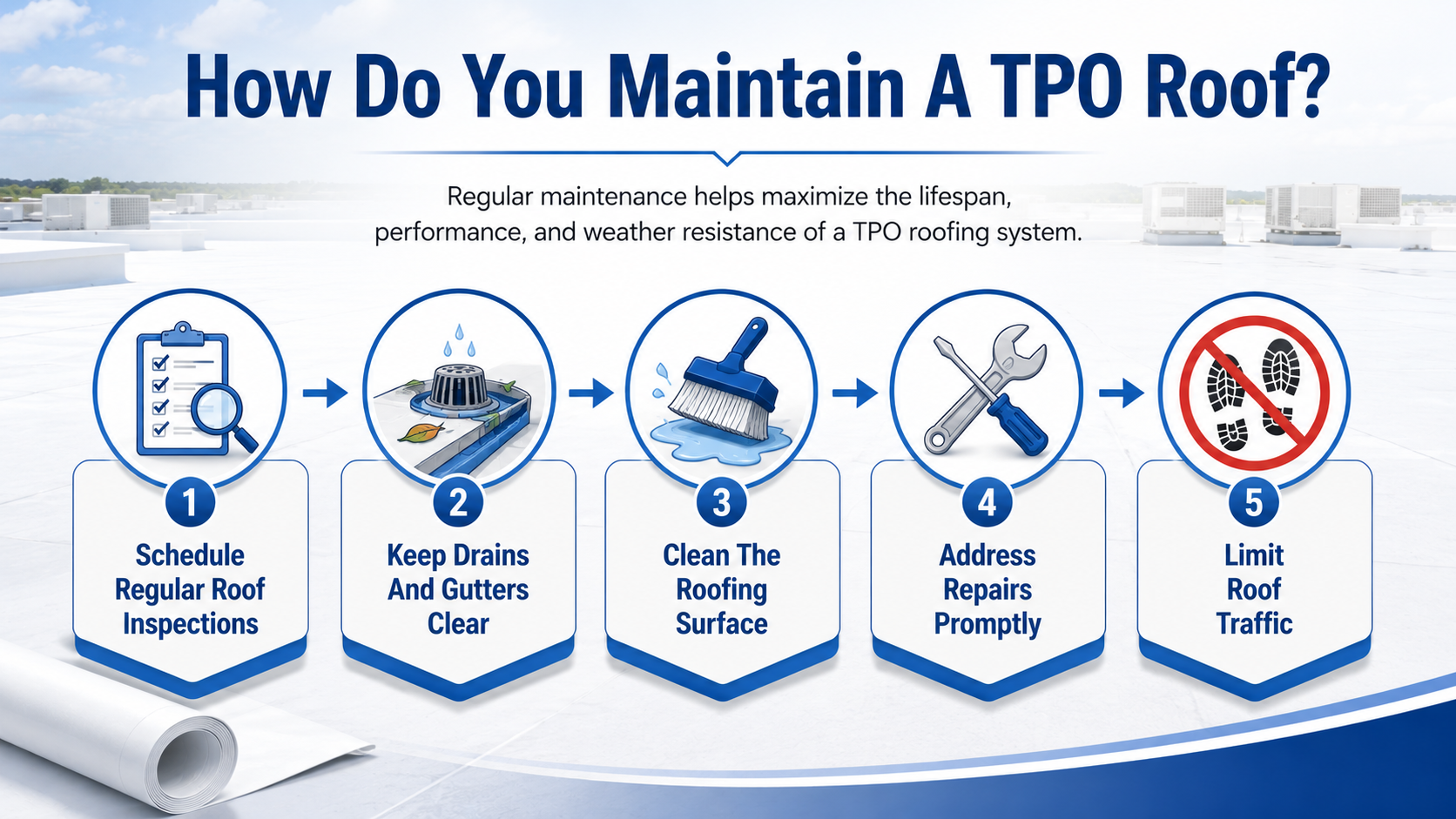
Routine maintenance helps protect a TPO roof from premature wear and can extend its service life. The following practices are essential for maintaining long-term performance.
Regular inspections help identify potential issues before they become costly repairs. Most roofing professionals recommend inspecting a TPO roof at least twice a year and after major weather events to check for damage, seam separation, or punctures.
Proper drainage is critical to TPO roof performance. Removing leaves, debris, and other obstructions from drains and gutters helps prevent standing water that can place additional stress on the roofing system.
Keeping the membrane clean helps maintain its appearance and reflective properties. Periodic cleaning removes dirt, debris, and contaminants that can accumulate over time and affect the roof’s overall efficiency.
Minor roofing issues can quickly develop into larger problems if left untreated. Repairing punctures, damaged flashing, or seam defects as soon as they are detected helps maintain the roof’s watertight integrity.
Excessive foot traffic can increase the risk of membrane damage and premature wear. Limiting roof access and using designated walk pads in frequently accessed areas can help preserve the condition of the roofing system.
TPO is one of several popular single-ply roofing membranes, and understanding how it compares to EPDM and PVC can help determine the best fit for a specific project.
| Feature | TPO Roofing | EPDM Roofing | PVC Roofing |
| Material Type | Thermoplastic membrane | Synthetic rubber membrane | Thermoplastic membrane |
| Seam Installation | Heat-welded seams | Taped or adhesive seams | Heat-welded seams |
| Leak Resistance | Excellent due to welded seams | Good, but seams may deteriorate over time | Excellent due to welded seams |
| Cost | Moderate | Typically lower upfront cost | Generally, the most expensive option |
| Energy Efficiency | Highly reflective and energy-efficient | Usually absorbs more heat unless specially coated | Highly reflective and energy-efficient |
| Chemical Resistance | Good | Moderate | Excellent |
| Fire Resistance | Good | Good | Excellent |
| Best For | Commercial buildings, retail spaces, warehouses, and offices | Budget-conscious projects and low-slope roofs | Restaurants, manufacturing facilities, and buildings exposed to chemicals |
The following comparisons highlight some of the most notable distinctions between TPO and other commonly used roofing membranes.
| Comparison | Why TPO Stands Out |
| TPO vs. EPDM | TPO’s heat-welded seams create a stronger, more leak-resistant roofing system than EPDM’s taped seams. |
| TPO vs. PVC | TPO offers many of the same benefits as PVC but at a lower cost, making it a popular choice for general commercial applications. |
TPO roofing remains one of the most widely used roofing systems for commercial and low-slope buildings because it offers a practical combination of performance, installation flexibility, and long-term value.
Understanding its construction, costs, maintenance requirements, and how it differs from other roofing materials can help property owners make a more informed roofing decision. For expert guidance and professional installation, contact Statewide Roofing Specialist.
Yes, TPO roofing is considered a cost-effective investment for many commercial buildings. Its reflective surface, durable construction, and relatively low maintenance requirements can help reduce long-term operating and roofing expenses.
A properly installed and maintained TPO roof typically lasts between 25 and 30 years. Factors such as climate, membrane thickness, installation quality, and maintenance practices can influence its overall lifespan.
In some cases, TPO roofing can be installed over an existing roofing system. However, the roof deck and underlying materials must be inspected to ensure they meet structural and installation requirements.
TPO roofing performs well in a wide range of climates due to its flexibility and weather resistance. It can withstand prolonged sun exposure, temperature fluctuations, and typical environmental conditions across many regions.