Oct 13, 2026
Green Bay Hail Damage Roof Replacement: GAF Timberline HDZ in Barkwood


Key Takeaways
|
When your roof needs repairs or replacement, finding a roofing company you can trust isn’t always as straightforward as it seems. In a case reported by Seattle Police, a homeowner lost $74,000 to individuals posing as roofing contractors after trusting them to perform work on his property.
While incidents like this are uncommon, they highlight an important reality: hiring a roofing company should never be based solely on a low quote or a convincing sales pitch. The best contractors earn trust through verified licenses, insurance coverage, strong reviews, transparent contracts, and a proven track record.
If you’re searching for a roofing company in 2026, this guide will help you separate qualified professionals from costly risks and make an informed hiring decision.
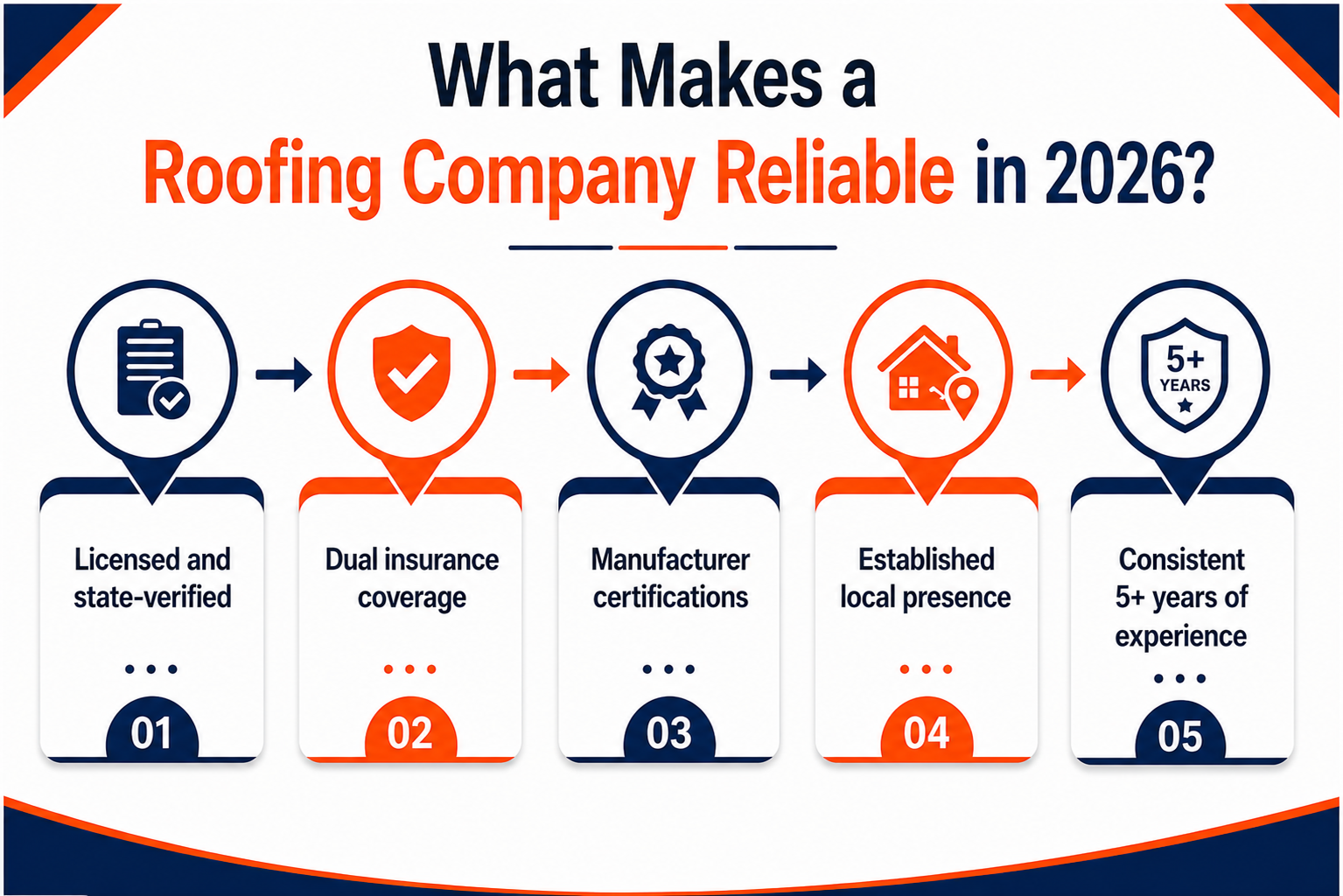
Trustworthy roofing companies in 2026 share a consistent set of qualities: proper licensing, verified insurance, manufacturer-backed credentials, and a track record of completed work you can actually check.
Here’s what separates top roofing companies from the rest:
A reliable roofing contractor is easy to spot if you know what to look for. The differences show up before the work even begins, in how they communicate, what they provide in writing, and how they respond to your questions.
| A Reliable Contractor Will | An Unreliable Contractor Will |
| Offer a detailed written estimate without being prompted, breaking down materials, labor, timeline, and cleanup costs line by line. | Offer a vague verbal quote with no itemized breakdown and resist putting it in writing. |
| Provide proof of license and insurance immediately when asked, without hesitation or delay. | Dodge direct questions about licensing, insurance, or subcontractors. |
| Give you time to review the contract and never pressure you to sign on the same day. | Create urgency with “limited-time” pricing or pressure you to decide immediately. |
| Have a permanent local office address you can verify, not just a mobile number and a magnetic truck decal. | Operate without a verifiable business location or rely solely on temporary contact information. |
| Carry consistent 4- and 5-star reviews across trusted platforms, built up over multiple years. | Have little to no review history, or a sudden spike of new reviews with no established track record. |
| Use a reasonable payment schedule tied to project milestones and completion. | Push for a large upfront cash payment before any work begins. |
Ask every contractor the same set of questions and compare not just what they say, but how they say it. Confidence, transparency, and willingness to document everything in writing are the clearest signs of a contractor who has nothing to hide.
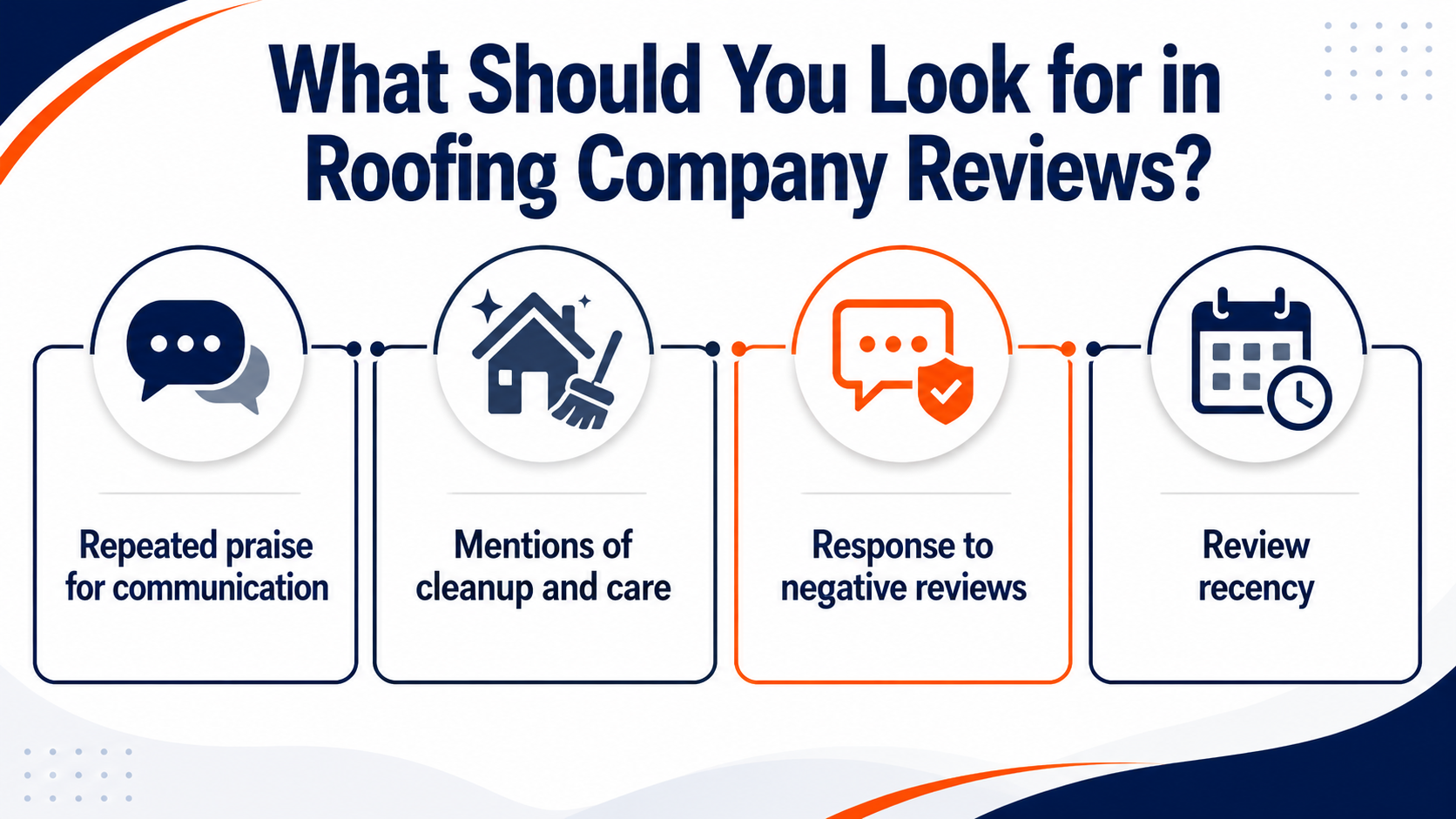
Roofing company reviews tell you what a contractor’s website never will. When reading reviews, look beyond the star rating and focus on patterns across multiple customers.
Watch for these specific signals:
Search the company name plus “complaints” or “scam” before hiring. It takes one minute and can save you thousands.
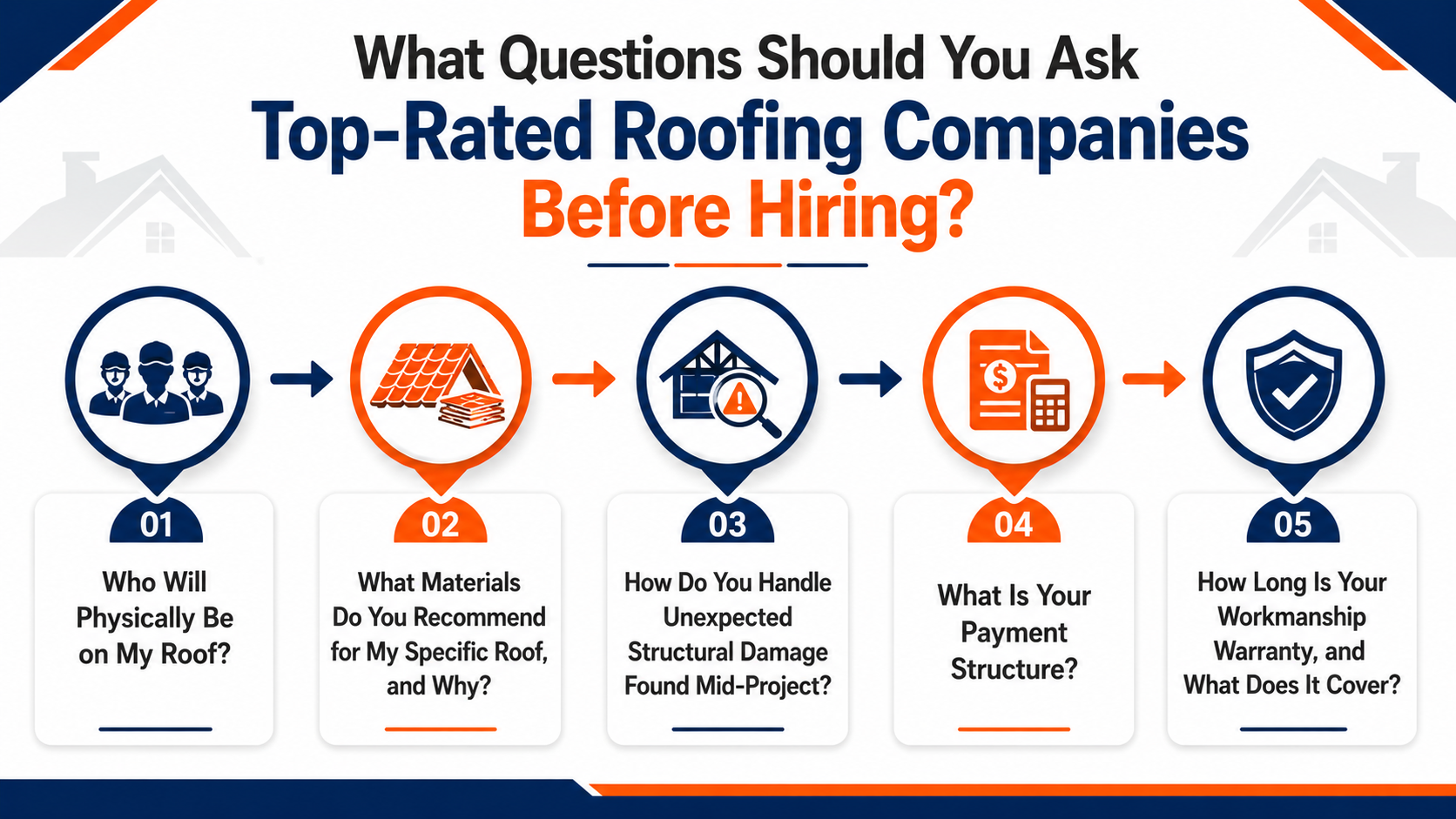
Before signing anything with any top-rated roofing company, ask these questions directly. The quality of the answers and the contractor’s confidence in giving them tell you everything.
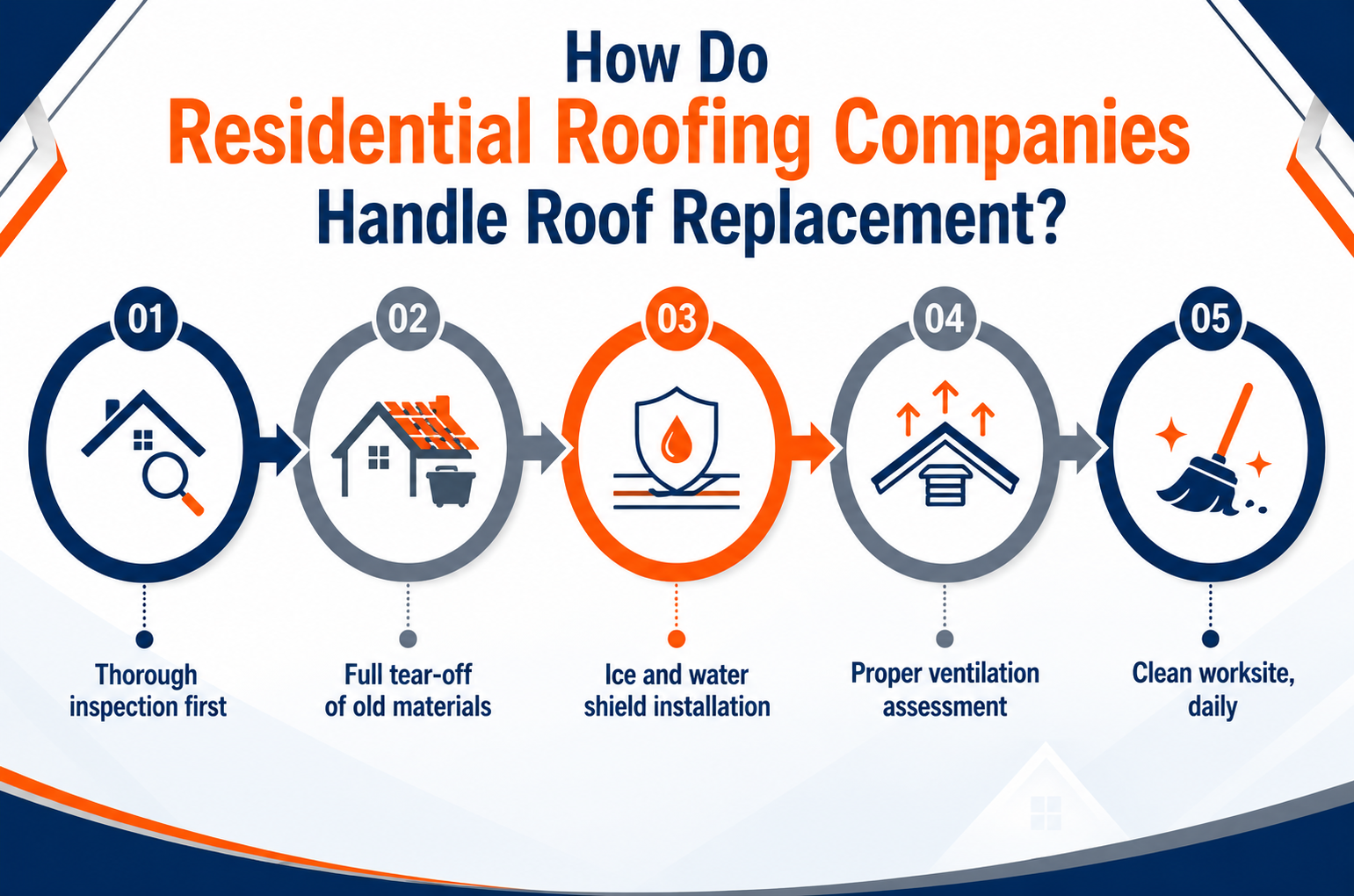
The best residential roofing companies treat roof replacement as a structured process, not a one-day transaction. Understanding what that process looks like protects you from shortcuts.
A professional roof replacement typically includes:
Ask the contractor to walk you through each step of the installation process before signing. A confident professional will welcome the question.
Before hiring anyone to repair your roof, it’s important to understand how convincing roofing scams have become and how much damage they can cause.
Here’s what one Reddit user, Justinynolds, shared from their own experience: “Another red flag is if the ‘sale ends today’ or they pressure you to sign something right then and there.” High-pressure sales tactics are a common warning sign of roofing scams. Reputable contractors give homeowners time to review estimates, compare options, and ask questions before making a decision. If a roofer insists that an offer expires immediately or pushes you to sign on the spot, treat it as a signal to slow down and verify their credentials before moving forward. |
We have compiled a few real-life examples of roofing scams that highlight why staying alert and choosing a trusted roofing expert is so important. Give it a quick read!
To avoid such scams, always verify the contractor’s license, insurance, and past work. Never make full upfront payments without proper checks.
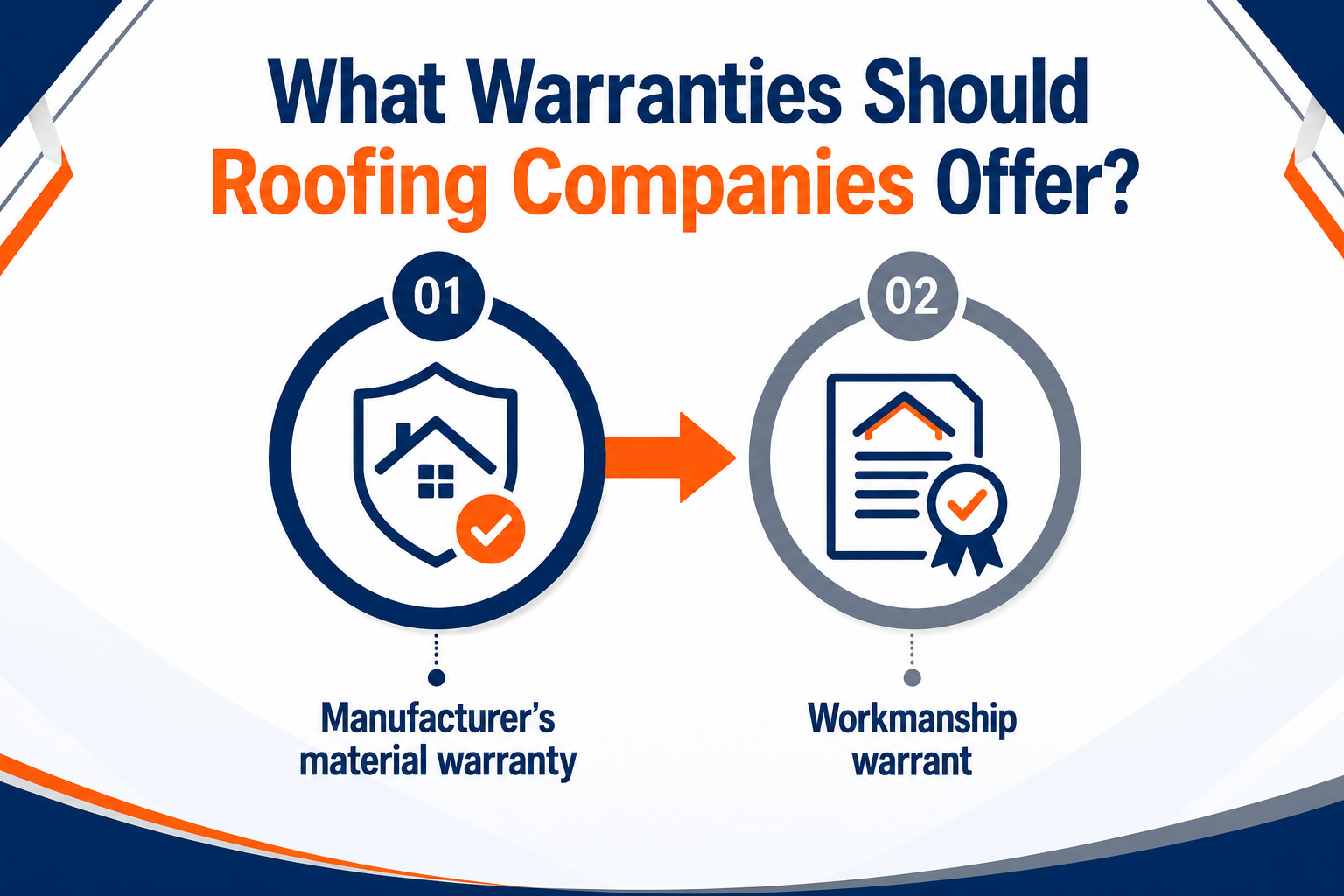
A warranty is what separates a genuine roofing company from one that disappears after the job is done. The best roofing contractors near you will always offer two distinct warranties and explain both clearly.
Before signing, confirm these three things in writing: what each warranty covers, what voids it, and exactly how to file a claim. A contractor who hesitates to document this clearly is not one you want on your roof.
Finding the best roofing companies in 2026 doesn’t require guesswork; it requires a clear checklist and the patience to use it. Verify credentials independently, read reviews on neutral platforms, ask direct questions, and insist on a written contract that spells out every detail before a single shingle is touched.
At Statewide Roofing Specialist, we hold GAF Master Elite certification, carry full liability and workers’ compensation insurance, and back every project with warranties that actually protect you. We serve homeowners across North Carolina, from Greensboro to Winston-Salem, and we welcome every question you have, because a homeowner who asks hard questions deserves straight answers.
Call us for your free roof inspection, or visit us at statewideroofingspecialist.com. Have a question about your roof? Leave a comment below or reach out directly; we’re here to help.
Start by checking the North Carolina Licensing Board for General Contractors to verify a company’s active license. Then cross-reference reviews on Google, BBB, and Angi. Look for companies with manufacturer certifications, a local physical address, and a consistent review history spanning multiple years.
A roofing contractor typically refers to an individual or small crew, while a roofing company is an established business with a formal structure, office, dedicated project managers, and employee crews. For roof replacement projects, a well-structured company generally offers greater accountability and longer-term warranty support.
Pricing is based on roof size (measured in squares, one square equals 100 square feet), material type, roof pitch complexity, tear-off requirements, and local labor costs. A legitimate itemized estimate will break each of these down individually. If a quote is a single lump-sum number with no breakdown, ask for clarification before proceeding.
Not necessarily. Top-rated roofing companies are priced fairly for the quality, warranty, and accountability they provide. The most expensive quote isn’t always the best, and the lowest quote is almost always cutting something, materials, labor quality, or proper disposal. Compare what’s included, not just the final number.