SUMMARY

  • Roof repair is best suited for minor, localized damage on relatively newer roofs, while roof replacement is recommended when damage is widespread or the roof has reached the end of its lifespan.
  • Although repairs have lower upfront costs, repeated fixes over time can become expensive, making replacement more cost-effective in the long term for ageing roofs.
  • The right decision depends on long term goals, property value considerations, and professional inspection results, which help homeowners choose between a short term repair and a long term roofing solution.

Your roof serves as an important structural system that safeguards your home from various external elements and extreme weather conditions. But with time, various factors such as ageing materials, storm impact, poor ventilation, and normal wear start causing a lot of stress on your roof. As a result, issues like leaks, rust, or visible deterioration start occurring.

And when these problems appear, homeowners often face one of the most important questions –

Should I repair or replace my roof?

Well, the answer depends on various things, namely –

  • The extent of damage
  • The age of the roofing system
  • And the long-term cost implication of each option

While repairs can resolve localized issues and extend roof performance, repeated damage or widespread deterioration may make replacement a more practical and cost-effective solution. But understanding in detail the difference between roof repair and roof replacement helps prevent recurring expenses and unexpected failures.

This detailed guide will explain all these differences, the cost, and outline the warning signs professionals use to recommend the right solutions.

Quick Overview – Roof Repair vs Roof Replacement

Factor Roof RepairRoof Replacement
Scope of WorkTargets and fixes specific problem areas such as leaks, damaged shingles, or minor structural issues.Involves removing existing roofing materials and installing an entirely new roofing system.
CostLower upfront costHigher upfront investment
Lifespan ImpactExtends life temporarilyResets lifespan entirely
Best ForMinor, localized damageWidespread wear or ageing of the roof
ROIShort-term solutionLong-term property value boost

Understanding the Difference Between Roof Repair And Replacement

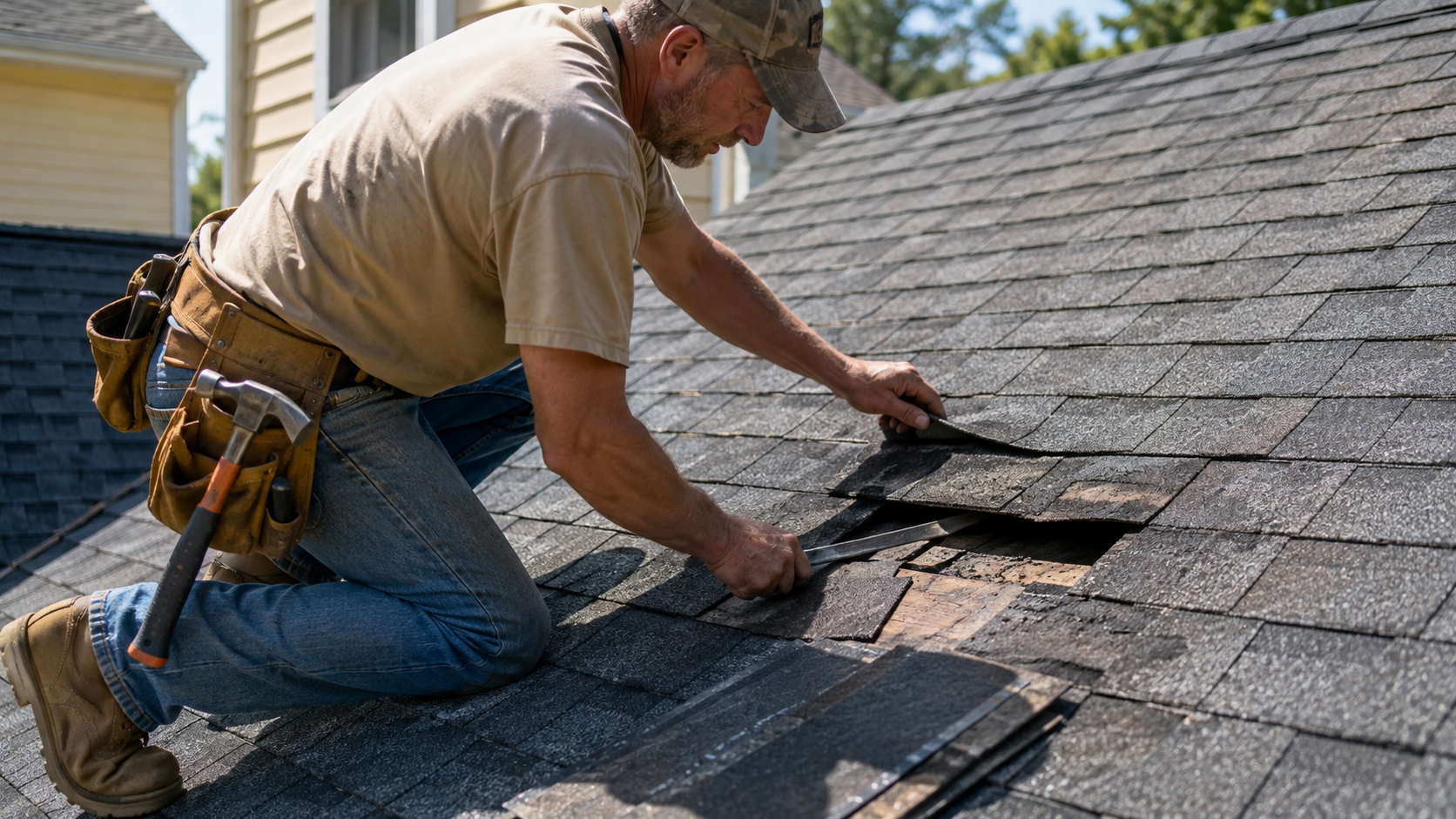
Roof repair focuses on fixing the specific problems that affect the limited areas of the roof. This may include –

  • replacing missing or cracked shingles
  • repairing small leaks
  • correcting flashing damage
  • addressing minor storm impact, or treating isolated rust on metal roofing

Repairs are most suitable when the damage is localized, and the overall roof structure remains stable and in good condition.

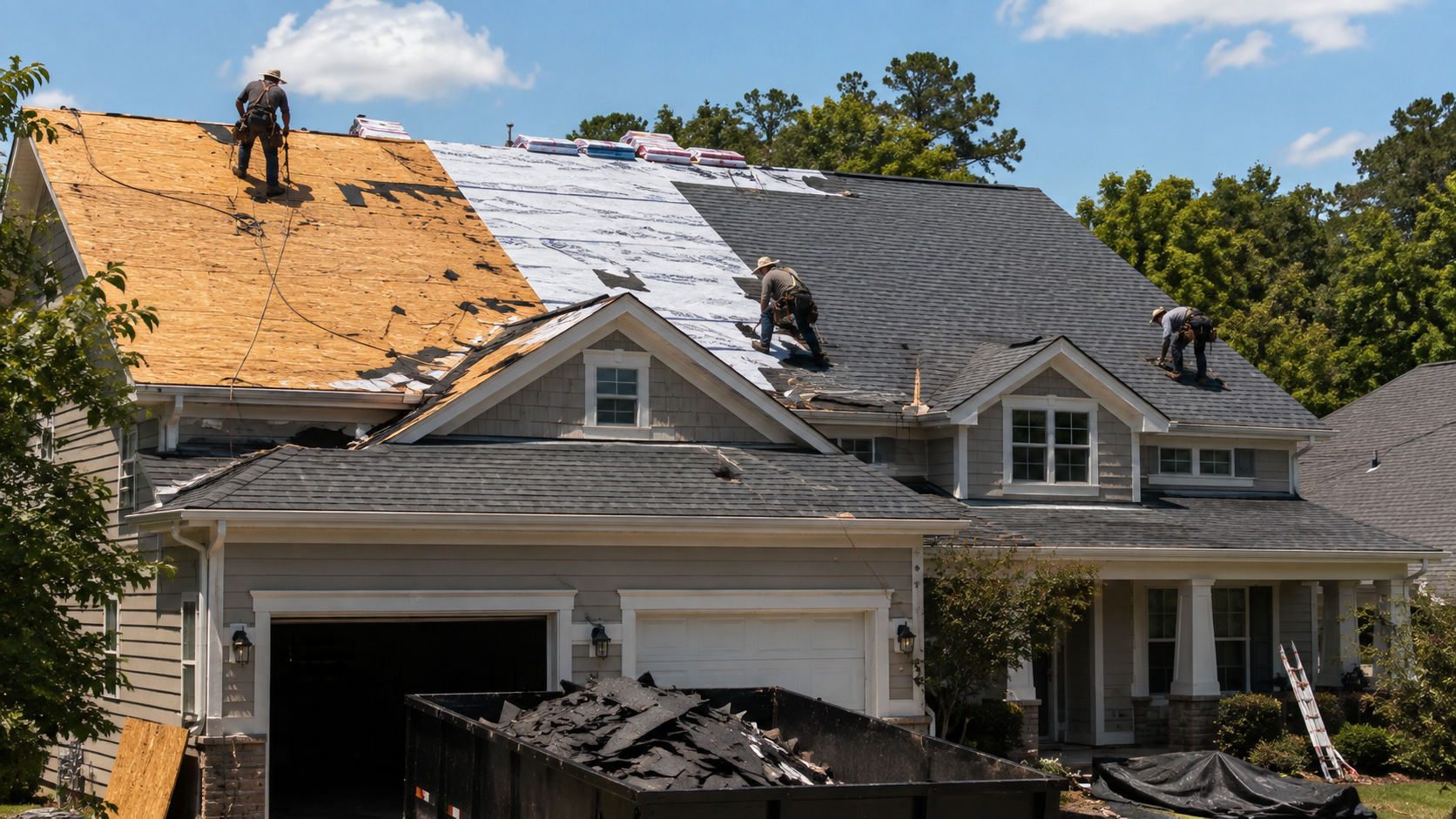
Roof replacement, on the other hand, involves renewing the entire roofing system. The process includes –

  • removing existing roofing materials
  • inspecting the decking and underlayment
  • installing new roofing components
  • and updating flashing, ventilation, and protective layers

Replacement is typically recommended when the roof has reached the end of its service life or when damage is widespread and cannot be effectively resolved through repairs alone.

Roof Replacement Cost vs Repair Cost

One of the most important factors homeowners consider when deciding between repair and replacement is cost. While repairs usually require a smaller upfront investment, replacement involves a higher initial expense but may provide better long-term value depending on the roof’s condition.

Average Roof Repair Costs

Typical repair cost ranges include –

  • Minor repairs: $155 to $450
  • Moderate repairs: $450 to $1,200
  • Major structural repairs: $1,300 to $8,500

Industry estimates show that the national average roof repair cost typically falls between $300 and $1,500, depending on damage severity and material type.

For a more detailed cost breakdown, you can read our guide on How Much Does Roofing Repair Cost.

Average Roof Replacement Costs

Roof replacement requires removing existing materials and installing a completely new roofing system. This increases the overall costs. Remember, the pricing depends on roof size, material selection, and installation complexity.

Common replacement cost ranges include –

  • Asphalt shingle roof: $5,000 to $12,000
  • Metal roof replacement: $8,000 to $20,000 or more
  • Premium materials such as tile or slate: $15,000 to $40,000 or more

To know more about the cost-effective option, check out our detailed guide – Roof Repair vs Replacement: Which Is More Cost-Effective?

Cost of Repairing a Roof vs Replacing a Roof Over 10 Years

This is where many homeowners are often surprised. Consider a common scenario –

  • $1,200 spent on repairs today
  • $1,500 spent again after a few years
  • $1,000 more following major storm damage

Over ten years, repeated repairs can total $3,000 to $5,000 or more without restoring the roof’s full lifespan. If your roof is already 18 to 22 years old, continued repairs may not be financially practical.

Rule of Thumb

If repair costs exceed 25 to 30% of the replacement cost, a full replacement is usually the more economical long term solution.

When to Repair Your Roof?

Roof repair is usually the right choice when the overall roofing system remains in good condition, and the damage is limited.

Choose repair when:

  • Damage is limited to a small, specific area
  • The roof is less than 10 to 15 years old
  • Most shingles remain intact and secure
  • There are no signs of sagging or structural damage
  • Leaks are isolated and recently developed

Should I Patch My Roof or Get a New One?

Patching can be effective in certain situations, but it is not always a long-term solution.

Patch your roof if:

  • Damage resulted from a recent storm
  • Only a few shingles are missing or damaged
  • The remaining roof structure is in good condition

Avoid patching if:

  • Leaks continue to reappear
  • Shingles are brittle, cracked, or curling
  • Granule loss is extensive
  • Mold or rot is visible beneath the roofing materials

How Insurance Impacts the Repair vs Replacement Decision

In many situations, roof damage is not simply the result of ageing. Severe weather events such as hailstorms, high winds, or falling debris can cause sudden and significant damage. In these cases, homeowners’ insurance may help cover part or all of the repair or replacement costs, depending on policy terms.

Understanding how insurance applies can influence whether repair or replacement becomes the more practical option.

When Insurance May Cover Roof Repairs

Insurance policies typically cover damage caused by sudden and accidental events, including:

  • Storm damage
  • Hail impact
  • Wind uplift
  • Fallen tree limbs
  • Fire-related damage

If the damage is localized and the roof is otherwise in good condition, insurers may approve repairs rather than full replacement.

When Insurance May Approve Roof Replacement

Full roof replacement may be covered when:

  • Storm damage affects a large portion of the roof
  • Structural integrity has been compromised
  • Matching materials are no longer available
  • Local building codes require full replacement

Insurance adjusters evaluate the extent of damage before determining coverage. In some cases, what initially appears to be minor surface damage may reveal deeper structural issues upon professional inspection.

Why Professional Inspection Matters in Insurance Claims

Before filing a claim, a detailed roof inspection helps determine:

  • Whether the damage qualifies as insurance-related
  • The full scope of visible and hidden damage
  • Estimated repair versus replacement costs

Accurate documentation, including photographs and written assessments, is important during the claims process. A professional evaluation ensures that all qualifying damage is properly identified before an adjuster completes their review.

Homeowners should also carefully review their deductible, depreciation terms, and policy limits to understand their financial responsibility.

When Should You Replace Your Roof?

Certain warning signs indicate that repairs may no longer be sufficient and that a full roof replacement is the more practical solution. Recognizing these signs early helps prevent structural damage and repeated expenses.

1. Age of the Roof

Every roofing material has an expected service life. Once a roof approaches or exceeds this range, replacement is often more reliable than ongoing repairs.

Roofing MaterialAverage Lifespan
3-tab asphalt shingles15 to 20 years
Architectural shingles25 to 30 years
Metal roofing40 to 70 years
Clay tile50 years or more
Slate75 to 100 years or more

If your roof is near or beyond its expected lifespan, investing in replacement typically provides better long-term value.

2. Widespread Shingle Damage

Extensive surface deterioration is a strong indicator that the roofing system is failing. Common signs include –

  • Curling shingles
  • Cracking or splitting
  • Bald spots caused by granule loss
  • Large sections of missing shingles

3. Structural Sagging

A sagging roof usually signals deeper structural concerns, such as:

  • Damaged roof decking
  • Wood rot
  • Ongoing water infiltration

These issues often require a full replacement rather than localized repairs.

4. Repeated Leaks

Frequent leaks and recurring repair calls suggest that the roofing system can no longer provide reliable protection. Continuous patching often becomes more costly over time.

5. Planning to Sell Your Home

For homeowners preparing to sell, the condition of the roof plays a major role in buyer perception. Remodeling industry reports indicate that a new asphalt roof can recover approximately 60 to 70 percent of its cost in resale value.

In contrast, a visibly damaged roof can reduce buyer confidence, lower offers, and create inspection challenges. Replacing an ageing roof may help improve market appeal and streamline the selling process.

Asphalt Shingle Repair vs Metal Roof Replacement

Homeowners often face a common decision when an ageing roof begins to fail. Should you continue repairing asphalt shingles or upgrade to a metal roofing system? The answer depends on the roof’s age, maintenance needs, and long-term performance expectations.

Metal roofing requires a higher upfront investment, but it offers greater durability and reduced maintenance over time compared to asphalt shingles.

Feature Asphalt RoofingMetal Roofing
Lifespan20 to 30 years40 to 70 years
MaintenanceModerate maintenance requiredLow maintenance needs
Energy EfficiencyStandard performanceOften higher due to reflective coatings
Upfront CostLower initial costHigher initial investment

NOTE – If an asphalt roof is approaching 20 years of age, upgrading to metal roofing may help reduce long term repair costs while improving durability and energy efficiency.

Budget-Friendly Roofing Options for First-Time Homeowners

For homeowners working within a limited budget, several roofing options can help reduce upfront costs while maintaining reliability.

  • Architectural asphalt shingles provide a good balance between affordability and lifespan.
  • Contractor financing programs allow payments to be spread over time.
  • Insurance claims may help cover storm-related damage when approved.
  • Roof overlays can lower installation costs if the existing structure is suitable, though they are not always ideal for long term performance.

Should I Repair or Replace My Roof? (Decision Checklist)

Use the following questions to help determine whether repair or replacement is the more practical option:

  • Is your roof more than 20 years old?
  • Have you experienced multiple leaks over time?
  • Do repair estimates exceed 30 percent of replacement cost?
  • Are you planning to sell your home soon?
  • Does your roof show widespread deterioration or visible wear?

If you answered “yes” to two or more of these questions, a full roof replacement may be the more reliable and cost-effective long-term solution.

Final Verdict: Roof Replacement vs Repair Cost and Value

There is no single solution that applies to every home. The right choice depends on the roof’s condition, age, and your long-term goals as a homeowner.

Repair makes sense when:

  • Damage is minor and limited to specific areas
  • The roof is relatively new
  • Budget constraints require a lower upfront expense

Replacement makes sense when:

  • The roof is ageing or nearing the end of its lifespan
  • Damage is widespread or recurring
  • You want long-term reliability and reduced maintenance concerns
  • You are investing in property value and overall home appeal

Summing Up

When comparing roof replacement vs repair cost, homeowners often focus on how much they will spend today. However, the true value of that cost depends on how long the solution will last. The real question isn’t just roof replacement vs repair cost. It is whether that cost is paying for a short-term fix or a long-term solution.

If the damage is minor and the roof is relatively new, repair is often the most practical and cost-effective option. When a roof is ageing or experiencing recurring issues, replacement typically provides greater reliability and long-term value.

If you are uncertain, a professional inspection can provide clear guidance. A qualified roofing specialist from Statewide Roofing Specialist can carefully evaluate your roof’s condition and recommend the most appropriate solution based on its age, damage level, and long-term performance needs.

For more information, contact us now!

Frequently Asked Questions (FAQs)

Several warning signs indicate that a roof may require immediate replacement rather than repair. These include widespread shingle damage such as curling, cracking, or significant granule loss, as well as large sections of missing shingles. Structural sagging is a serious concern and often points to underlying decking damage or moisture intrusion. Frequent or recurring leaks, visible water stains inside the home, and signs of mold or rot beneath roofing materials also suggest system failure. Additionally, if the roof has reached or exceeded its expected lifespan, replacement is typically the safest and most cost-effective solution.

The average lifespan of a roof depends largely on the roofing material, installation quality, and exposure to weather conditions. Standard asphalt shingle roofs typically last between 15 and 30 years, while metal roofs can perform for 40 to 70 years with proper maintenance. Clay tile roofs often exceed 50 years, and slate roofing can last 75 to 100 years or more. Regular inspections, timely repairs, and proper ventilation can help extend the overall lifespan of any roofing system.

Roof replacement frequency depends on the roofing material, installation quality, maintenance, and environmental exposure. Most asphalt shingle roofs require replacement every 20 to 30 years, while metal roofs may last 40 to 70 years or longer. Tile roofs can exceed 50 years, and slate roofs may last several decades beyond that. Rather than relying only on age, homeowners should also consider visible wear, recurring leaks, and structural deterioration. Regular professional inspections help determine when replacement becomes necessary to maintain safety and long-term performance.

The most common roofing materials include asphalt shingles, metal roofing, clay or concrete tiles, slate roofing, and wood shingles or shakes. Asphalt shingles are popular for affordability, while metal roofs offer durability and energy efficiency. Tile and slate provide long lifespans and a premium appearance. Wood roofing is valued for its natural look but requires more maintenance.

Slate roofing typically lasts the longest, with a lifespan of 75 to 100 years or more when properly installed and maintained. Clay tile and metal roofing also offer excellent durability and can last several decades.

Terry Cribb - Statewide Roofing Specialist

Terry Cribb is the owner and manager of Statewide Roofing Specialist, a locally owned and operated roofing company based in North Carolina. He founded the business in 2012 and has grown into a trusted name across North Carolina, South Carolina, and Tennessee. With a background in business and management from West Davidson High School, Terry leads a fully licensed and insured team known for honest service, skilled craftsmanship, and a commitment to customer satisfaction.

Speak With a Roofing Specialist Today!

336-480-1824
Call Now
336-480-1824