Oct 13, 2026
Green Bay Hail Damage Roof Replacement: GAF Timberline HDZ in Barkwood



Key Takeaways
|
In 2023, 17 of the 28 billion-dollar U.S. weather disasters were severe hail events, making hail the single largest category of catastrophic weather loss that year, according to NOAA Climate.gov.
Yet despite how common and costly hail is, most homeowners have no idea their roof has been damaged until a leak shows up, sometimes months after the storm.
That’s the problem with hail damage: it rarely announces itself. A hailstone just one inch in diameter, roughly the size of a quarter, can dent, bruise, and strip the protective granules from your shingles without leaving a single sign visible from the street. By the time water starts seeping through, the damage has already been silently worsening through every rain cycle since the storm.
This blog exactly shows you how to identify hail damage on your roof shingles, step by step, so you can catch it early, avoid costly repairs, and walk into your insurance claim with the evidence you need.
If your area experienced hailstones that were 1 inch (quarter-sized) or larger, inspect your roof as soon as it’s safe. Even if you can’t see visible damage from the ground, hidden bruising and granule loss can weaken shingles and lead to leaks over time. Taking photos immediately after the storm can also make the insurance claims process much easier.
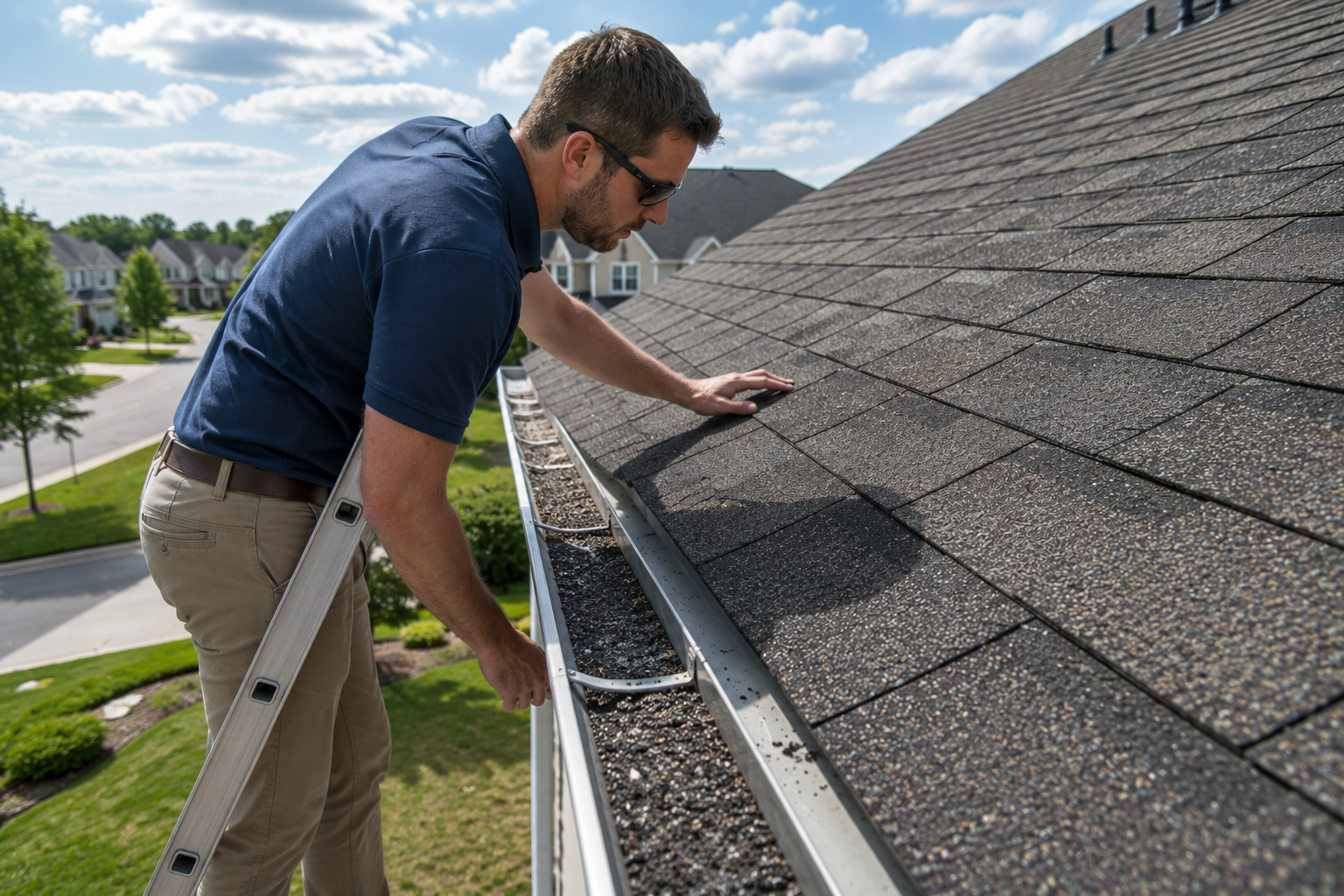
You can identify hail damage on your roof shingles by starting your inspection from the ground and working upward systematically, looking for both direct and indirect signs of impact.
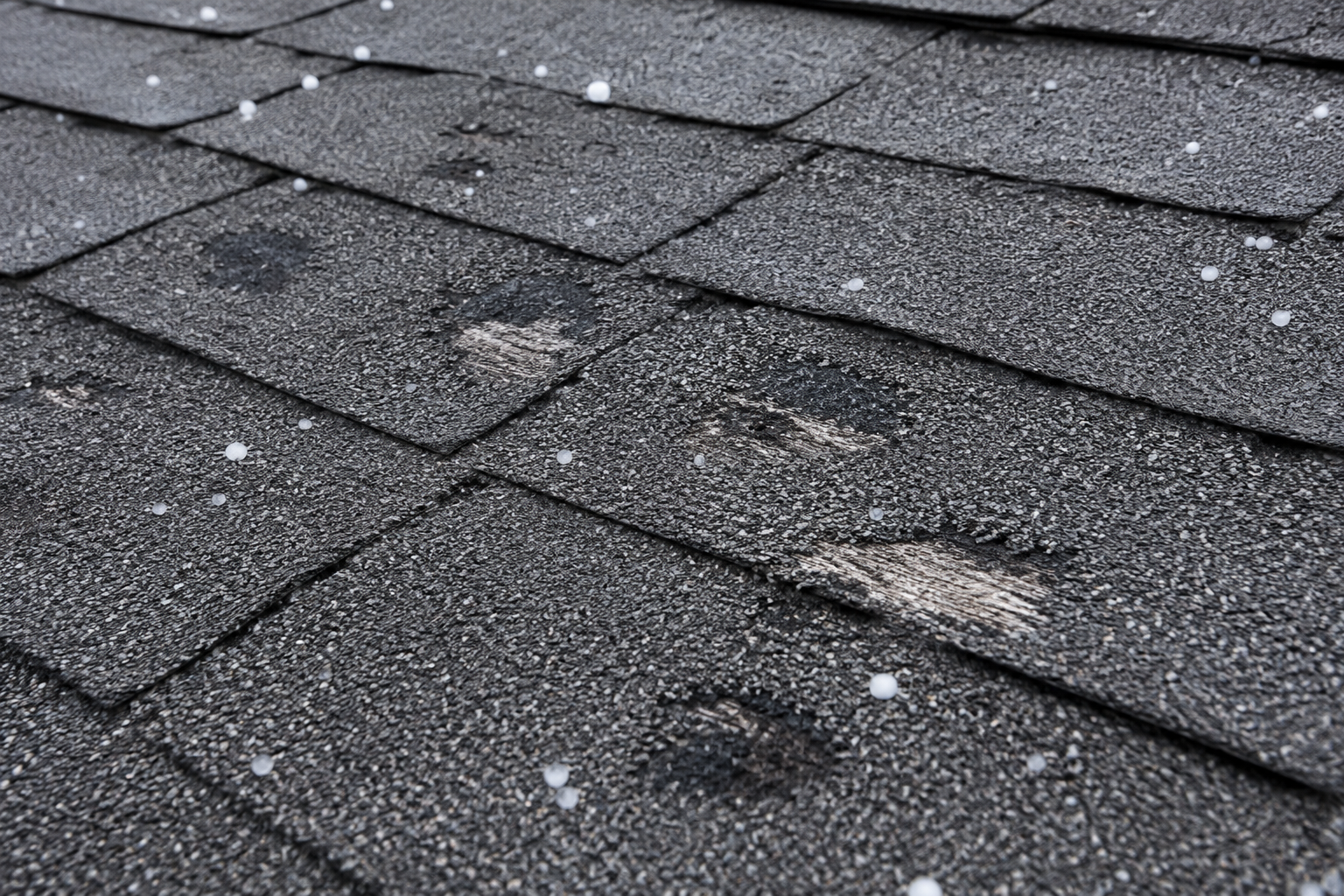
On asphalt shingles, hail damage appears as a combination of visible marks and changes in physical texture that distinguish it from normal wear.
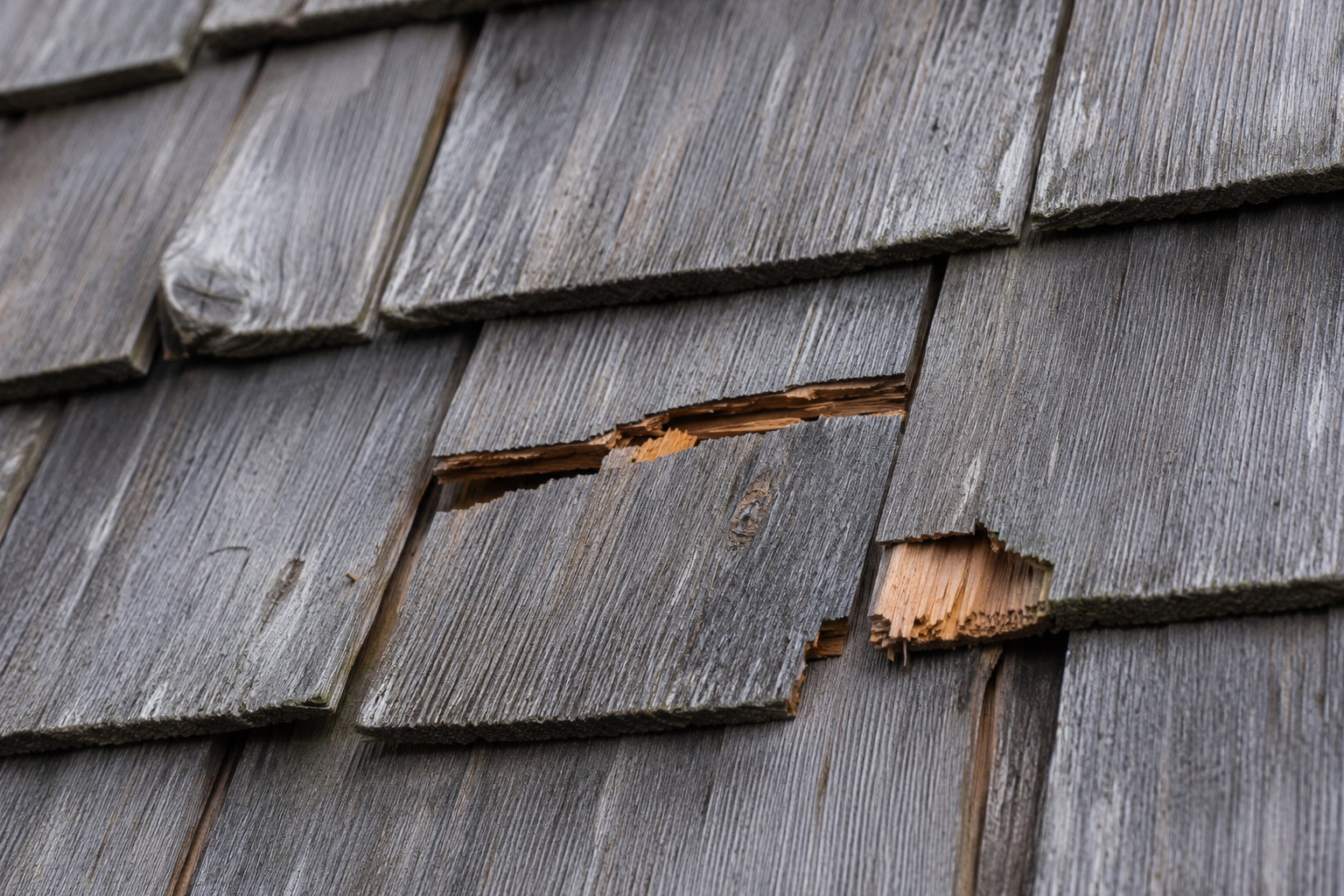
Wood shingles respond to hail impacts very differently from asphalt shingles, producing distinct split patterns rather than dents or granule loss.
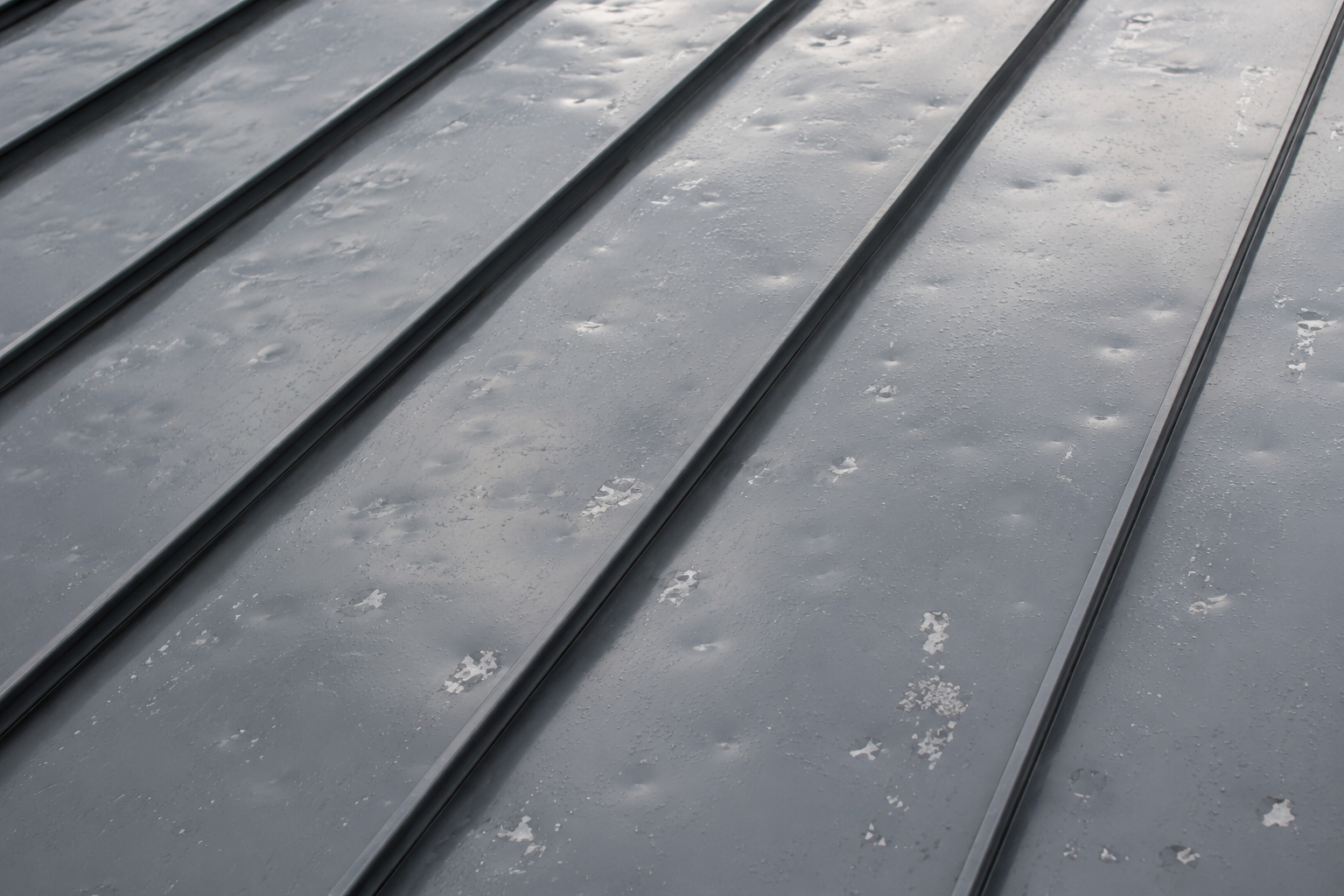
Metal roofing shows hail damage differently from asphalt and wood roofing, with impacts leaving physical deformation rather than surface material loss.
Not every mark on your shingles is hail damage. Blistering is a common condition that can be mistaken for impact damage, but the two have clearly different causes and appearances.
Blistering develops gradually over time as heat and trapped moisture cause bubbles to form on the shingle surface. Hail damage, by contrast, appears suddenly after a specific storm event. If you notice marks on your shingles but have not had a recent hailstorm, blistering is the more likely explanation.
| Feature | Hail Damage | Blistering |
| Surface marks | Dents or impact bruises | Small raised bubbles |
| Granule loss | Visible, often collects in gutters | Minimal, mostly at edges |
| Cracks or splits | Irregular, caused by impact force | Rare, may appear along blister edges |
| Roof leak risk | High if unrepaired | Usually low, primarily cosmetic |
| Timing | Appears after a hailstorm | Develops gradually over months or years |
Real-world example: If you inspect your roof after a storm and find dark, sunken dents with granules missing beneath them, that is hail damage. If you find small raised bubbles on an older roof with no recent storm activity, you are most likely looking at heat or moisture blistering.
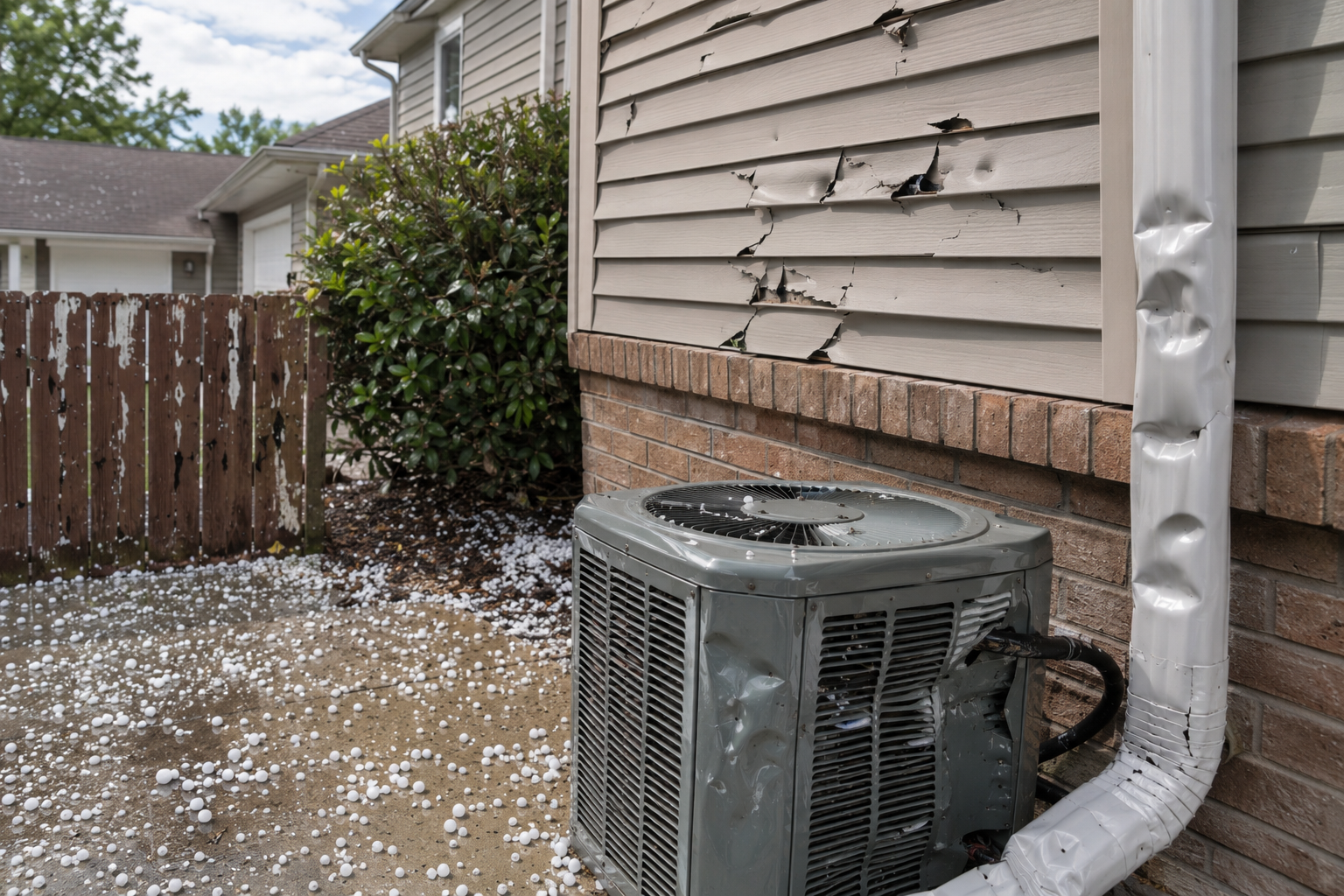
Beyond the roof itself, hail leaves a trail of evidence across your entire property that can help confirm whether your shingles were affected.
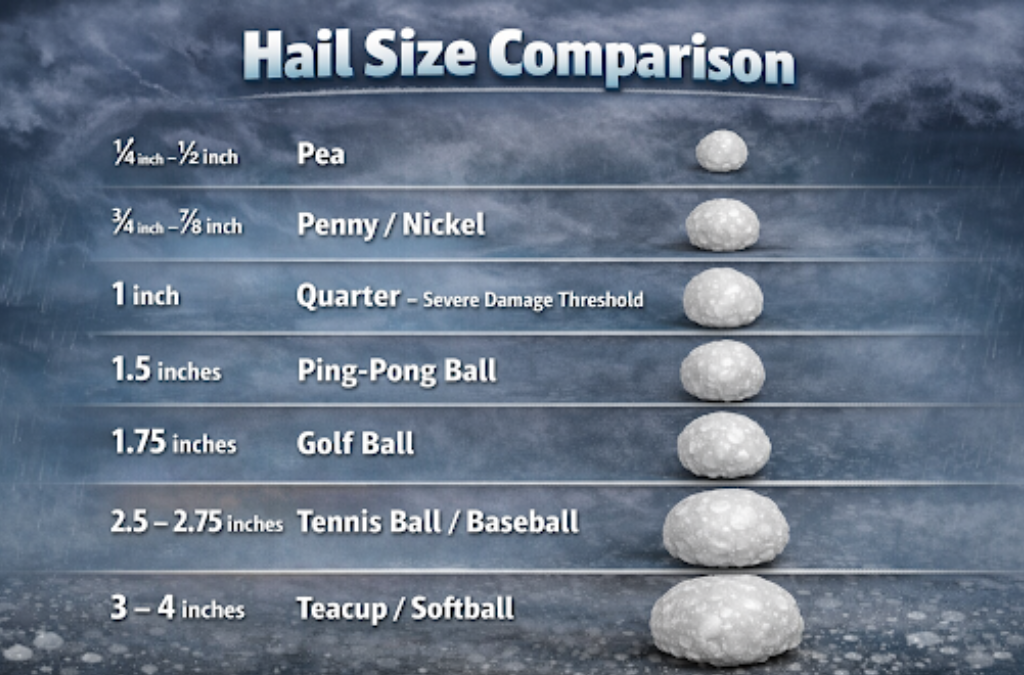
Hail size is the single most reliable predictor of how much damage your roof is likely to sustain, with the risk increasing sharply as stones grow larger.
The National Weather Service classifies hail as severe once it reaches 1 inch in diameter, roughly the size of a quarter. At this size, asphalt shingles can sustain meaningful granule loss and surface bruising. As hailstones grow beyond this threshold, the damage escalates significantly.
| Hail Size | Comparison | Typical Roof & Property Damage |
| ¼ – ½ inch | Pea / Mothball | Little to no structural damage |
| ¾ – ⅞ inch | Penny / Nickel | Minor damage to weaker shingles |
| 1 inch | Quarter — Severe Threshold | Granule loss, dents on vinyl siding, vehicle damage |
| 1.5 inches | Ping-Pong Ball | Shingle damage, broken windows |
| 1.75 inches | Golf Ball | Cracked shingles, windshield damage |
| 2.5 – 2.75 inches | Tennis Ball / Baseball | Significant damage to roofs, siding, and vehicles |
| 3 – 4 inches | Softball | Severe structural damage; may puncture roof decking |
It is worth noting that two storms producing hail of the same size can cause very different levels of damage depending on wind speed and your roof’s condition, which is why the factors covered next matter.
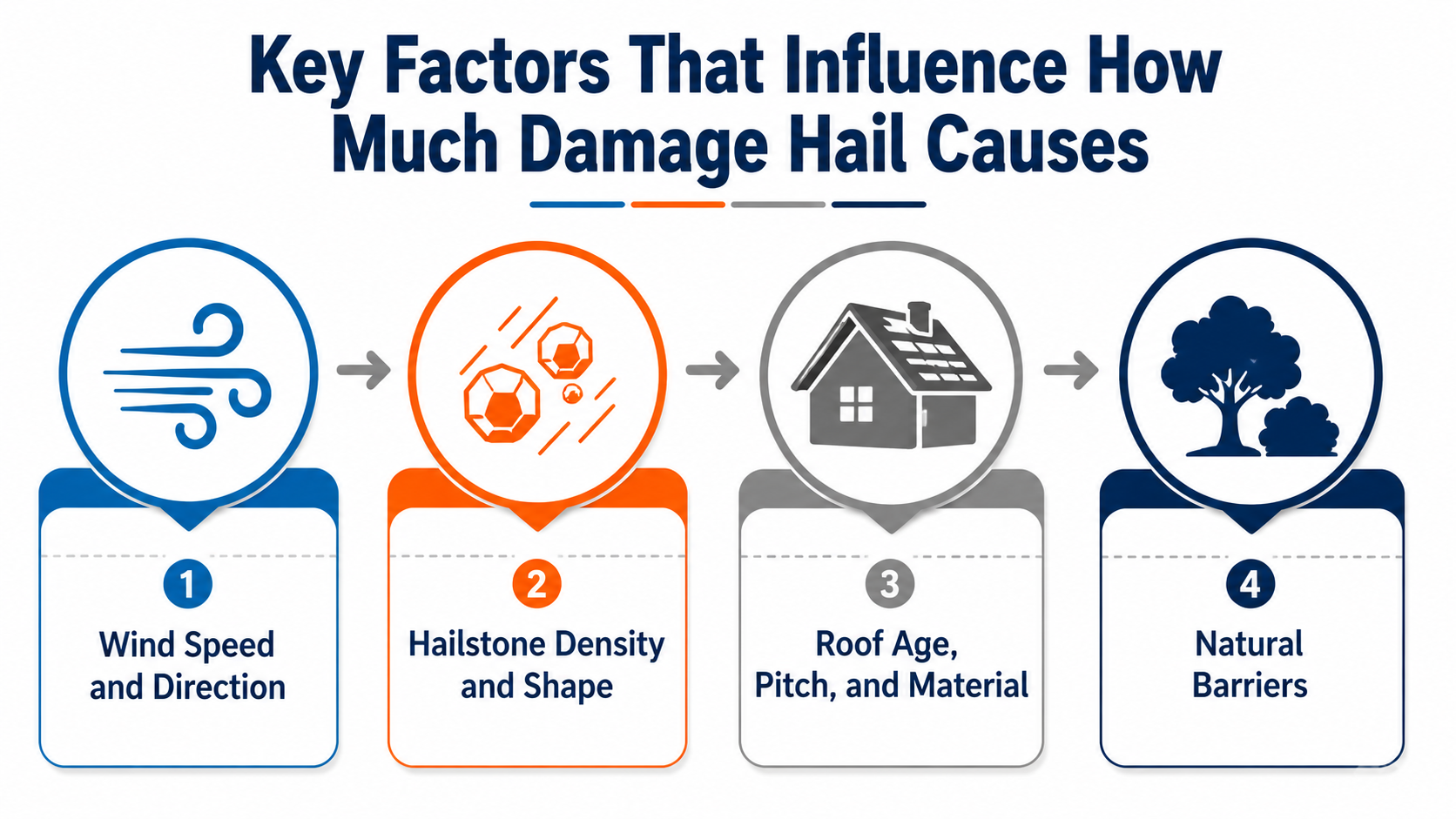
Hail size alone does not determine the outcome. Several additional variables affect how severely your roof is impacted.
You should call a professional roofer any time a storm produces hail at or above the one-inch severe threshold, even if you cannot see obvious damage from the ground.
Specific situations that warrant an immediate professional inspection include finding five or more dents concentrated in a small area, discovering missing or lifted shingles, or learning from local NWS reports that golf ball-sized or larger hail fell in your area.
Self-inspection has real limits. Wet or steep roofs are dangerous to walk on, and trained inspectors know exactly where to look for damage that is easy to miss, including bruising beneath the granule surface that is only detectable by touch.
With GAF Master Elite Certification (top 2% nationwide), 10,000+ projects since 2012, workmanship warranties up to 25 years, documented drone inspections, three Angie’s List Super Service Awards, and 24/7 emergency response across 60+ cities in NC, SC, and TN, Statewide Roofing Specialist is the Piedmont Triad’s most trusted choice for homeowners who demand lasting protection and real accountability. Contact us today to schedule your inspection before the damage worsens.
A professional roof inspection is one of the most effective steps you can take to protect your insurance claim after a hailstorm. Statewide Roofing Specialist does not provide home insurance, but we do provide the documentation and support that make your claim as strong as possible.
Acting quickly and methodically after a hailstorm gives you the best chance of catching damage early and protecting both your home and your insurance claim.
Hail damage on roof shingles is frequently invisible from the ground, but that does not mean it is not there. By starting your inspection at ground level, working methodically up to the roof surface, and knowing what to look for on your specific shingle type, you can catch damage early, before a small impact point becomes a costly leak or structural repair.
If you are unsure about your roof’s condition after a storm, Statewide Roofing Specialist is here to help. Our team provides thorough post-storm inspections and photo documentation you can keep, and we can meet your adjuster on site. Contact us today to schedule your free roof inspection.
Yes. Granule loss, soft bruising, and mat exposure are often invisible from street level. A hands-on inspection or professional assessment is the only reliable way to confirm your roof’s condition after a hailstorm.
Hail as small as 1 inch in diameter, about the size of a quarter, is classified as severe by the National Weather Service and is large enough to cause meaningful damage to asphalt shingles, including granule loss and surface bruising.
As soon as it is safe and the shingles are dry. Early inspection allows you to document damage while it is fresh and file your insurance claim within the required window.
Yes. Even small impact points that remove granules or bruise the mat layer allow moisture to penetrate over time, leading to attic dampness, ceiling stains, insulation damage, and potential mold growth if left unrepaired.
Repair as soon as possible. Delaying gives rain and UV exposure time to worsen the damage and may complicate your insurance claim if the insurer determines some deterioration occurred after the storm event.
Look for dents in gutters, vents, and AC units; cracks or chips in siding; vehicle damage; and hail debris in the yard. These ground-level indicators are often more visible than roof damage itself and signal that your shingles should be inspected.
Most standard homeowners’ insurance policies cover sudden storm damage, including hail. Coverage specifics, including deductibles and depreciation policies for older roofs, vary by insurer and policy, so review your policy and contact your provider promptly after a storm.
Gutter damage alone does not confirm roof shingle damage, but it is a strong indicator. If your gutters are dented and you also find granules inside them after a storm, there is a high probability that your shingles were impacted as well. A professional inspection will confirm which surfaces were affected.