Oct 13, 2026
Green Bay Hail Damage Roof Replacement: GAF Timberline HDZ in Barkwood



Key Takeaways
|
When storm season rolls through North Carolina, you’re not just watching the sky. You’re watching your roof. That’s not paranoia. According to NOAA’s billion-dollar disaster data for North Carolina, the state has averaged 7.4 billion-dollar weather disasters a year over the last five years, nearly triple its 45-year average. With storms hitting more often, the repair-or-replace call isn’t one homeowners can put off anymore.
Every hail cell and gust front leaves behind the same question: does your roof need a patch or a full replacement? Wait too long, and a fixable leak turns into rot, mold, or a sagging deck. This guide walks you through the signs, costs, and insurance realities that help you decide.
Roof repair fixes a specific, isolated problem while the rest of the roofing system stays intact. Roof replacement removes the entire roof system and installs a new one in its place.
Roof Repair typically covers issues like a single leak, a small number of damaged shingles, or a flashing problem around a chimney or vent. The rest of the roof continues functioning normally once that one issue is resolved.
Roof Replacement is a full reset, used when the roof as a whole has reached the end of its useful life or has too much damage for a patch to hold up in the long term.
If you’re not sure which category your roof falls into, the age of the roof, combined with how many areas are affected, is usually the fastest way to tell, as covered in detail below.
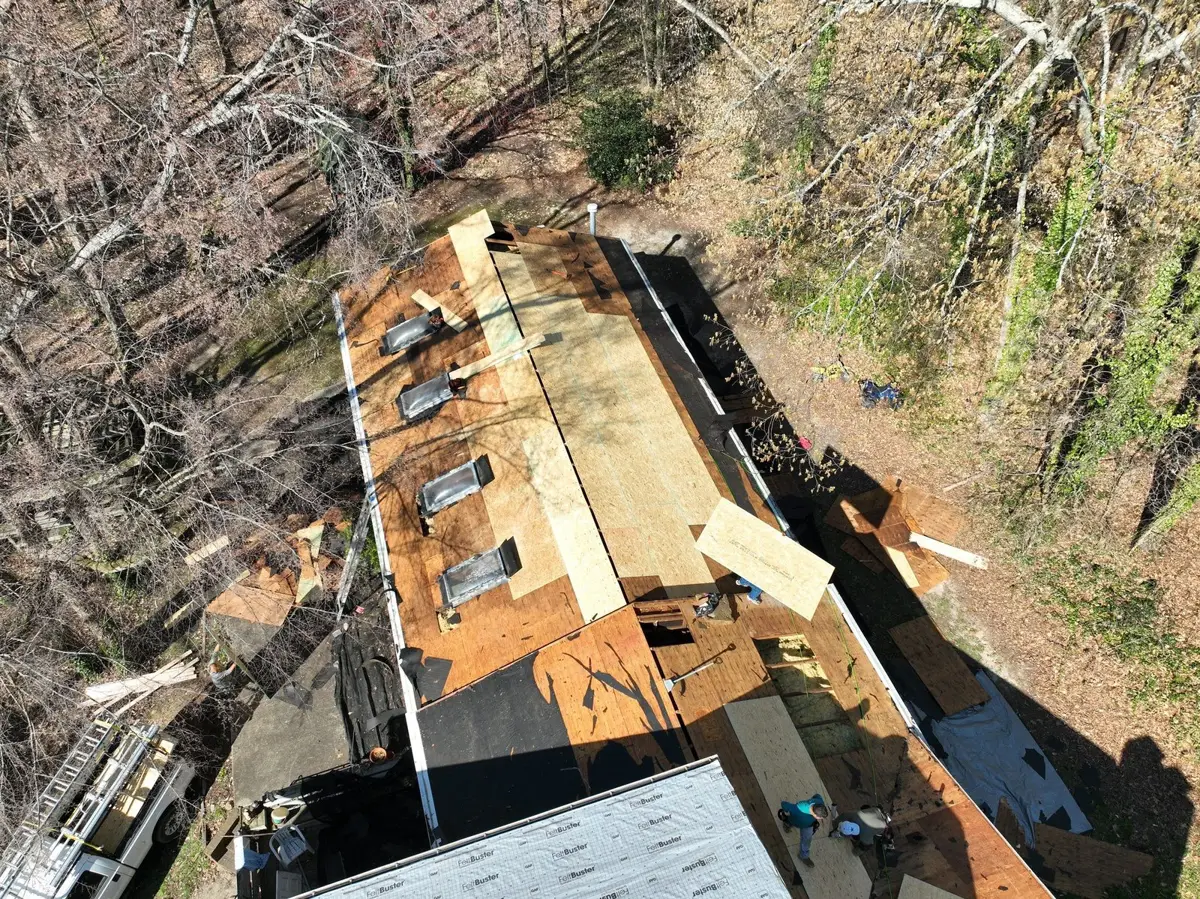

Whether you need a repair or a full replacement depends on two things: how old the roof is and how widespread the damage is.
A roof usually needs repair only when the problem is confined to one area, and the roof itself is still relatively young.
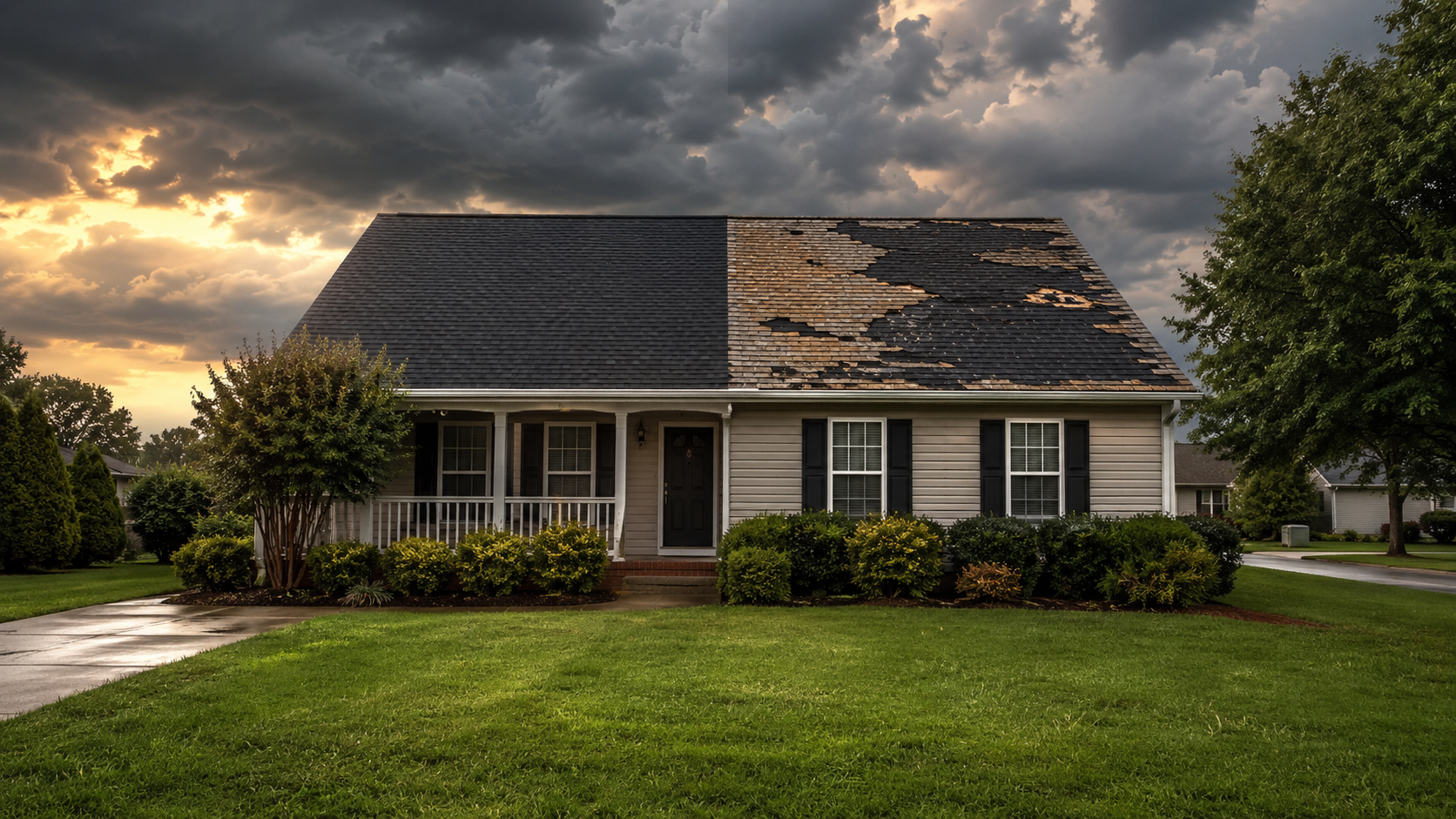
A roof typically needs a full replacement when damage or age exceeds what a patch can fix.
| Factor | Repair | Replacement |
| Roof age | Under 10–12 years | 20+ years |
| Damage location | One isolated area | Spread across multiple sections |
| Leak points | Single leak | Multiple leaks |
| Repair history | First-time issue | Recurring repairs |
| Structural condition | Deck intact | Deck sagging or soft |
Roof repairs in North Carolina typically cost $150 to $3,000, while a full roof replacement generally ranges from $8,000 to $20,000+ for a 2,000-square-foot home. The total cost depends on the extent of the damage, the roofing material, labor, and the size and complexity of the roof.
| Service | What It Includes | Best For |
| Roof Repair | Repairs a specific damaged area, such as missing shingles, flashing damage, or a localized leak. | Minor damage when the rest of the roof is in good condition. |
| Roof Replacement | Removes the existing roofing system and installs a completely new roof. | Widespread damage, aging roofs, or when repairs are no longer cost-effective. |
A common guideline used in the roofing industry is the 25% rule. If more than 25% of the roof requires repair, a full replacement is often the more practical and cost-effective long-term solution.
Roofing contractors commonly price work by the square, a standard roofing measurement equal to 100 square feet (10 ft × 10 ft). The number of squares required directly affects the overall project cost.
| Repair Type | Typical Cost |
| Minor shingle repair | $150–$500 |
| Leak or flashing repair | $300–$1,200 |
| Large section repair (over 100 sq. ft.) | $1,000–$4,000 |
| Roofing Material | Installed Cost per Sq. Ft. | Estimated Total Cost (2,000 Sq. Ft. Roof) |
| Asphalt Shingles | $4–$12 | $8,000–$24,000 |
| Metal Roofing | $7–$25 | $14,000–$50,000 |
| Tile or Slate | $10–$30+ | $20,000–$60,000+ |
A roof in North Carolina typically lasts 15 to 70 years, depending on the roofing material. Hot summers, high humidity, heavy rainfall, and seasonal storms can shorten a roof’s lifespan, making the right material and regular maintenance essential.
| Roofing Material | Average Lifespan in North Carolina | Key Considerations |
| Asphalt Shingles | 15–30 years | 3-tab shingles typically last 15–20 years, while architectural shingles last 20–30 years. |
| Metal Roofing | 40–70 years | Highly resistant to heavy rain, strong winds, and storm damage, making it well-suited for North Carolina’s climate. |
| Slate and Tile | 50–100+ years | Extremely durable and long-lasting but may crack if impacted by large hail or heavy debris. |
North Carolina’s heat and humidity accelerate roof aging by exposing roofing materials to constant UV radiation and moisture. Over time, asphalt shingles may lose granules, curl, dry out, or develop algae in damp conditions.
Hurricanes and severe thunderstorms can shorten a roof’s lifespan by lifting shingles, damaging flashing, and exposing the roof to water intrusion. Wind-driven debris can also crack or puncture roofing materials during major storms.
Frequent shifts between hot and cool temperatures cause roofing materials to expand and contract. Over time, this repeated movement can weaken shingles, flashing, and sealants, increasing the risk of cracks and leaks.
Routine maintenance helps roofs last longer in North Carolina’s climate. Schedule a professional roof inspection once a year, remove leaves and other debris that trap moisture, keep gutters clean to improve drainage, and trim nearby tree branches to reduce the risk of storm damage.

North Carolina’s hurricanes, tropical storms, and severe thunderstorms are among the leading causes of roof damage statewide, and the right fix depends on where the damage occurs.
Hail damage isn’t always visible from the ground. A post-storm inspection is worth scheduling even if the roof looks fine, since bruised shingles can fail months later.

Homeowners insurance in North Carolina typically covers sudden, accidental roof damage, such as damage from storms or hail, but generally excludes damage caused by age, wear, or lack of maintenance.
If your roof is damaged by a storm, following the right steps for an insurance claim can help the process go smoothly.
Statewide Roofing Specialist has completed more than 10,000 roofing projects since 2012 and holds GAF Master Elite certification, a distinction limited to the top 2% of roofing contractors nationwide. That certification, paired with Documented drone inspections, means we can document hail bruising and storm damage you’d never catch from the ground, without anyone stepping foot on a compromised roof.
We’ve also picked up three Angie’s List Super Service Awards along the way, and we run 24/7 emergency response across 60+ cities in North Carolina, South Carolina, and Tennessee, so a leak that shows up at midnight during a storm doesn’t have to wait until Monday.
A contractor who only pushes replacement, or only offers repair, isn’t giving an unbiased read on your roof. The right partner makes the case for whichever option actually fits.
Deciding between roof repair and replacement in North Carolina comes down to your roof’s age, the extent of the damage, and what’s happening beneath the surface. Repair makes sense for isolated, recent issues; replacement makes sense once damage or age is widespread. If you’re unsure which applies to your roof, the team at Statewide Roofing Specialist can provide a clear, documented inspection, so you can move forward with confidence instead of a guess.
Yes, upfront costs are lower. But repeated repairs to the same roof can eventually add up to more than a full replacement would have cost.
Check your roof’s age, the extent of the damage, and your repair history. A professional inspection gives you a clear, documented answer.
No. Most storm damage is repairable if it’s isolated. Widespread hail bruising or structural damage is more likely to require full replacement.
It depends on the damage’s extent. Minor, isolated damage is usually covered as repair; extensive storm damage is more often covered as full replacement.
Once a year is standard, plus an additional inspection after any major storm to catch damage that isn’t visible from ground level.