Oct 13, 2026
Green Bay Hail Damage Roof Replacement: GAF Timberline HDZ in Barkwood



Key Takeaways
|
If you’ve spotted a fresh water stain on your ceiling after a storm, you already know that sinking feeling. Across North Carolina, hurricanes, hailstorms, and high winds batter roofs almost every season, and what looks like minor damage can quietly turn into leaks, mold, and structural rot.
The North Carolina Department of Insurance advises photographing damage and making temporary repairs right away to protect your claim, and that same urgency applies to the roof itself.
Acting fast isn’t just about paperwork; it’s what keeps a small leak from becoming a much bigger repair.
This guide covers how fast to repair storm damage, the warning signs to watch for, and when to call a professional.
If your roof has been through high winds, hail, or a hurricane, don’t wait for a leak to appear. Schedule a roof inspection within 24–48 hours, even if everything looks fine from the ground. Many types of storm damage aren’t immediately visible but can worsen with the next rainfall.

Roof storm damage should be inspected within 24–48 hours, with temporary protective measures (such as tarping) applied the same day whenever it’s safe. Full repairs should be completed within a few days to two weeks, depending on the severity of the damage.
Minor issues, a handful of lifted shingles, and small dents can often be fixed within a week. Major damage, such as exposed decking or structural sagging, requires prompt action, sometimes within 24 hours, to prevent interior damage from spreading.
Here’s a general timeline breakdown based on what we see across the Piedmont Triad:
| Damage Severity | Inspection Window | Repair Window |
| Minor (a few missing shingles, cosmetic dents) | 24–48 hours | 1–2 weeks |
| Moderate (isolated leak, damaged flashing) | Same day | 3–7 days |
| Severe (exposed decking, sagging, active interior leak) | Same day | 24–72 hours |
Never wait for “a better time.” Even a small opening in your roof can allow water to enter with every rain event until it is properly sealed.

Delaying roof repairs turns a manageable fix into a much bigger, more expensive problem. Water finds the path of least resistance, and once it’s inside your home, it doesn’t stay contained to the roof.
Here’s what tends to happen when repairs are put off:
What most homeowners don’t realize is that these problems compound quickly. A leak that would have cost a few hundred dollars to patch in week one can turn into a multi-thousand-dollar decking and drywall repair by week three. Waiting doesn’t just put the roof at risk; it also jeopardizes your insulation, ceilings, and indoor air quality.

Urgent roof storm damage shows up as missing or torn shingles, active leaks, sagging rooflines, heavy granule loss in your gutters, or visible daylight through the attic. Any one of these means you shouldn’t wait to schedule an inspection.
Watch for:
Walk through your attic with a flashlight after a storm. If you can see daylight where you shouldn’t, it’s one of the clearest signs your roof has been breached.

Roof leaks can spread through insulation, drywall, and ceiling framing within hours, not days. Water travels along the path of least resistance, often appearing far from where the actual roof damage began.
A small breach can soak insulation, run along rafters, and stain a ceiling several feet away, all before you notice a drip. That’s why what looks like a “small” leak from inside often means a larger area of roof damage than expected.
The good news is that a fast response limits how far water travels. Getting a tarp on the affected area and scheduling an inspection within the first day or two keeps the damage contained to a smaller, more manageable repair instead of a full ceiling and insulation replacement.
Yes, North Carolina insurers expect homeowners to act within a reasonable time after storm damage, and delays can be used to reduce or deny a claim. Most policies include a duty-to-mitigate clause, meaning you’re responsible for taking reasonable steps to prevent further damage once the storm has passed.
Under North Carolina’s Unfair Trade Practices Act, insurers are required to affirm or deny coverage within a reasonable time after you file proof of loss, but that standard works both ways. If secondary damage, like rot or mold, develops because repairs sat untouched, an adjuster may argue that the damage resulted from inaction rather than the storm itself and deny that portion of your claim.
Photograph everything before you touch anything. Timestamped photos of the original damage can protect you if a dispute comes up later.
Here’s the thing: insurers in North Carolina don’t require you to file within a hard legal deadline, but your individual policy almost certainly does. Most carriers expect notification within 30 to 60 days of the storm, and the sooner you act, the easier it is to prove your damage came from that specific weather event rather than ordinary wear.

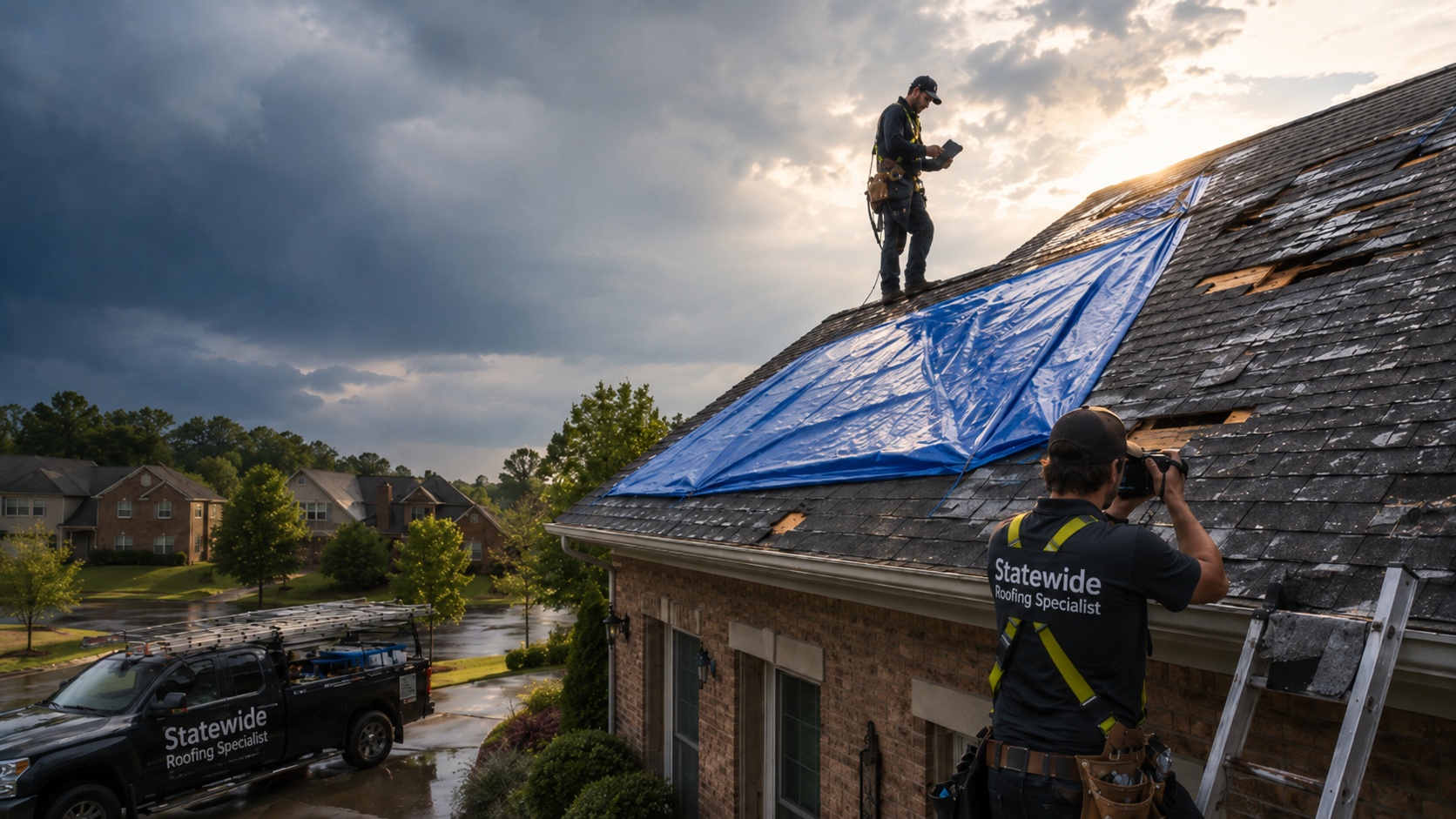
Tarping exposed areas, clearing debris, and photographing all visible damage are the most effective temporary steps to protect a storm-damaged roof while you wait for full repairs. These steps limit further water intrusion and support your insurance claim.
Homeowners should call a roofer the same day or the next business day after a storm, even if the damage looks minor from the ground. A professional inspection catches problems that aren’t visible from the driveway, like lifted flashing or hidden granule loss.
With GAF Master Elite certification, a distinction held by just the top 2% of roofing contractors nationwide, we’ve seen how fast small issues become expensive ones. One homeowner in Greensboro called us after a summer storm left shingles missing across their roofline; a Documented drone inspection caught underlying damage that wasn’t obvious from the ground, and getting ahead of it kept the repair from turning into a full structural issue.
Waiting for a “convenient” appointment window costs you time you don’t have. Across more than 10,000 roofing projects since 2012, backed by workmanship warranties up to 25 years and three Angie’s List Super Service Awards, the homeowners who come out ahead are the ones who get an inspection on the books before the storm has even finished making the local news. Our 24/7 emergency response across 60+ cities in North Carolina, South Carolina, and Tennessee means that inspection can happen the same day, storm or no storm.
If you’re not sure what you’re looking at after a storm, our free roof inspection gives you a straight answer with no obligation.
Storm damage doesn’t wait, and neither should you. Acting within 24–48 hours protects your home from mold, rot, and rising repair costs and protects your insurance claim, too. The sooner you inspect, tarp, and document the damage, the smaller the fix will be.
If your roof took a hit this season, call Statewide Roofing Specialist for a free, thorough inspection, no obligation, just a straight answer. Have questions about your roof? Leave a comment below or give us a call today.
Minor cosmetic damage can typically wait a week or two if it’s tarped and dry. Active leaks, missing shingle sections, or structural sagging require attention within 24–48 hours to prevent water damage and mold growth.
North Carolina doesn’t set a strict legal deadline for repairs, but most policies include a duty-to-mitigate clause requiring reasonable action to prevent further loss. Waiting too long can give an insurer grounds to dispute part of your claim.
Yes. Many roofing contractors, including Statewide Roofing Specialist’s residential roofing services, offer emergency tarping and inspection services around the clock during and after major storms.