Oct 13, 2026
Green Bay Hail Damage Roof Replacement: GAF Timberline HDZ in Barkwood



Key Takeaways
|
Wisconsin averages about 23 tornadoes each year, according to the National Weather Service Green Bay office, with most occurring during late spring and summer. For homeowners in Appleton, severe winds and storms can damage a roof in ways that aren’t always visible from the ground.
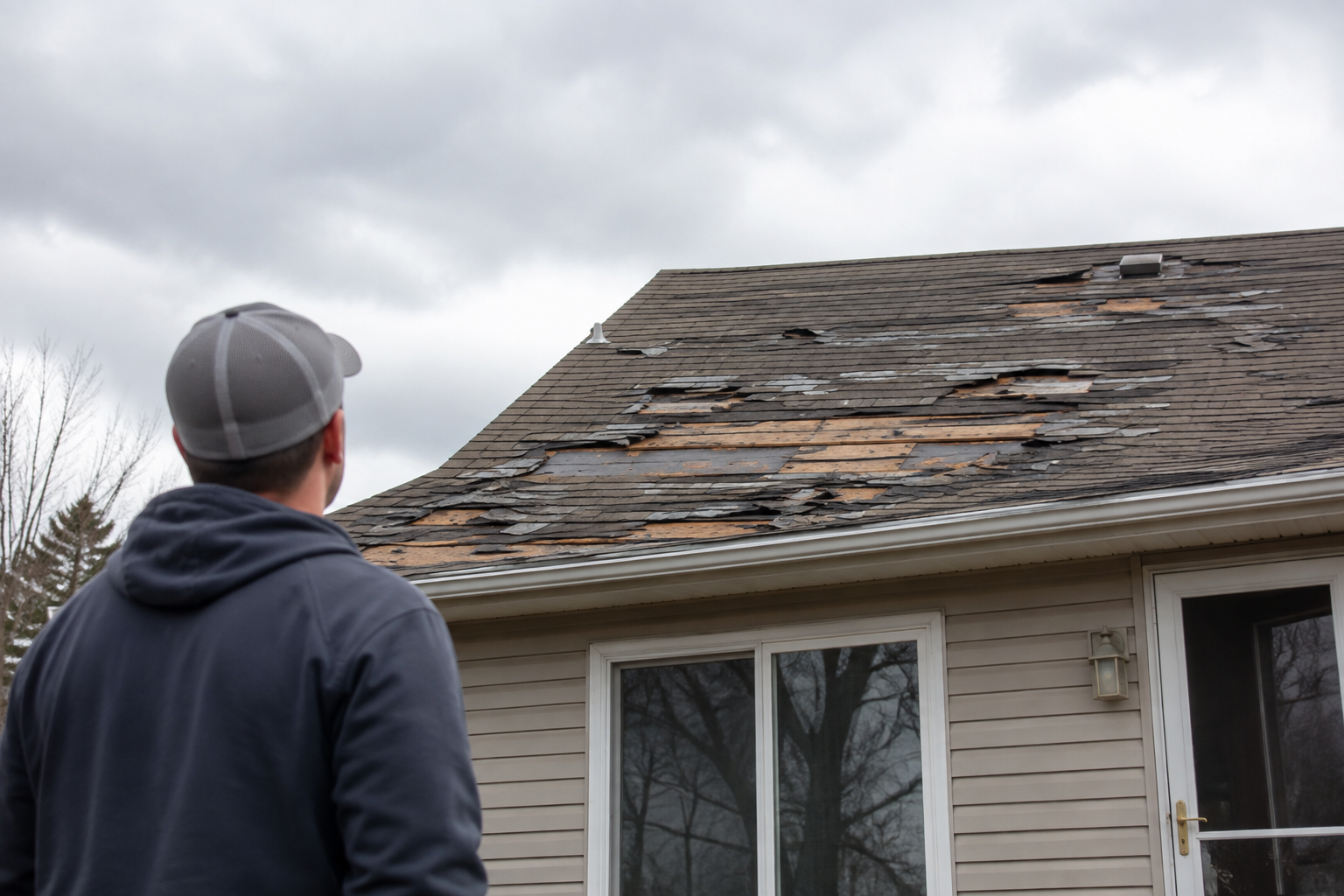
Wind can loosen shingles, damage flashing, or create small openings that allow water to reach your attic. Left unnoticed, these issues can lead to leaks, mold growth, wood rot, and more expensive repairs over time.
Many of the early warning signs can be identified without climbing onto your roof. A careful inspection from the ground, followed by an attic check, is often enough to determine whether your roof needs professional attention.
This guide explains how to inspect your roof safely, what signs of storm damage to look for, where hidden damage is most likely to appear, and when it’s time to call a professional roofer.

You should inspect your roof within 24 to 48 hours after a storm passes, focusing on a ground-level check first and an attic check second.
Wisconsin tornado activity is heavily seasonal; May, June, and July account for the vast majority of the state’s 1,537 documented tornadoes since 1844, according to the National Weather Service. If a storm rolls through Appleton during these months, an inspection should move to the top of your to-do list.

You can safely inspect your roof from the ground by using binoculars, walking your home’s perimeter, and checking your attic, all without climbing a ladder.
Ground-level checklist:
Attic checklist:
Never inspect alone, and never climb onto a storm-damaged roof yourself. Wet or wind-loosened shingles make roof access dangerous even for short periods, so leave the close-up inspection to a professional with the right safety equipment.

A complete storm-damage inspection checklist covers three areas: the roof surface, the flashing and penetrations, and the drainage and structural components.
Roof surface and materials:
| Component | What to Look For |
| Shingles | Missing, cracked, curled, or blistered areas |
| Granules | Excessive buildup collecting in gutters |
| Fasteners | Loose, rusted, or popped nails |
| Growth | Moss, algae, or dark staining that traps moisture |
Flashing and penetrations:
| Component | What to Look For |
| Chimney | Cracked mortar, loose caps |
| Vents and pipes | Dry rot or missing rubber seals |
| Skylights | Worn caulking, visible gaps |
| Valleys | Loose or displaced metal flashing |
Drainage and structure:
| Component | What to Look For |
| Gutters/downspouts | Debris buildup, loose fastening |
| Fascia and soffits | Rot, water staining, peeling paint |
| Attic and interior | Water stains, mold, visible daylight |

You can check for hidden storm damage by inspecting your ceilings, walls, and attic for signs of moisture that aren’t visible from outside.
Ceilings and upper walls:
Walls, corners, and openings:
Attic:
A roof can pass a ground-level visual check and still be leaking. Wind can break the seal on shingles without visibly displacing them, which means the first real sign of damage often shows up inside your attic, not on your roofline.

You should call a professional roofer if you notice missing or damaged shingles, any interior water staining, or a roof approaching 20 years old.
| Situation | DIY-Safe? | Call a Pro? |
| A few loose granules in the gutter | Yes, monitor | — |
| More than a few missing shingles | — | Yes |
| Any water stain on a ceiling or wall | — | Yes, immediately |
| Roof is 20+ years old after a storm | — | Yes |
| Visible sagging or dips in the roofline | — | Yes, immediately |
| Damaged flashing around chimney or vents | — | Yes |
Additional triggers for a professional inspection:

Skipping a roof inspection after a storm can lead to hidden leaks, structural wood rot, mold growth, and even a denied insurance claim.
The sooner storm damage is documented and inspected, the stronger your position, both for preventing further damage and for any insurance claim you may need to file.
A visual inspection can help you spot obvious storm damage, but some problems are only visible during a professional assessment. If you’ve noticed missing shingles, water stains, damaged flashing, or other warning signs, Statewide Roofing Specialist offers free, documented drone roof inspections, 24/7 emergency repairs, GAF Master Elite® expertise, and workmanship warranties up to 25 years (options vary by system). If your roof was directly hit by tornado winds, read our guide on what to do after tornado winds damage your roof in Appleton for the next steps.
Already know your roof took a direct hit? Read our guide on what to do after tornado winds damage your roof in Appleton for the full step-by-step recovery process.
Inspect within 24 to 48 hours. Start with a ground-level visual check, then follow up with an attic inspection a day or two later since some leaks take time to appear.
Yes. Most storm damage, missing shingles, granule loss, and dented flashing, is visible from the ground with binoculars. Save ladder access and close-up inspection for a licensed professional.
Water stains or damp spots in the attic. Wind can break a shingle’s seal without visibly displacing it, so attic moisture often appears before any outside damage is obvious.
Call a professional if you see missing shingles, any interior water staining, sagging rooflines, or if your roof is over 20 years old following a storm.
Untreated storm damage can lead to hidden leaks, mold, and wood rot, and delayed reporting may also affect your ability to file a successful insurance claim.