Oct 13, 2026
Green Bay Hail Damage Roof Replacement: GAF Timberline HDZ in Barkwood

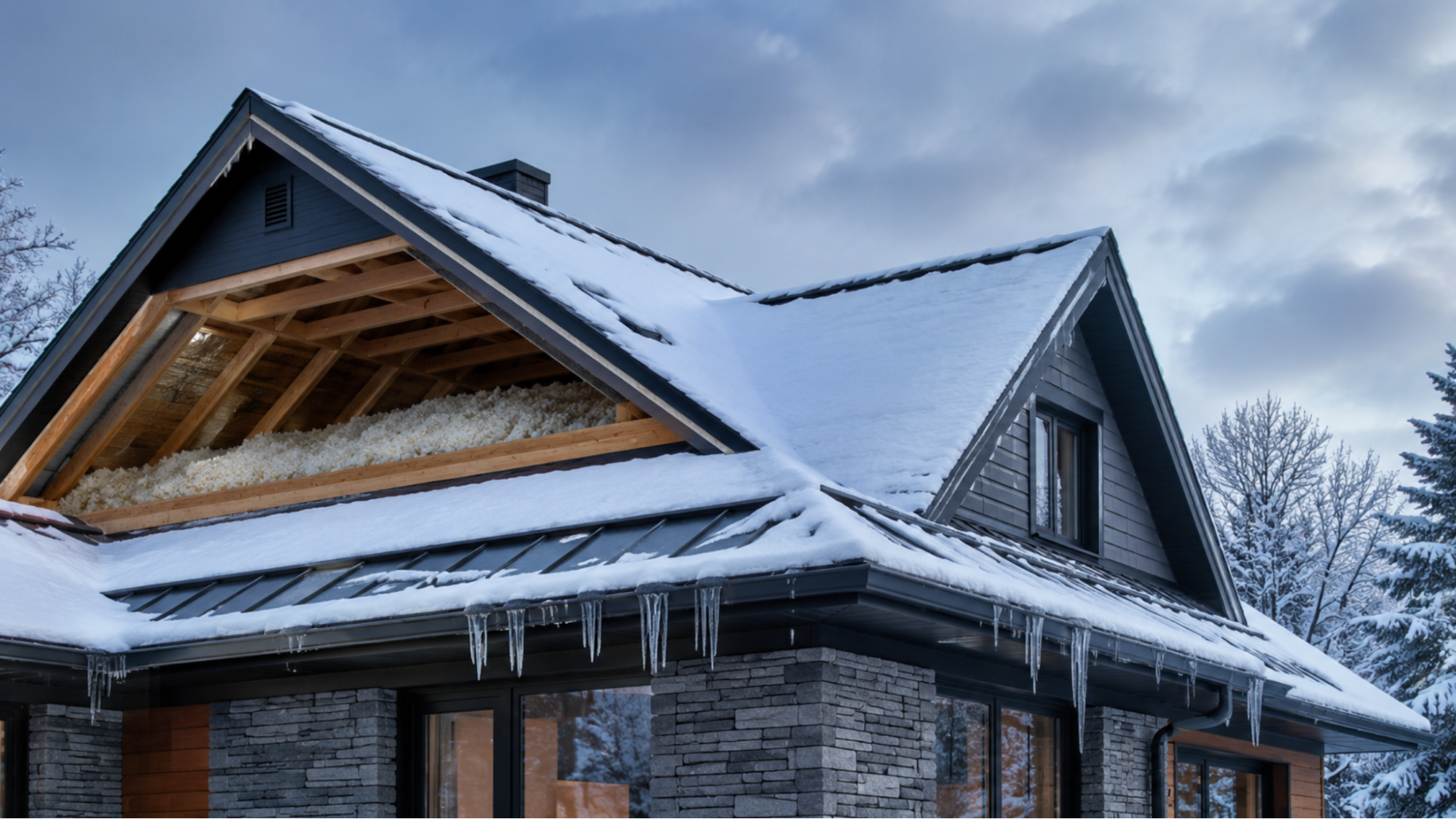


Standard roofing materials and methods fail under extreme freeze-thaw cycles, sub-zero temperatures, and heavy snow loads (30 – 50+ lb./sq. ft.). This is why roofing in Wisconsin requires specialized cold-climate engineering, which includes self-adhering ice shields, cold-weather sealing, and attic thermal management.
A standard shingle roof might easily last 30 years in a temperate southern state. However, standard roofing practices cannot hold up in the Upper Midwest.
The average lifespan of a residential roof in Wisconsin is 18 to 25 years, which is roughly 20% to 30% less than the national average. Premature roof failure can be prevented if your roofing contractor in Wisconsin follows cold-weather installation protocols.
The life expectancy of a roof depends on how well the roofing material and structure resist severe thermal expansion, structural snow loads, and moisture intrusion.
| Roof System / Material | Average Lifespan (Wisconsin) | Average Lifespan (National) | Cause of Degradation (Wisconsin) |
| Architectural Asphalt Shingles | 18 – 25 Years | 25 – 30 Years |
|
| Standing Seam Metal | 40 – 60+ Years | 50 – 70 Years |
|
| Commercial Low-Slope (EPDM/TPO) | 20 – 30 Years | 25 – 35 Years |
|
Your contractor must stick to the following two critical cold-climate engineering standards for a long-lasting roof replacement in Wisconsin.
Under the Wisconsin Uniform Dwelling Code (SPS 321.28), a roof covering an area above a heated space must use self-adhering ice-and-water-shield underlayment. The membrane must extend from the eave edge up the slope to a point at least 24 inches inside the interior warm wall line.
Extend this membrane 36 inches to 72 inches up the roof deck in high-snowfall areas or low-slope sections. This prevents melted snow from driving standing water under the shingles during severe freeze-thaw cycles.
Asphalt shingle sealant strips need direct sunlight and ambient temperatures of approximately 40℉ to 45℉ or higher to activate. Avoid installing shingles during late autumn or winter, as seal strips remain inactive due to lack of ambient heat.
Your Wisconsin roofing contractor must hand-tab the shingles when replacing a roof below 40 ℉. They must manually apply dime-sized spots of asphalt roofing cement under each shingle tab. This secures the system until warmer weather permanently seals the adhesive strips.
Roofing costs in Wisconsin for a standard 2,000-square-foot home typically range between $9,000 and $19,000. You can expect to pay $4.50 to $9.50 per square foot for architectural shingles.
Tear-off requirements, roof pitch, structural decking repairs, and choice of material also influence the total cost.
| Roof System / Type | Cost per Sq. Ft. | Average Total Cost (2,000 sq. ft.) | Expected Lifespan |
| Architectural Shingles | $4.50 – $9.50 | $9,000 – $19,000 | 18–25 Years |
| Standing Seam Metal | $12.00 – $22.00 | $24,000 – $44,000 | 50+ Years |
| Commercial Low-Slope (TPO/EPDM) | $6.50 – $14.00 | $13,000 – $28,000 | 20–30 Years |
Removing two or more layers of old shingles adds $1,000 to $2,500 in additional labor and landfill tipping fees.
Water trapped under your shingles due to ice dams often rots the OSB or plywood decking beneath. Replacing damaged wood costs $75 to $120 per sheet installed.
Steeper roofs (typically 7/12 pitch or higher) require specialized safety-harness rigging and staging. Moreover, installation is slower. Consequently, your roof installation cost may increase by 15% to 30%.
Municipal roof replacement permits in Wisconsin typically range from $50 to $500+, depending on the city, project valuation, and local inspection requirements.
Premium asphalt systems with Class 4 impact ratings offer the highest level of protection. Reinforced nail zones and layered asphalt construction withstand hail up to 2 inches in diameter and wind speeds of up to 130 mph.
Standing-seam metal features concealed fasteners and interlocking vertical panels that allow heavy snow and ice to slide off easily. This design prevents structural overload, eliminates ice dam formation, and provides 50+ years of maintenance-free service.
Reinforced single-ply membranes maintain elasticity in sub-zero temperatures, resisting thermal shock cracking and seam separation. These membranes are ideal for commercial low-slope or flat roofs.
Ambient temperature is 60°F or higher from spring through autumn. Direct sunlight activates shingle adhesive strips, allowing them to seal immediately upon placement.
Hire a certified roofing contractor if you plan to install a roof in winter. Materials must be stored in heated environments prior to installation to prevent cracking. A certified contractor uses specialized pneumatic coil nailers adjusted for cold weather and applies manual asphalt roof cement under each shingle tab to secure the roof until spring warmth arrives.
Check for the following credentials before you choose a roofing contractor in Wisconsin:
A contractor cannot legally pull municipal building permits for residential roofing work without these licenses.
They must have at least $250,000 in general liability insurance and active Workers’ Compensation coverage.
Only 2% of contractors nationwide hold the GAF Master Elite Award, which allows roofers to provide factory-backed warranties such as:
They use thorough, documented inspections and high-resolution drone imaging to safely identify subtle hail, wind, and storm damage that ground-level inspections miss.
Look for the following red flags to protect your property and wallet:
Always verify state DSPS licenses and GAF Master Elite® factory certifications before you sign any contract. Your residential or commercial roofing contractor in Wisconsin must use materials engineered for cold climates.
Statewide Roofing Specialist is a trusted Wisconsin team backed by GAF Master Elite® certification (top 2% of roofing contractors) and a Wisconsin contractor license (#4717-DCFR).
A residential roof replacement in Wisconsin typically costs between $9,000 and $19,000. The final cost depends on roof pitch, material, tear-off layers, and rotted decking repairs.
A standard architectural shingle roof lasts 18 to 25 years. Metal roofs last 40 to 60+ years. Commercial EPDM/TPO membranes last 20 to 30 years.
Yes, you can, but only if the temperature is below 40℉. This requires specialized cold-weather protocols, such as storing materials in heated environments and performing manual hand-tabbing.
Class 4 impact-resistant architectural shingles and 24-gauge standing-seam steel offer the highest level of cold-climate protection.