Key Takeaways

  • Verify a contractor’s license, general liability insurance, and workers’ comp before hiring; request proof, not just a verbal claim.
  • GAF Master Elite certification and thorough, documented inspections signal stronger training, inspection accuracy, and manufacturer-backed warranties.
  • Get a detailed, itemized written estimate; avoid phone-only quotes or unexplained lump-sum numbers.
  • Watch for red flags: no license number, upfront full payment demands, door-to-door post-storm pitches, and pressure to sign Assignment of Benefits forms before inspection.
  • Compare workmanship vs. material warranty terms separately, since “lifetime” often covers materials only.
  • Document storm damage thoroughly before filing any insurance claim.

Your roof is one of the biggest investments in your home, and choosing the wrong contractor can turn into a costly mistake. That risk is more than theoretical in North Carolina.

In June 2026, a North Carolina Department of Insurance investigation highlighted alleged cases of roofing contractors intentionally damaging shingles and then claiming the damage was caused by wind or hail to pursue fraudulent insurance payouts.

Situations like this show why homeowners should not choose a roofing company based on a quick inspection, a low price, or a promise to handle their insurance claim. Before hiring a contractor, you need to know how to verify their credentials, insurance, certifications, reviews, warranties, and estimate.

This guide walks you through the 15 factors to consider when choosing a roofing company in North Carolina, helping you spot potential red flags and make a more informed hiring decision.

Quick Insight

The best roofing company in North Carolina is licensed and insured, holds a manufacturer certification such as GAF Master Elite, backs its work with a strong workmanship warranty, has verifiable local reviews, and provides a detailed written estimate before any work begins.
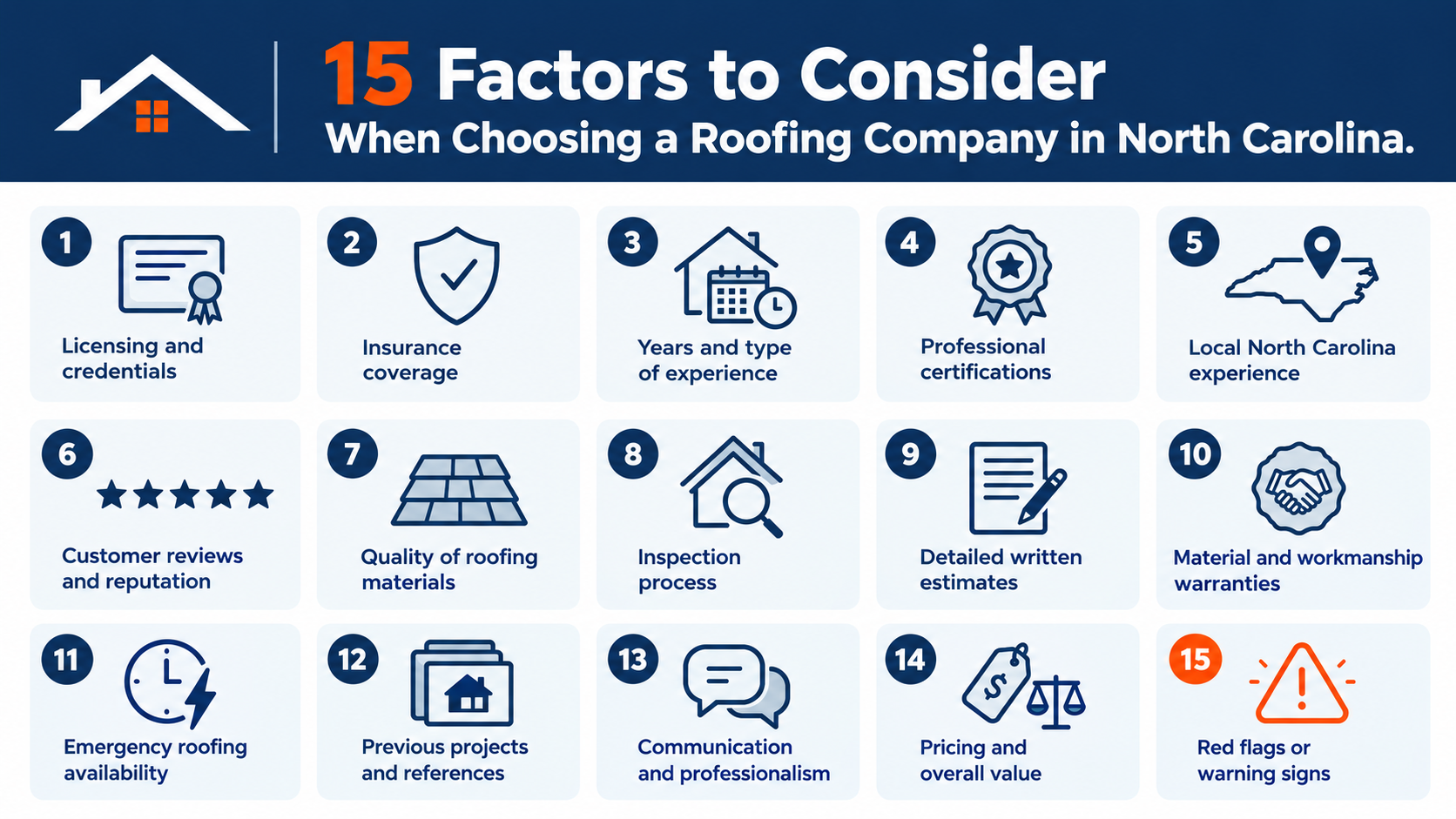
15 Factors to Consider When Choosing a Roofing Company in North Carolina

15 Factors to Consider When Choosing a Roofing Company in North Carolina

Every roofing contractor in North Carolina should be measured against the same set of criteria. Use this list to compare estimates side by side instead of judging companies on price alone.

  1. Licensing and credentials: North Carolina requires a general contractor license for roofing projects worth $40,000 or more, a threshold raised from $30,000 in October 2023. Ask for the license number before you agree to anything.
  2. Insurance coverage: A reliable contractor carries general liability insurance and workers’ compensation if they have three or more employees. Request a certificate that lists your name and address.
  3. Years and type of experience: Time in business only tells part of the story. Ask how long the company has worked on your specific roof type, whether that’s asphalt shingle, metal, or flat commercial roofing.
  4. Professional certifications: GAF Master Elite status is held by fewer than 2% of roofing contractors nationwide and comes with stronger manufacturer-backed warranties. Thorough, documented inspections matter most when storm damage and insurance claims are involved.
  5. Local North Carolina experience: Look for a local physical office and reviews spanning several years. Crews that only show up after a storm with no local history are often gone before a warranty issue ever comes up.
  6. Customer reviews and reputation: Check Google, the Better Business Bureau, and Facebook, rather than relying solely on testimonials posted on the company’s website. Specific, dated feedback is more trustworthy than generic praise.
  7. Quality of roofing materials: Ask which brands the contractor installs and whether those materials meet local wind and impact ratings. Better materials also tend to qualify for stronger manufacturer warranties.
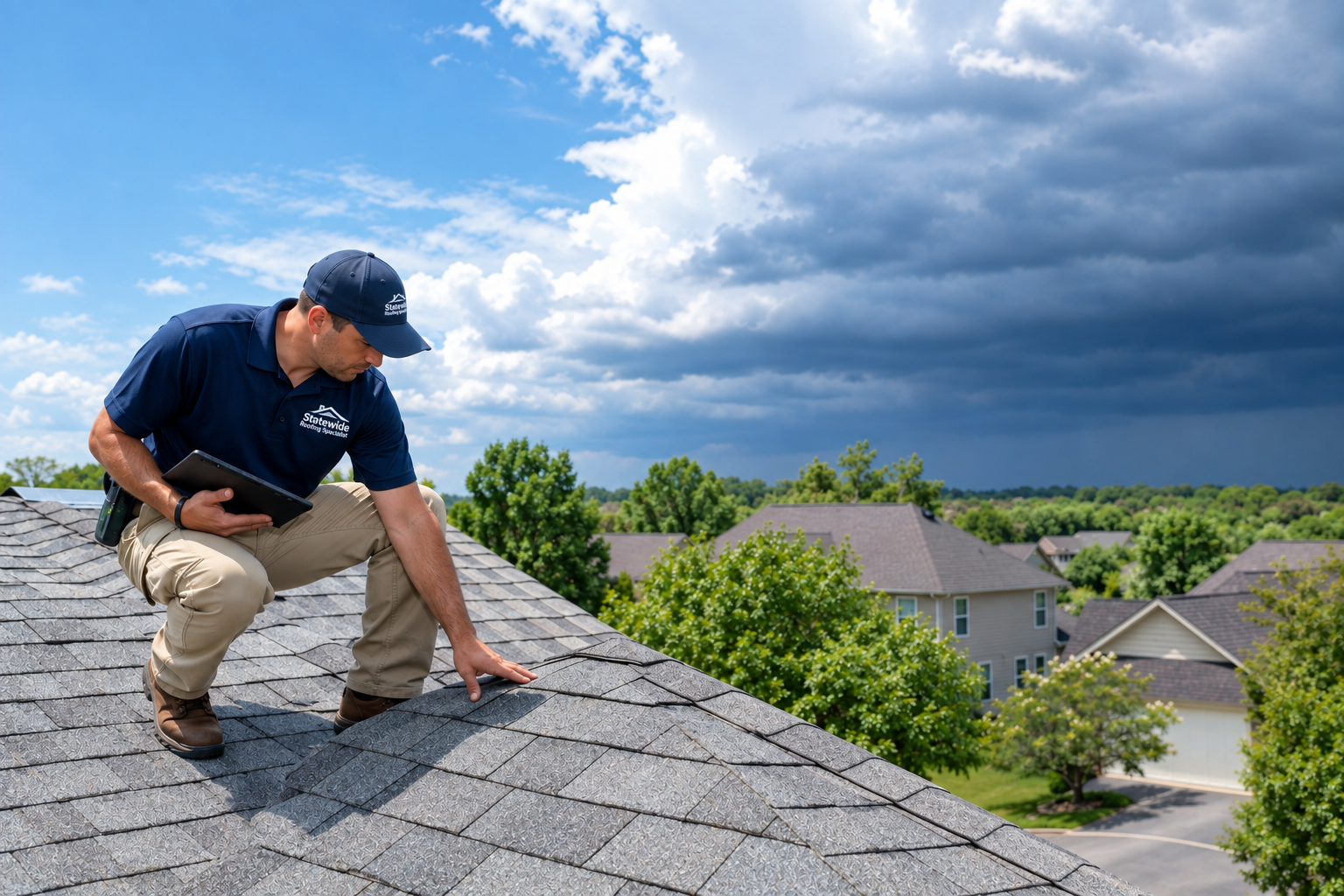
  8. Inspection process: A real inspection covers the entire roof system, not just a glance from the driveway. Drone photography and a thorough, documented inspection add accuracy, especially after storm damage.
  9. Detailed written estimates: A trustworthy estimate lists materials, labor, cleanup, disposal, and a timeline in writing. Avoid any company that only gives you a number over the phone.
  10. Material and workmanship warranties: Material warranties cover product defects, while workmanship warranties cover the quality of the installation itself. Standard workmanship coverage runs 2 to 5 years, while certified contractors can offer up to 25.
  11. Emergency roofing availability: Ask how quickly the company can respond after hours if a leak or storm damage happens outside normal business days.
  12. Previous projects and references: A confident contractor will show you a portfolio of completed work and connect you with references from jobs done in your own area.

    See Our Real Roofing Results

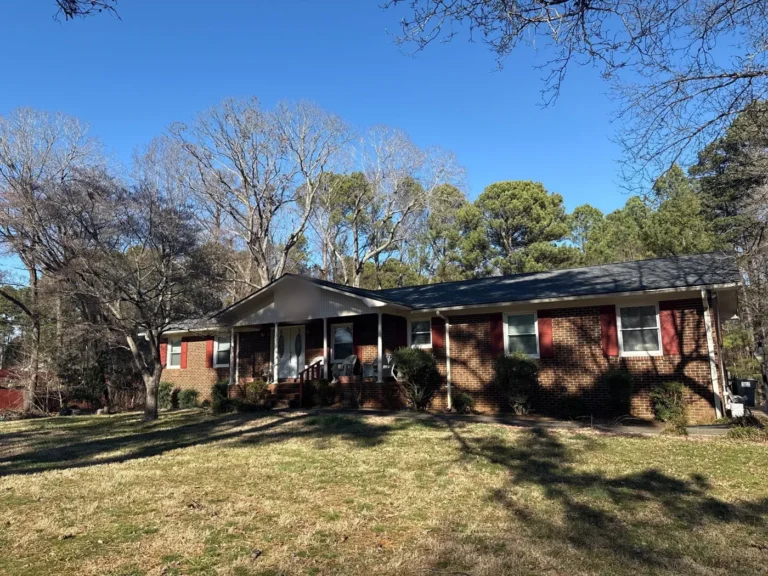
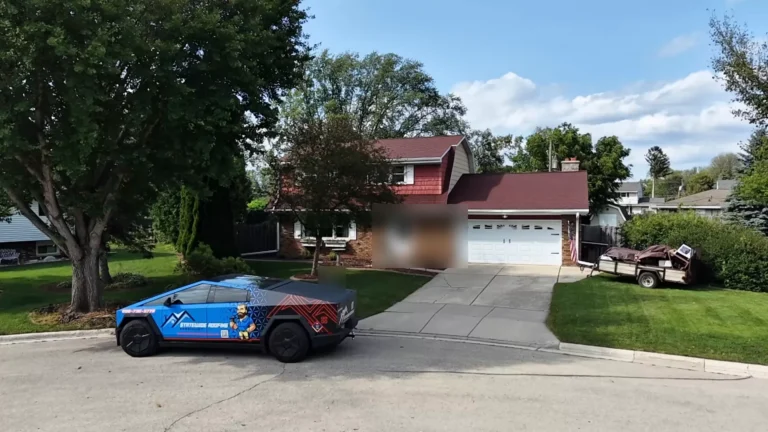
    A contractor’s past work can tell you more than a sales pitch. Explore real before-and-after roofing projects from Statewide Roofing Specialist to see completed work on actual homes and different roof types across our service areas.

    View Our Completed Roofing Projects β†’

  1. Communication and professionalism: Pay attention to how clearly a company explains your options before you’ve even signed anything, and whether they assign one dedicated point of contact.
  2. Pricing and overall value: Compare the full package, including materials, warranty coverage, and included services, rather than choosing the lowest quote. Look for a roofer who provides transparent pricing and clearly explains the estimate before you sign.
  3. Red flags or warning signs. No license number, demands for full payment upfront, sudden appearances right after a storm, pressure to sign the same day, and verbal-only estimates are all reasons to keep looking.

    ⚠️ Watch For This Scam

    North Carolina’s Insurance Commissioner has repeatedly warned homeowners about contractors who go door-to-door right after storms, offering “free inspections” and pressuring homeowners to sign an Assignment of Benefits (AOB) form on the spot. Once signed, your entire insurance payout can go directly to that contractor, even if you later want to walk away. A legitimate, established local contractor is rarely knocking on doors uninvited; they’re too busy with scheduled work.

    Quick Tip

    A “lifetime” warranty almost always covers materials only, not labor. Always ask what the workmanship warranty covers separately and get the answer in writing.

What Questions Should You Ask a Roofing Company in North Carolina Before Hiring Them?

The right questions reveal a lot about how a company operates before you ever sign a contract. Bring this list to every estimate appointment.

  • Is the estimate itemized, including cleanup and disposal costs?
  • Who will be my dedicated point of contact throughout the project?
  • What happens if hidden damage is discovered once work begins?
  • Is a permit required for this project, and will you be the one to pull it?
  • What does the workmanship warranty cover, separate from the material warranty?
  • Can you provide your license number and a current certificate of insurance?

Insurance Claims and Roof Replacement Basics in North Carolina

A good roofing company makes the insurance claim process easier, not more confusing. Be cautious of any company that asks you to sign an assignment of benefits form before they’ve inspected the damage, since this can hand over control of your claim too early.

⚠️ Watch For This Scam

In a 2025 sting operation, North Carolina insurance investigators caught a roofing company employee intentionally damaging a homeowner’s shingles, then falsely filing an insurance claim for wind and hail damage, a scheme that could have cost the insurer $30,000. If a contractor pressures you to file a claim before a real inspection, or a “storm” appears right after their visit, treat it as a red flag and verify independently.

This is exactly why documentation matters before anyone files a claim on your behalf. Legitimate help looks like clear photo or drone evidence of the damage and direct communication with your adjuster. Our storm damage inspections are built around this kind of documentation, using thorough, photo-documented inspection reports.

If you’re planning a full roof replacement, permits are required once a project reaches North Carolina’s licensing threshold, and a licensed contractor should handle that paperwork as part of the job. Most residential roof replacements take between one and three days to complete, depending on the size and complexity of the roof and the weather that week.

Why North Carolina Homeowners Choose Statewide Roofing Specialist

Homeowners can apply the same criteria covered in this guide directly to Statewide Roofing Specialist:

  • Inspection Accuracy: Drone technology lets Statewide document roof conditions in detail before a single ladder goes up, giving homeowners a clearer estimate upfront and insurance adjusters the photo evidence they need to process storm claims faster.
  • Credentials: Statewide Roofing Specialist has served the Piedmont Triad since 2012, is a GAF Master Elite roofing contractor (top 2% of roofing contractors), and is a multiple-time Angi Super Service Award winner.
  • Certifications: The company holds GAF Master Elite status and performs thorough, drone-supported inspections.
  • Warranty coverage: Work is backed by warranty options up to 25 years, depending on the roofing system.
  • Service: Statewide offers 24/7 emergency roof repair and storm damage inspections and documentation for storm-damaged roofs.
  • Coverage: Service spans both residential and commercial roofing across the Piedmont Triad, including Greensboro, High Point, and Winston-Salem.

You can request a free roof inspection or ask about financing options while you compare your own estimates against the checklist above.

Conclusion

Choosing the trustworthy roofing company in North Carolina comes down to a few clear checks: verify the license and insurance, look for real manufacturer certifications, read reviews across multiple platforms, and get a detailed written estimate with a clear warranty before you sign anything. Skipping these steps is how homeowners end up with a roof that fails early or a warranty that no one honors.

Once you’ve compared your options against this checklist, you can request a free roof inspection from Statewide Roofing Specialist and see exactly where your roof stands.

Frequently Asked Questions (FAQs)

Cost depends on roof size, pitch, and material choice. Asphalt shingle replacements are the most affordable option, while metal and tile cost more upfront but last longer and often carry stronger warranties.

Yes, most roof replacements require a permit once the project reaches the state’s licensing threshold. Your roofing contractor should pull this permit for you as part of the job, not leave it to you.

Most residential replacements take one to three days from start to finish. Larger homes, steep pitches, or bad weather can extend the timeline by a day or two.

A material warranty covers defects in the shingles or components. A workmanship warranty covers the quality of the installation itself, so both should be confirmed separately in writing.

Most policies cover sudden storm or hail damage, but many carry a separate wind-and-hail deductible. Check your policy details and document damage thoroughly before filing a claim.

Terry Cribb - Statewide Roofing Specialist

Terry Cribb founded Statewide Roofing Specialist in 2012 and leads a Piedmont Triad team known for honest service, skilled craftsmanship, and a commitment to customer satisfaction.