Sep 22, 2026
7 Common Roof Problems Wisconsin Homeowners Should Address Before Winter

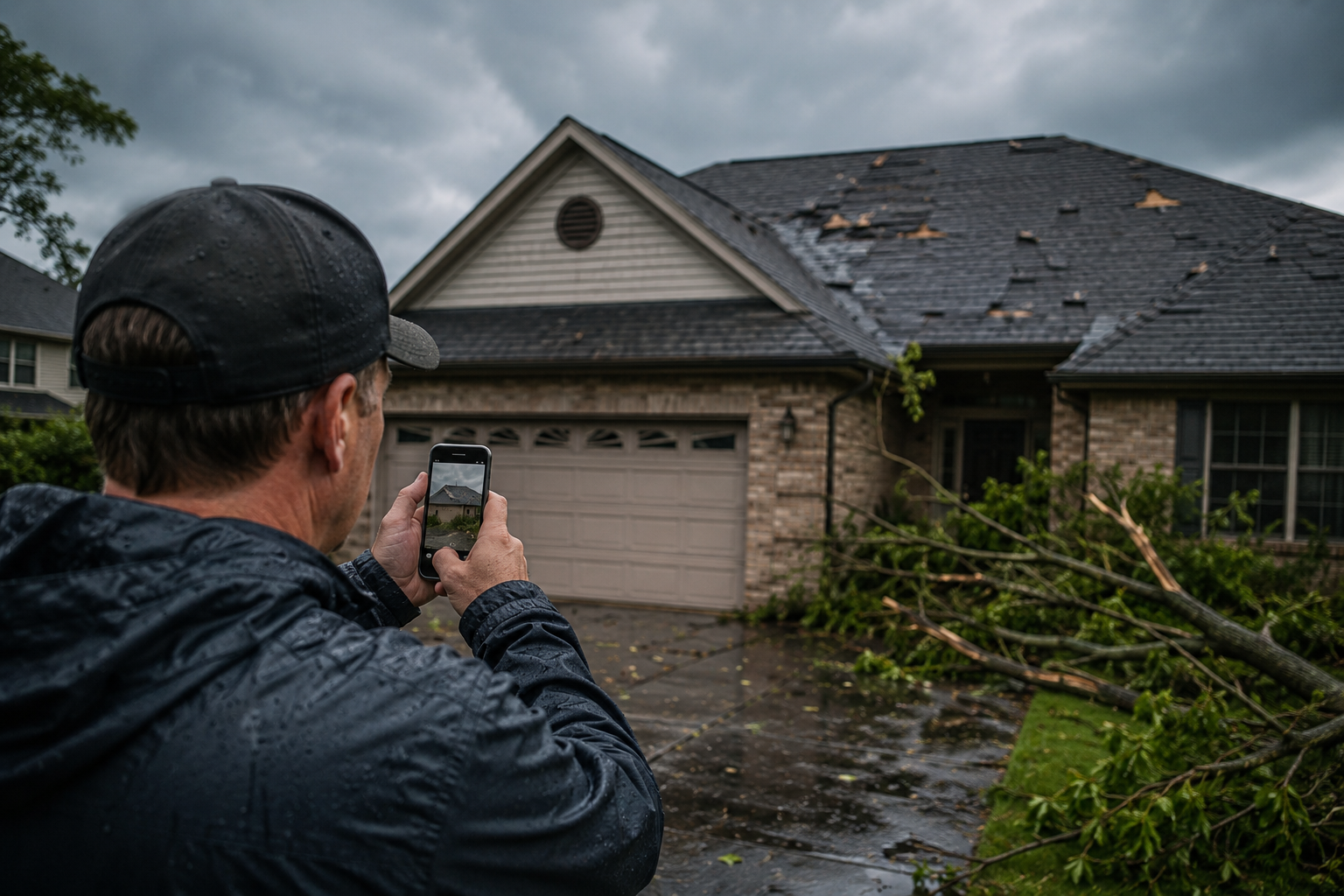


On the night of August 22, 2026, the National Weather Service issued a Severe Thunderstorm Warning for Madison County and Haywood County in North Carolina, with 60 mph wind gusts and quarter-size hail.
Storms like this don’t just knock down trees. They damage roofs in ways you often can’t see from inside your home.
Once the storm passes and the skies clear, the first thing you should do is check your roof. This guide walks you through exactly how to check for roof damage after a thunderstorm, safely, step by step, without climbing a ladder.
Most roof storm damage goes unnoticed for weeks, or even months. By the time water stains appear on your ceiling, the damage underneath is already much worse. A quick post-storm check can save you thousands of dollars in repairs.

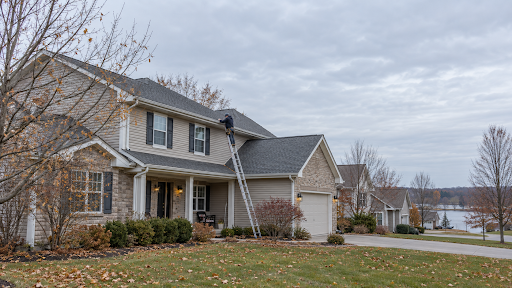
Start at ground level, look for these signs before you ever look up at the roof.

Stand back far enough to see each slope; here is what storm damage looks like from the ground.
Use your phone camera zoom or binoculars; a zoomed photo shows damage the naked eye misses.

This is where early storm damage hides; check each of these carefully.
Gutters
Soffit and Fascia
Run your hand along the inside of your gutter. If it comes away covered in dark sandy granules, your shingle surface is breaking down and needs professional attention.

Hail damage rarely looks dramatic; here is exactly what to look for.
Quarter-size hail, about 1 inch in diameter, is enough to bruise shingles and strip granules. That is exactly what the National Weather Service recorded in western North Carolina on August 22, 2026.

Wind damage can be obvious or completely hidden; check for both.
Obvious Signs
Less Obvious Signs
60-mph wind gusts, like those in the August 2026 NC storm, are strong enough to break adhesive seals, even when shingles still look intact. The damage underneath may already be done.

Water moves fast once it finds an entry point; check these interior areas right after the storm.
Focus on areas around your chimney, bathroom vents, and skylights; these are the most common leak entry points.

Good documentation protects your entire insurance claim; do this before calling anyone.
Most insurance policies require prompt reporting of damage. Waiting even a few weeks can give your insurer grounds to reduce or deny your claim. Document first, then call.

A ground-level check catches what is obvious; a professional inspection catches what will cost you later.
Want to see what storm-damaged roofs look like after a full professional restoration? View our before-and-after roofing projects to see real results from NC homeowners.
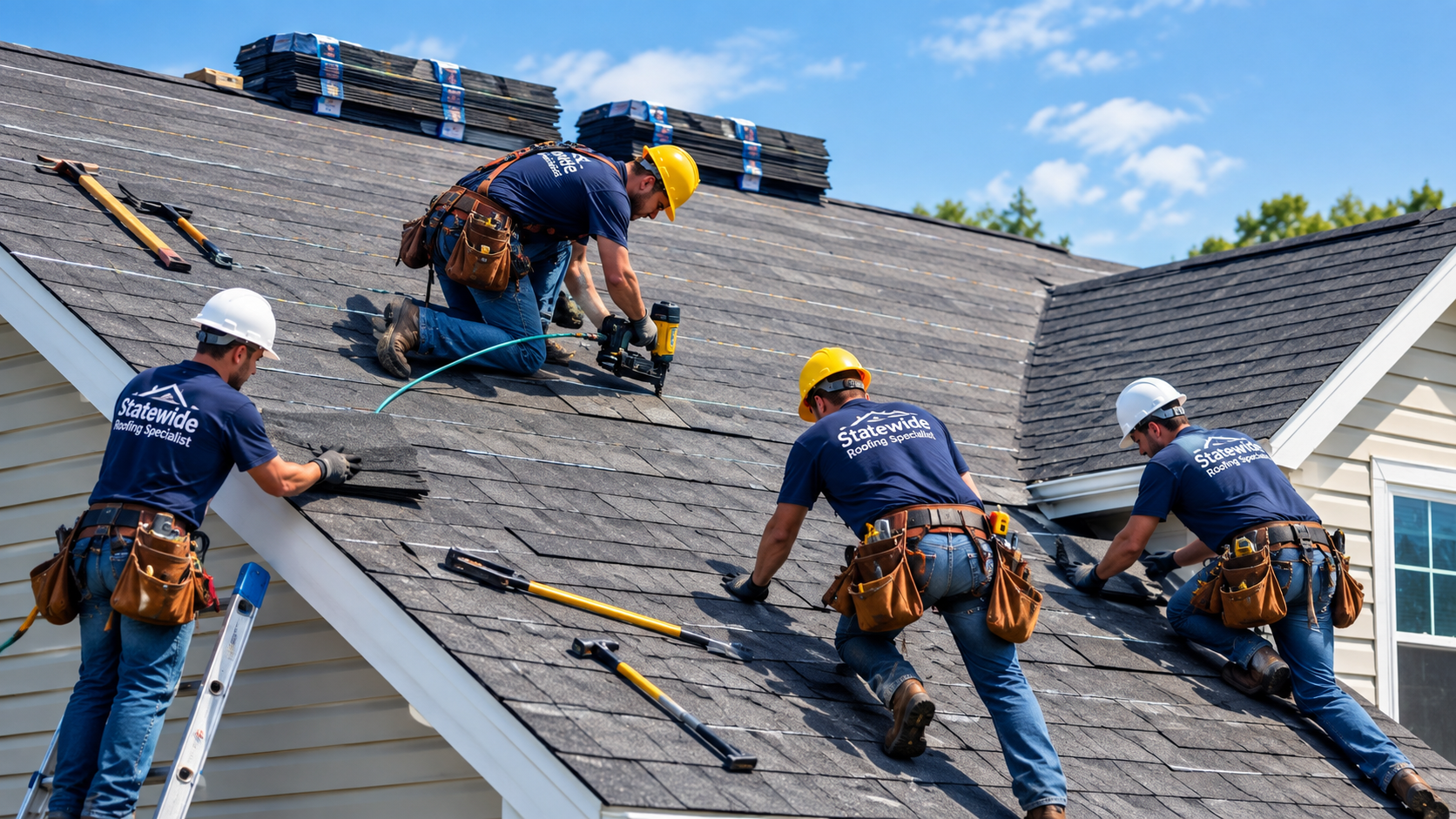
After major storms, out-of-town contractors move fast through neighborhoods. Always choose someone local, licensed, and insured. Statewide Roofing Specialist has served NC, SC, and TN since 2012.
You now know exactly where to look and what to look for after a severe thunderstorm. A quick check today prevents a costly failure months from now. If anything looks concerning, call Statewide Roofing Specialist for a free inspection.
Call: 336-480-1824
Serving Greensboro, Winston-Salem, High Point, and all of NC, SC, and TN.
Yes. Thunderstorms bring two direct threats: hail that bruises and strips shingles, and high winds that break seals and tear shingles off completely, often without any visible signs from the ground.
Check as soon as it is safe to go outside. Waiting even a few days allows water to enter through small openings, which can significantly weaken your insurance claim.
Look for missing or curled shingles, dark patches, granule buildup in gutters, damaged flashing around chimneys, and water stains or damp spots appearing inside your home or attic.
Hail damage appears as circular dark dents on shingles, like bruises on an apple, along with shiny patches where the granule layer has been knocked off the surface.
Wind damage shows as missing shingles, lifted or curled edges, and displaced ridge cap shingles. Less obvious signs include exposed underlayment and flashing pulled away from chimneys or vents.
Yes. Hail can bruise the shingle mat beneath the surface without visibly cracking it. The shingle looks intact from the ground but has already lost its waterproofing ability underneath.
Yes. Lifted seals, stripped granules, and micro-cracks in flashing allow water to slowly work in. You may not see a ceiling leak for weeks, but the damage is already spreading.
Document everything with timestamped photos first. Then contact your insurance company promptly, avoid authorizing permanent repairs before the adjuster inspects, and call a local licensed roofer immediately.
Yes, always. A professional inspection finds bruised shingles, failed seals, and hidden damage a ground-level check misses. Statewide Roofing Specialist offers a free inspection; call 336-480-1824 today.