Oct 13, 2026
Green Bay Hail Damage Roof Replacement: GAF Timberline HDZ in Barkwood

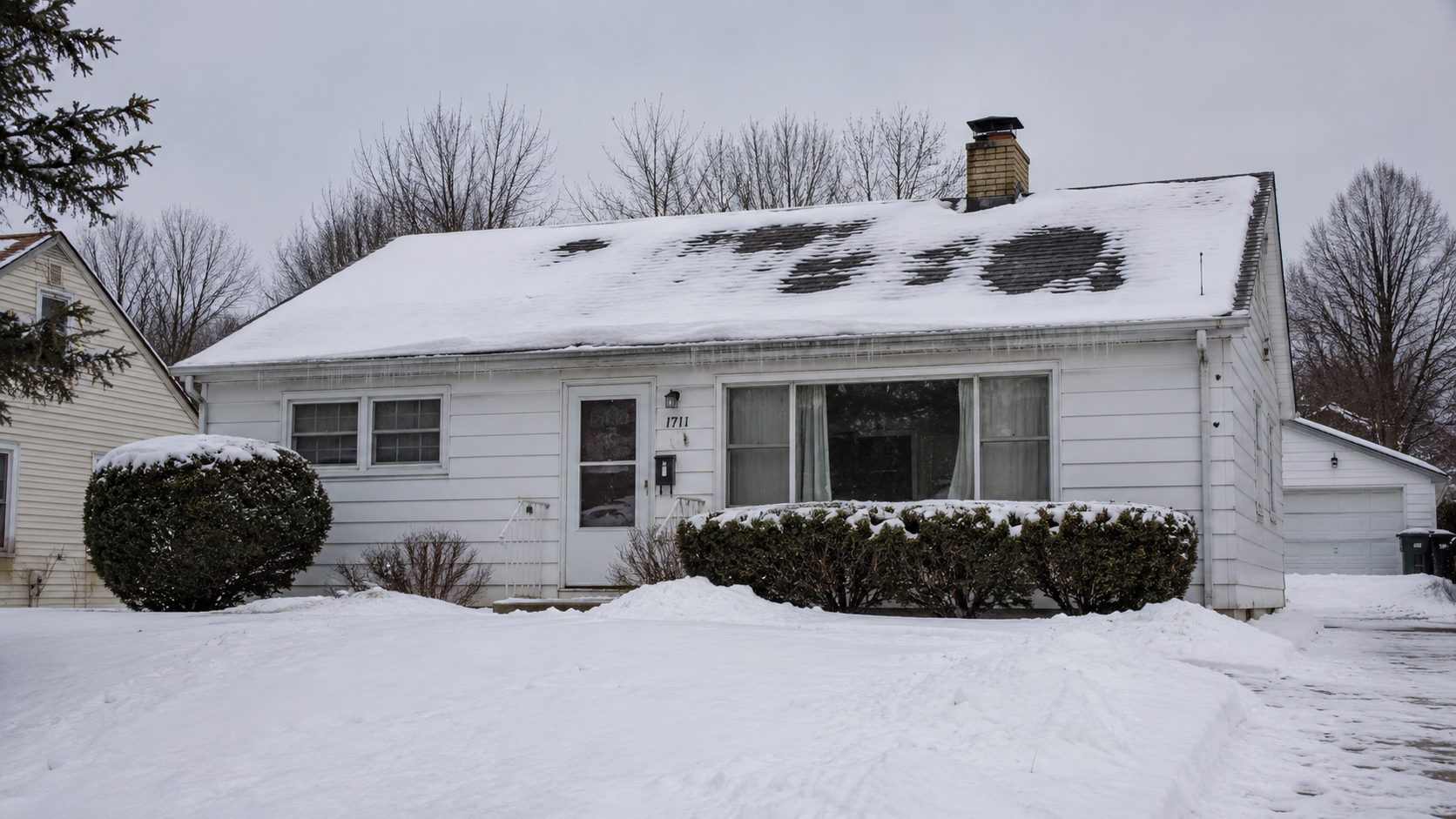


Most roofs in Appleton, WI, last 15–50 years, depending on the roofing material, installation quality, maintenance, and exposure to snow, ice, and freeze-thaw cycles.
So, how much longer can your roof handle another Appleton winter? Heavy snowfall, freezing temperatures, ice dams, and spring storms can put significant stress on roofing materials and shorten their service life.
Knowing your roof’s material, age, and condition can help you plan ahead instead of dealing with an unexpected leak or costly replacement. This guide covers the lifespan of major roofing materials in Appleton, the factors that can shorten a roof’s lifespan, warning signs to watch for, and when it makes more sense to repair or replace your roof.
Most roofs in Appleton last about 15–50 years, depending on the roofing material, installation quality, maintenance, and exposure to Wisconsin’s snow, ice, and freeze-thaw cycles. Asphalt shingles generally have the shortest lifespan, while metal and slate can last significantly longer.
Roofing material plays a major role in how long your roof lasts in Appleton. Here’s what to expect from the most common options.
| Roofing Material | Typical Lifespan | Performance in Appleton |
| Asphalt Shingles (3-tab) | 15–20 years | Vulnerable to freeze-thaw damage; shorter end of range common |
| Architectural Shingles | 25–30+ years | Better durability; handles winter conditions well |
| Metal Roofing | 40–70 years | Excellent, sheds snow easily, resists ice dams |
| Cedar Shake | 20–40 years | Requires proper underlayment; moisture management is critical |
| Slate | 75–100+ years | Outstanding longevity; high upfront cost |
The most widely used roofing material in Appleton. They’re affordable and easy to replace, but the freeze-thaw cycle accelerates granule loss and cracking.
A significant upgrade from 3-tab, architectural shingles are thicker, heavier, and engineered to resist wind uplift, a major advantage in Appleton’s storm season.
Metal is one of the best-performing roofing materials for Wisconsin homeowners. It sheds snow naturally, doesn’t absorb moisture, and handles freeze-thaw cycles better than any shingle product.
Cedar performs well in cold climates but requires more attention in Appleton’s wet conditions. Without proper roof underlayment and ventilation, moisture can cause premature rot and splitting.
Slate is the longest-lasting roofing material available, and it handles cold climates exceptionally well. The main consideration in Appleton is ensuring your roof structure can support its significant weight.
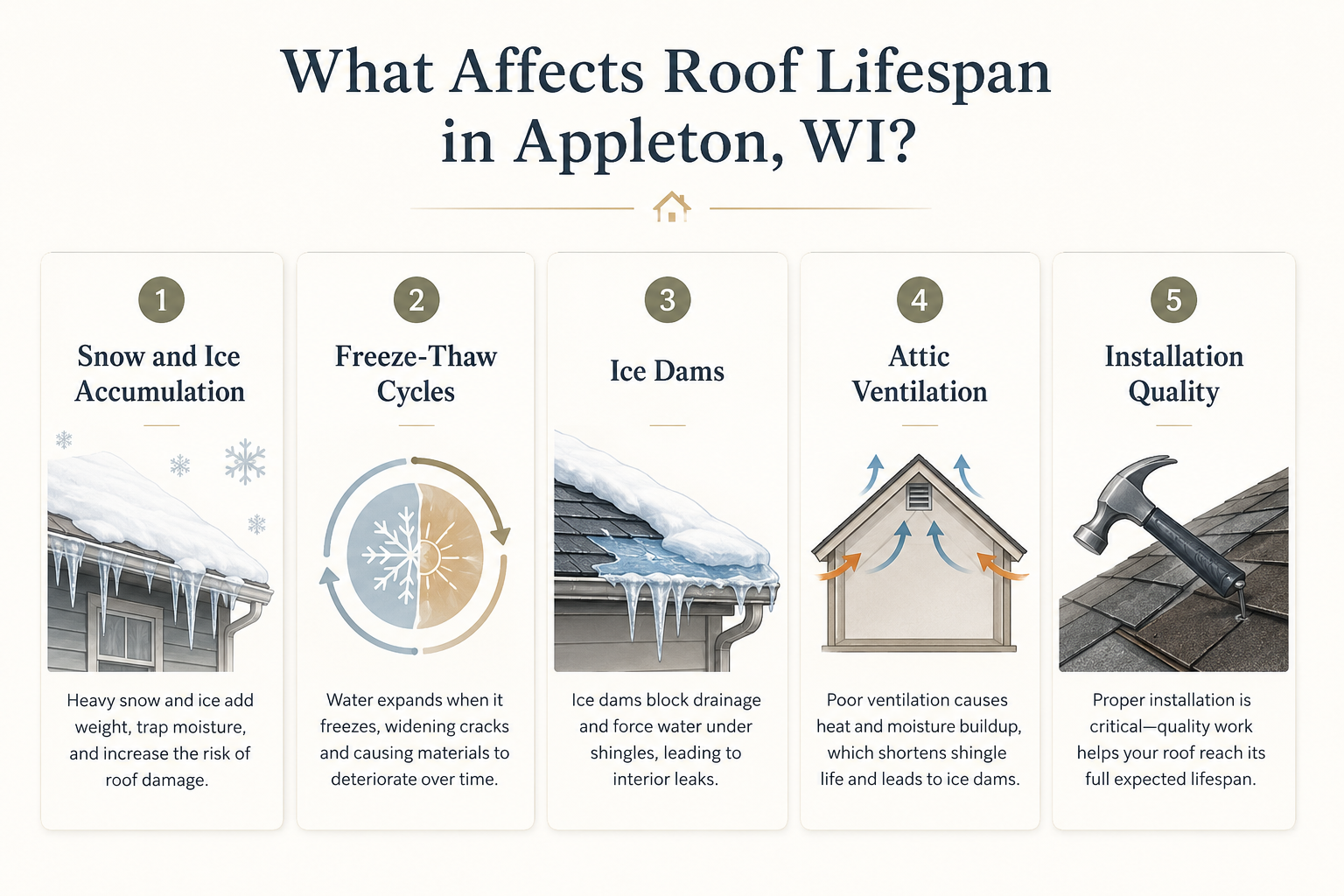
Even the best roofing material won’t last its full lifespan if these factors aren’t addressed. In Appleton specifically, these are the conditions that wear roofs down fastest.
Heavy snow loads stress the roof deck, rafters, and fasteners. A single major snowfall in Wisconsin can add 10–20 lbs per square foot of load to your roof structure.
Every time water freezes, it expands by approximately 9%. In roofing, this means that water penetrating small cracks or gaps widens them with every freeze, gradually undermining the roof’s integrity.
Ice dams form when warm air from a poorly ventilated attic melts snow on the upper roof. That water runs down and refreezes at the cold eaves, creating a barrier that forces moisture back under shingles.
Poor attic ventilation is one of the most overlooked factors in premature roof aging. It causes heat buildup in summer (which bakes shingles from underneath) and ice dam formation in winter.
A roof is only as good as its installation. Improper nailing patterns, skipped underlayment, or poorly sealed flashing are common causes of early failure, especially under the stress Appleton winters create.
The National Roofing Contractors Association (NRCA) estimates that up to 40% of roofing failures are related to poor installation rather than material defects.
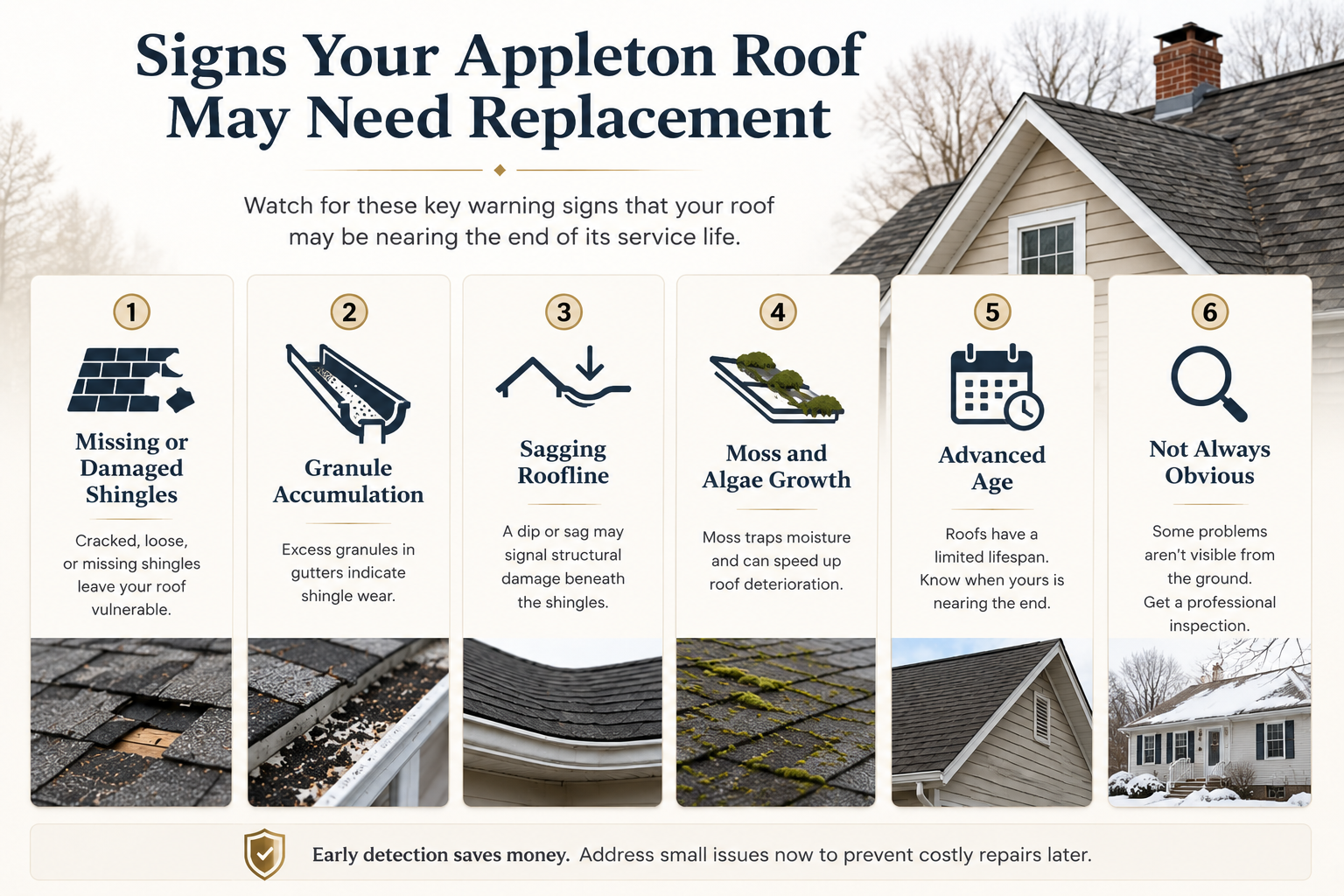
Your Appleton roof may need replacement when you see widespread shingle damage, persistent granule loss, structural sagging, or signs that the roofing system is nearing the end of its service life.
Your roof won’t always give obvious warning signs, especially from the ground. Knowing what to look for helps you act before a manageable problem becomes a costly one and determine when emergency roof repair may be necessary.
This is one of the most common questions Appleton homeowners face, and the answer depends on a few clear factors.
| Situation | Recommended Action |
| Damage is isolated, roof is relatively young | Roof repair is likely sufficient |
| Multiple problem areas, roof is aging | Roof replacement is more cost-effective long-term |
| Repair cost exceeds 30–50% of replacement cost | Replacement is the smarter investment |
| Storm damage with insurance involvement | Get a professional inspection before any decision |
If storm damage is involved, a roof insurance claim may cover part or all of the cost, and if cost is still a concern, flexible roof financing options are available so you’re not forced to delay a necessary repair.
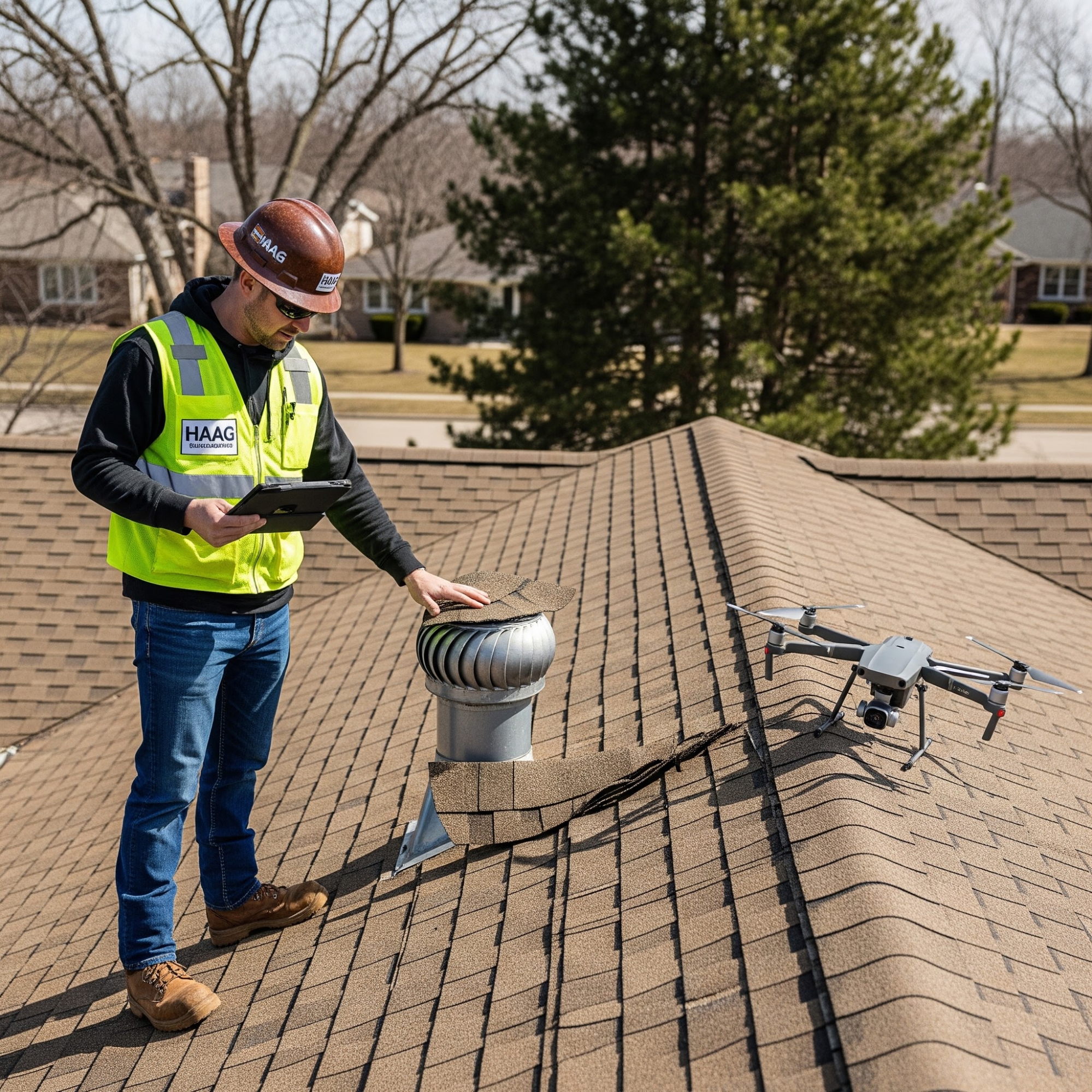
A professional roof inspection is the most reliable way to know exactly what condition your roof is in, and what it needs. In Appleton, there are specific times when an inspection is especially important.
A thorough inspection goes well beyond a visual scan from the driveway. Our professional roof inspection in Appleton, WI, uses drone technology to access every part of the roof safely and accurately, capturing detailed imagery that a ground-level or ladder inspection simply can’t match.
For storm damage assessments, our Thorough, documented roof inspection process is recognized by insurance adjusters and provides the documentation needed to support a claim, so you’re not navigating that process alone.
Most roofing problems are found in three areas: around flashing (chimneys, skylights, vents), along the eaves where ice dams form, and at roof penetrations. A quality inspection checks all of these in detail, not just the shingles.
If your roof is getting older, showing warning signs, or you’re unsure how much life it has left, now is the time to find out. A professional inspection can identify existing problems, help you plan for future repairs or replacement, and prevent small issues from becoming more expensive.
Concerned about your roof’s remaining lifespan? Call (608) 736-9779 or contact us for a FREE roof inspection. Statewide Roofing Specialist serves Appleton and surrounding communities with professional roof inspections, repairs, and replacements. Our team can assess your roof’s condition and help you understand the next steps for your home.
Slate lasts the longest, up to 75–100+ years, but it’s also the most expensive and requires a roof structure strong enough to support its weight. For most Appleton homeowners, metal roofing is the most practical, long-lasting option, with a 40–70-year lifespan, excellent snow-shedding performance, and far lower maintenance demands than shingles or cedar.
In Appleton, a professional roof inspection is recommended twice a year, once in spring after winter has done its damage, and once in fall before temperatures drop. Additionally, always schedule an inspection after any major storm, when visible damage appears, or as your roof approaches the end of its expected lifespan. Skipping regular inspections is one of the most common reasons roofs fail earlier than they should.
Yes, significantly. Snow shortens roof life in two ways. First, heavy accumulation adds physical load stress to the deck and fasteners. Second, the freeze-thaw cycle drives water into small cracks and gaps, which expand with every freeze, progressively weakening shingles, flashing, and sealants. In Appleton, where freeze-thaw cycles repeat dozens of times each winter, this cumulative effect is one of the biggest reasons roofs here age faster than in warmer climates.
For Wisconsin’s climate specifically, metal roofing and architectural shingles are the two strongest choices for most homeowners. Metal handles everything Appleton throws at it, snow loads, ice dams, freeze-thaw cycles, and high winds, and lasts 40–70 years with minimal upkeep. Architectural shingles offer strong performance at a lower upfront cost, with a 25–30+ year lifespan. The right choice depends on your budget, your home’s structure, and how long you plan to stay, a free roof inspection can help you make the right call for your specific situation.