Oct 13, 2026
Green Bay Hail Damage Roof Replacement: GAF Timberline HDZ in Barkwood



KEY TAKEAWAYS
|
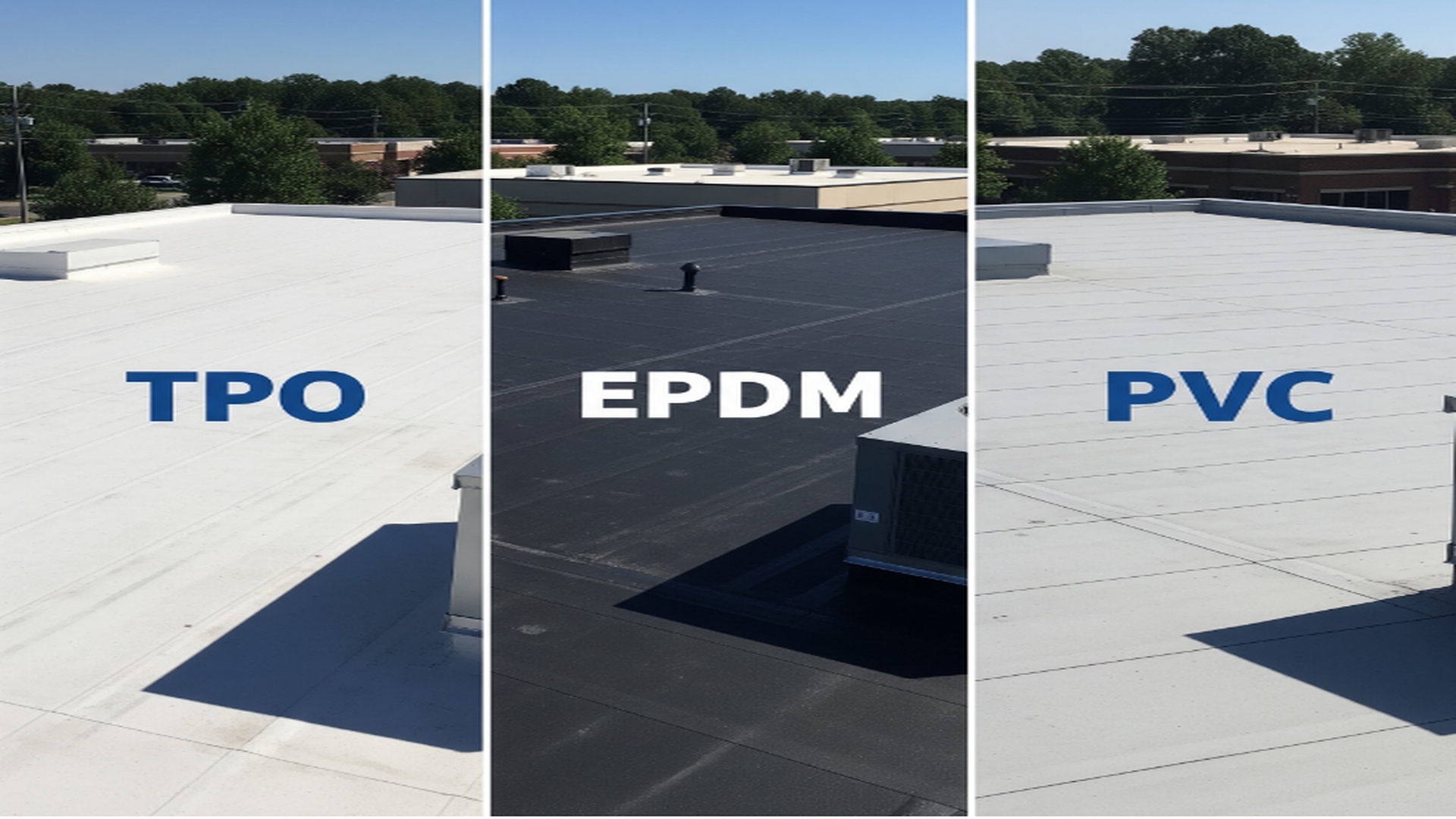
Trying to choose between TPO, EPDM, and PVC for your roof? You’re probably looking at the differences in price, lifespan, and performance and wondering which option is actually worth your money. The answer isn’t always straightforward.
A membrane that works well for one North Carolina property may be a poor fit for another. Your building type, roof conditions, local weather, and budget all play a role. Rather than choosing based on price or popularity, it helps to understand where each membrane performs well. Below, we compare TPO, EPDM, and PVC to help you find the right option for your property.
In North Carolina, the right membrane depends on how your building is used, where it’s located, and what your roof needs to withstand. Here’s how TPO, EPDM, and PVC compare.
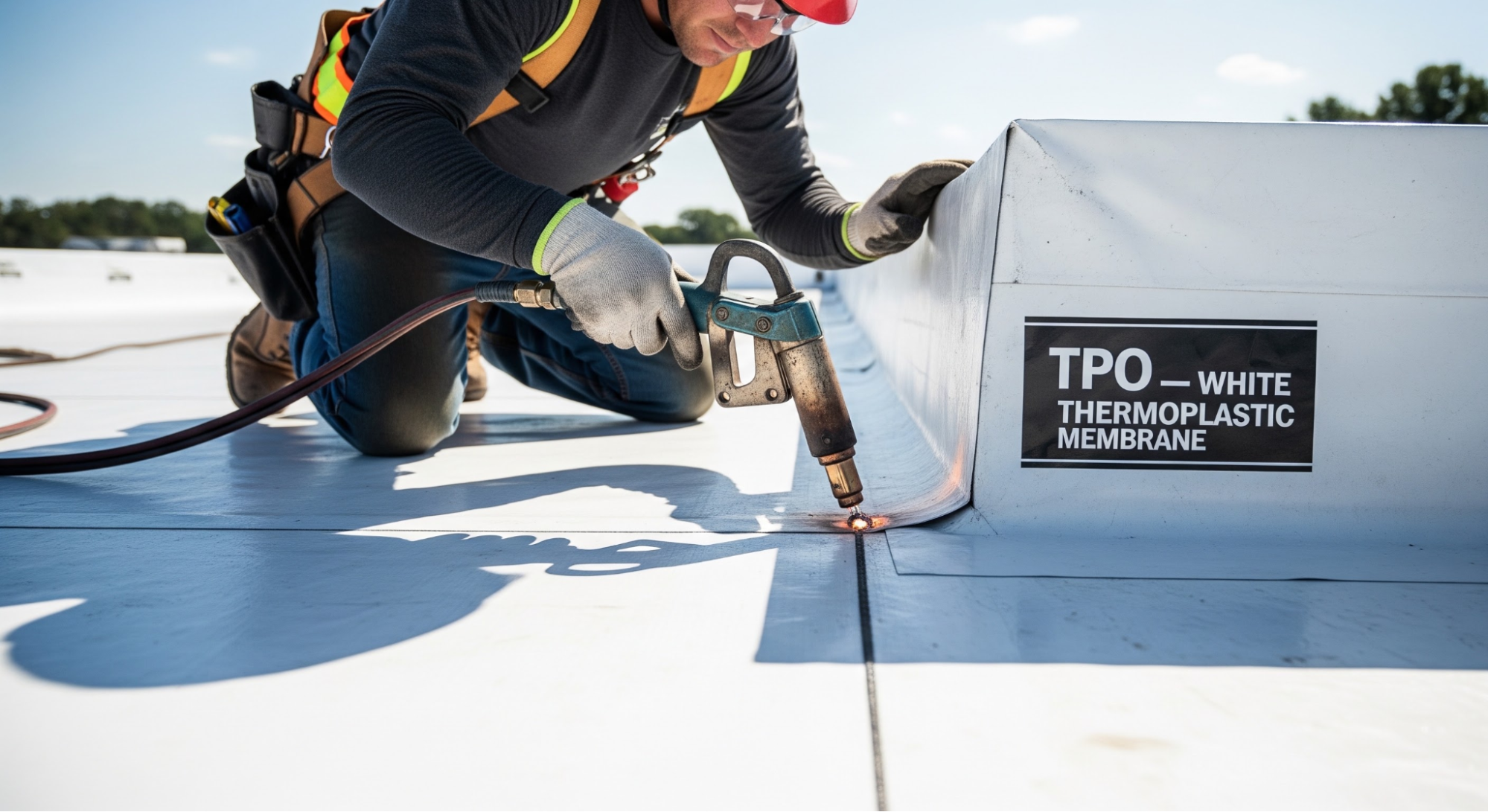
TPO (Thermoplastic Polyolefin) is a white, heat-welded single-ply membrane and the fastest-growing commercial roofing system in North America. It’s used on commercial buildings and flat-roof residential properties across NC.
The global TPO roofing market was valued at $2.1 billion in 2025 and is projected to reach $3.5 billion by 2034, growing at a 6.1% CAGR.
That growth isn’t accidental. TPO has become the go-to membrane for property owners who want strong performance without paying PVC prices.
Want to know whether TPO is the right choice for your property? Explore our complete guide to TPO roofing in North Carolina, including costs, benefits, lifespan, and maintenance requirements.
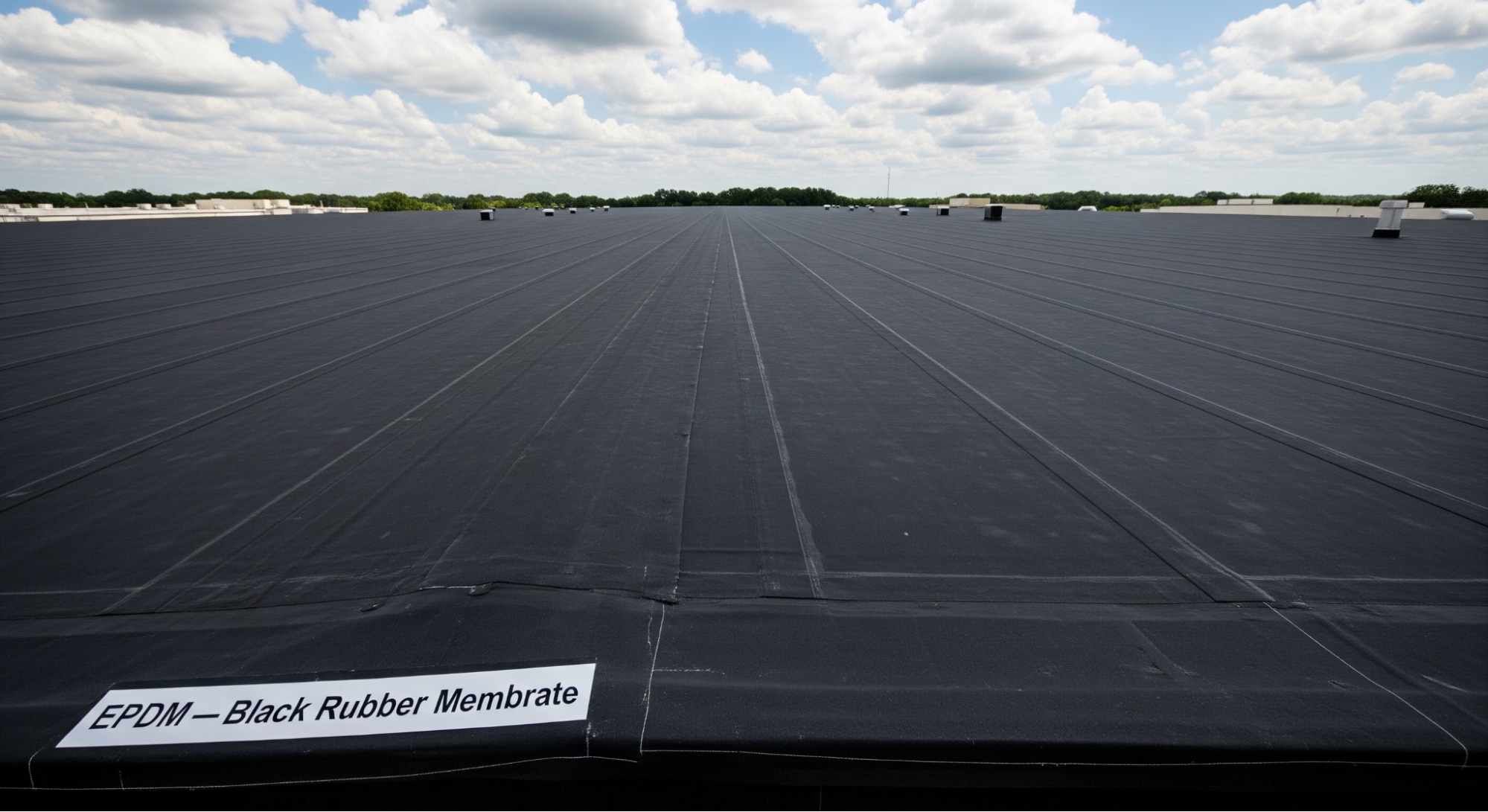
EPDM (Ethylene Propylene Diene Monomer) is a synthetic rubber membrane that has been in commercial use since the 1960s. It’s one of the most widely installed flat roofing systems in the world, and for good reason.
The global EPDM roofing market was valued at $2.3 billion in 2025, making it the largest single-ply segment by current market size.
Six decades of real-world performance don’t lie. EPDM remains a top choice for large commercial roofs where budget and longevity matter most.
Considering EPDM for a large or low-slope roof? Explore our complete guide to EPDM roofing in North Carolina, including its costs, lifespan, maintenance needs, and long-term benefits.
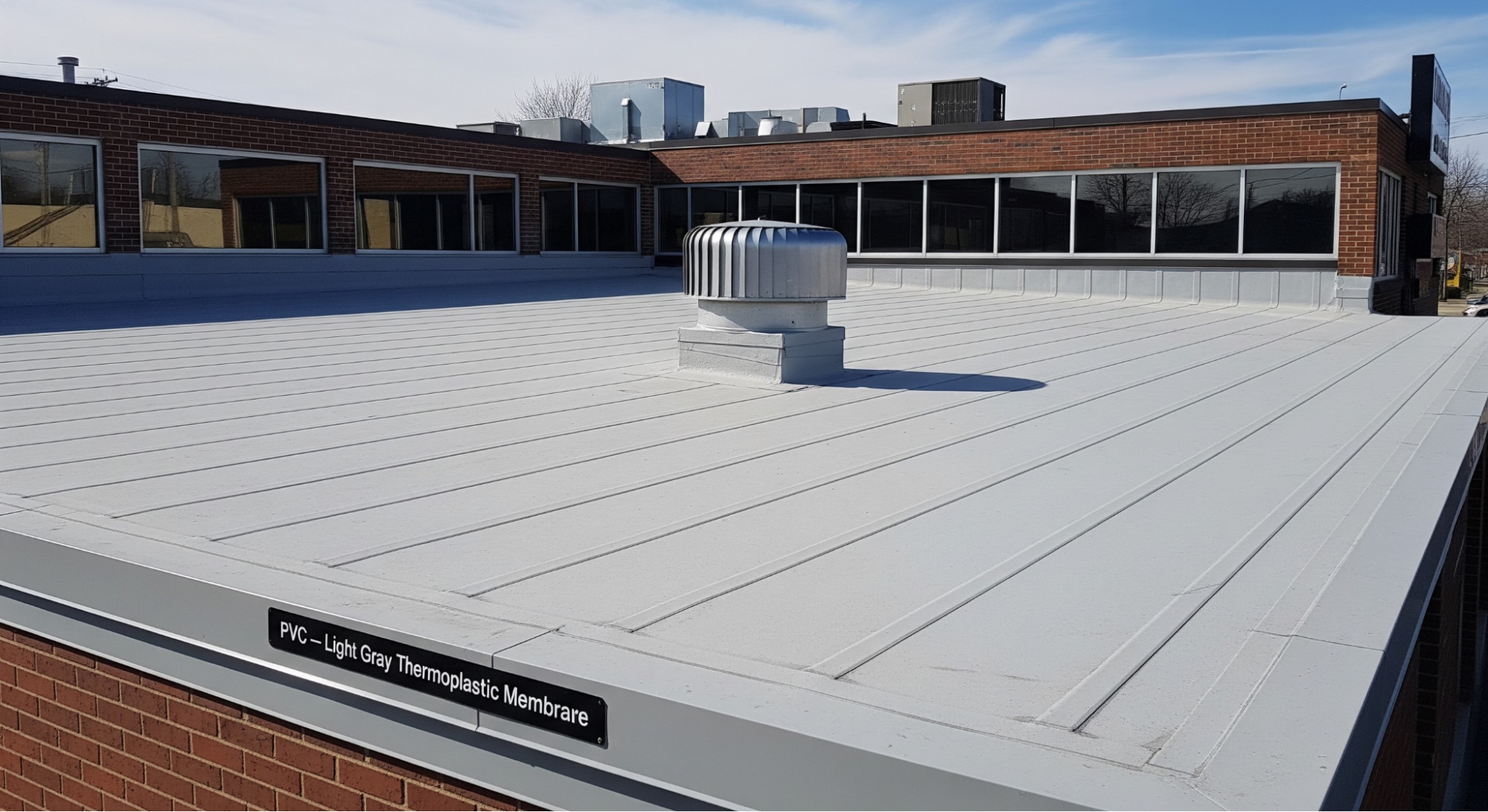
PVC (Polyvinyl Chloride) is a thermoplastic membrane with heat-welded seams and built-in chemical and grease resistance. It’s the only single-ply membrane that holds up to rooftop kitchen exhaust, making it the default choice for restaurants and food-service buildings.
The global PVC roofing market is projected to reach $7.8 billion by 2034, growing at a 5.6% CAGR, the largest projected market size of the three membranes.
Despite its higher price point, the market continues to grow. For buildings where chemical resistance is non-negotiable, PVC consistently delivers the lowest total cost of ownership over time.
Here’s how all three stack up directly.
| Factor | TPO | EPDM | PVC |
| Installation Cost | $3.50–$7.50/sq ft | Lowest of the three | Highest of the three |
| Lifespan | 20–30 years | 30–50 years | 25–35+ years |
| Seam Method | Heat-welded | Adhesive or tape | Heat-welded |
| Energy Efficiency | High — reflective white surface | Lower — black absorbs heat | High — reflective |
| Chemical Resistance | Moderate | Good | Excellent |
| Best NC Building Type | Offices, retail, flat-roof homes | Large warehouses, industrial | Restaurants, food facilities |
| Maintenance Demand | Low, welded seams rarely fail | Moderate, seams need regular checks | Low, welded seams hold well |
| Best Long-Term Value For | Energy-conscious properties | Large roofs on tight budgets | Chemical-exposure buildings |
If you’re comparing membranes on price alone, you’re missing the bigger picture. A cheaper membrane on the wrong building can cost far more in energy bills, repairs, and early replacement than paying a little more upfront for the right fit.
Choosing the right membrane comes down to three things: NC’s climate, your building type, and your long-term budget. Get all three right, and you won’t need to think about your roof again for decades.
North Carolina’s climate is more demanding than most people realize, and it varies significantly depending on where your property is.
Your building type matters as much as your location. Here’s the honest match:
You don’t have to figure this out alone. Statewide Roofing Specialist installs TPO, EPDM and PVC across NC, and our team will tell you exactly which membrane best fits your building, budget, and location.
📞 Call 336-936-5245 or schedule your free inspection online
TPO and PVC are thermoplastic membranes with heat-welded seams. EPDM is a rubber membrane sealed with adhesive. Each differs in cost, climate performance, chemical resistance, and ideal building application.
TPO is the best fit for most NC commercial properties due to its reflective surface, heat-welded seams, and strong performance in NC’s hot, humid climate. PVC suits chemical-exposure buildings and mountain properties.
TPO lasts 20–30 years, PVC lasts 25–35 years, and EPDM lasts 25–30 years. Lifespan depends on installation quality, maintenance frequency, and local climate conditions.
Installed costs range from 4.50–8.00 per sq ft for EPDM, 5.50–8.50 for TPO, and 7.00–12.00 for PVC. Final cost depends on roof size, complexity, tear-off, and NC location.
TPO is better for most NC commercial buildings — lower cost, strong energy performance, and excellent fit for NC’s climate. PVC is better when chemical resistance or cold-weather flexibility is the priority.
Not for most buildings. PVC outperforms TPO only where chemical or grease resistance is needed. For general commercial use, TPO delivers comparable durability at a significantly lower installed cost.
Four factors determine the right choice: your NC location and climate zone, your building’s use, your roof size, and your budget. Chemical exposure and cold-weather performance are the two biggest differentiators.
Start with your building type: restaurants need PVC, large warehouses fit EPDM, and most other commercial buildings in NC perform best with TPO. Then factor in your NC region and budget to confirm.