Oct 13, 2026
Green Bay Hail Damage Roof Replacement: GAF Timberline HDZ in Barkwood



Key Takeaways
|
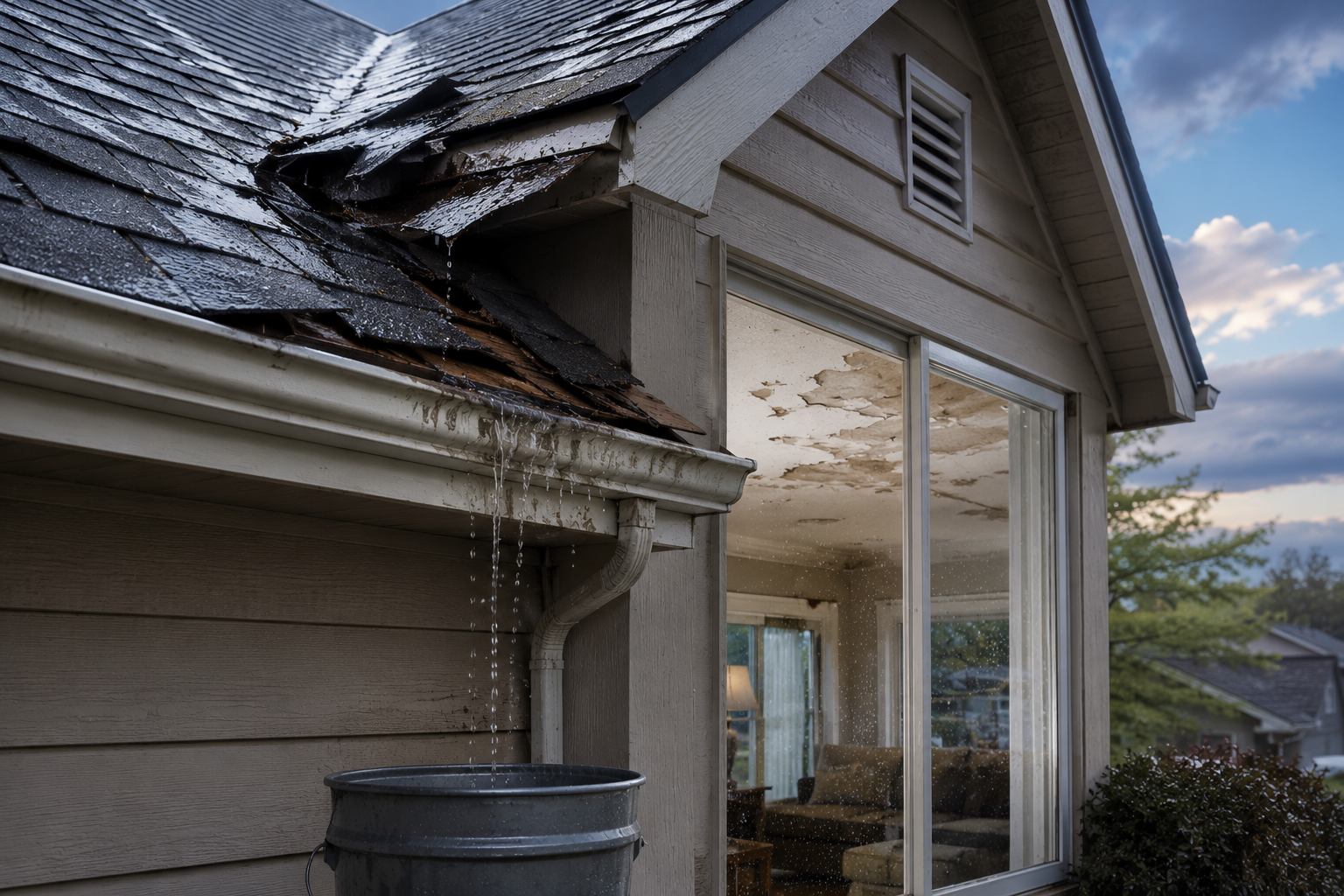
You can spot a roof leak by looking for water stains, dripping water, mold growth, musty odors, or damaged shingles. To stop further damage, move valuables, place a bucket under active leaks, and cover the affected roof area with a waterproof tarp. Repairing the leak requires identifying the source, such as damaged shingles, flashing, or pipe boots, and fixing or replacing the failed roofing material.
According to the U.S. EPA, mold can begin growing in a water-damaged home within 24 to 48 hours if a roof leak goes unaddressed.
The challenge is that many homeowners don’t discover a roof leak until water has already soaked insulation, damaged the roof deck, and spread behind walls or ceilings. By the time a ceiling stain appears, hidden damage may already be extensive.
This guide explains how to identify the warning signs of a roof leak, stop water damage immediately, find the source of the leak, and determine when you can repair it yourself or when it’s time to call a professional.
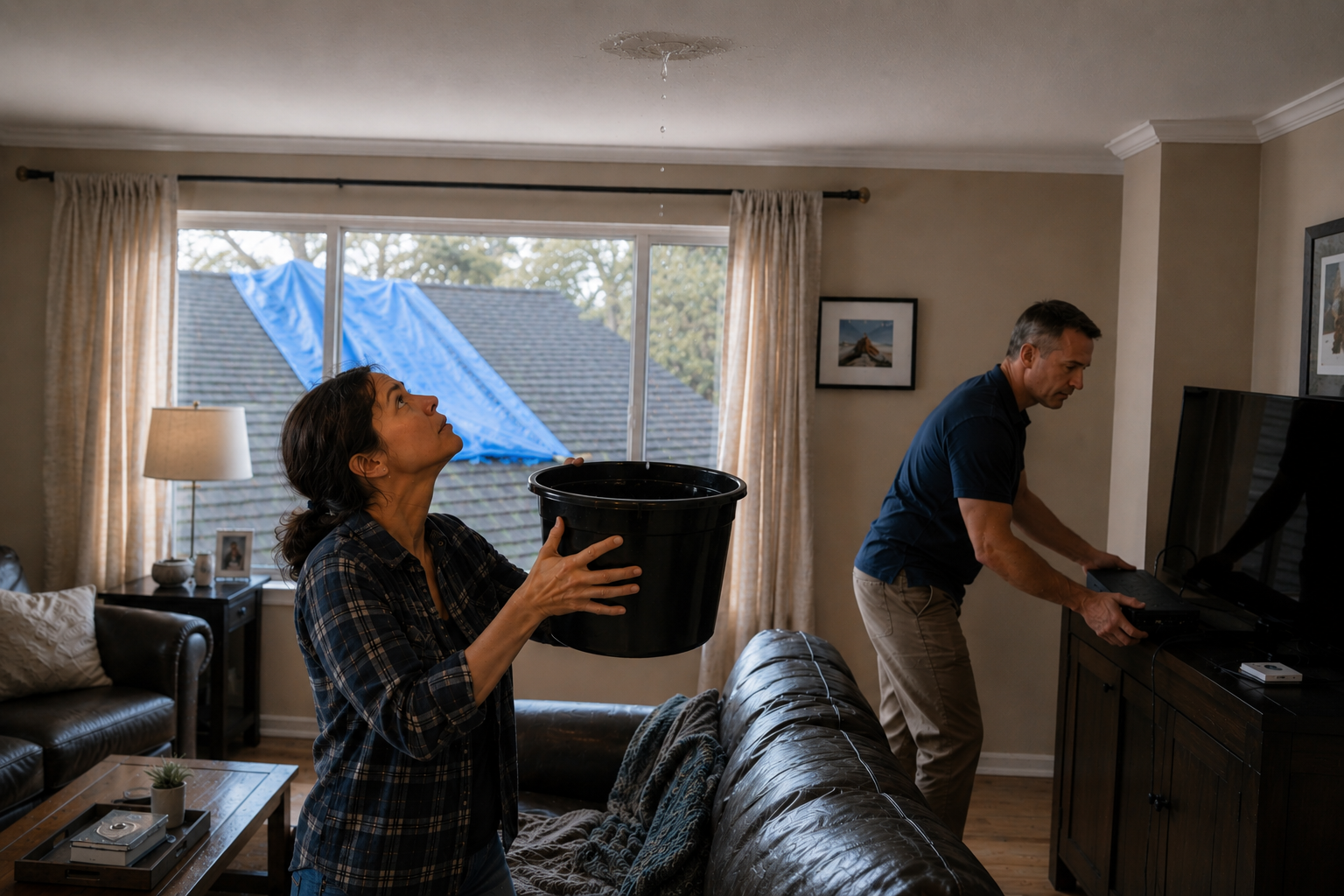
The moment you spot a roof leak, your first priority is to protect your home and belongings, not to find the source. Every minute counts because water spreads fast and causes compounding damage to drywall, insulation, flooring, and personal property.
Here’s what to do right away:
Acting within the first hour can be the difference between a simple repair and a costly structural restoration.
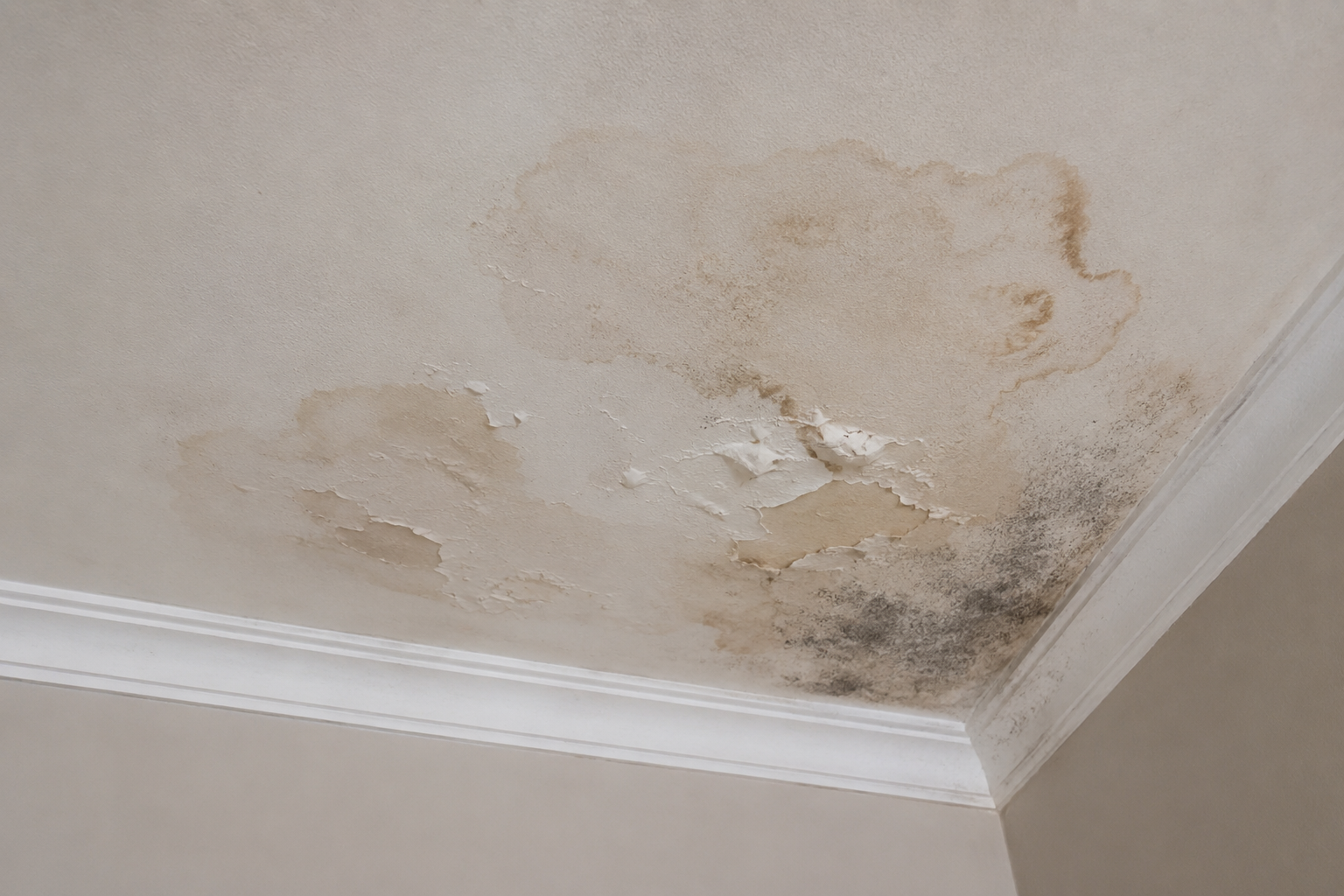
Roof leaks don’t always announce themselves with a visible drip. Many homeowners discover water damage long after the leak has already done significant harm. Knowing what to look for inside your home is the key to catching it early.
Watch for these interior warning signs:
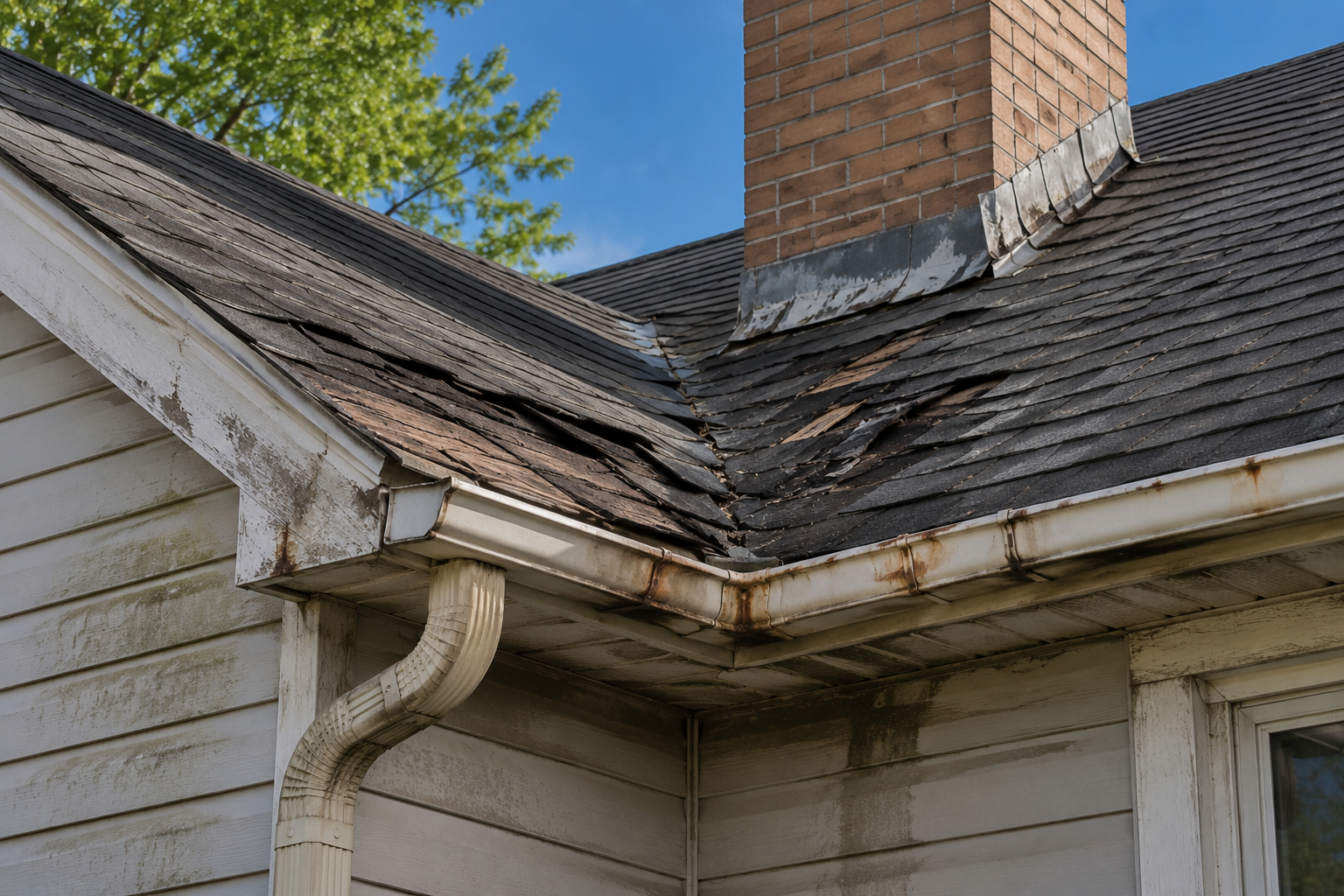
A careful exterior inspection can help you spot a roof leak before it causes serious interior damage. You can safely inspect your roof from the ground using binoculars and look for these warning signs:
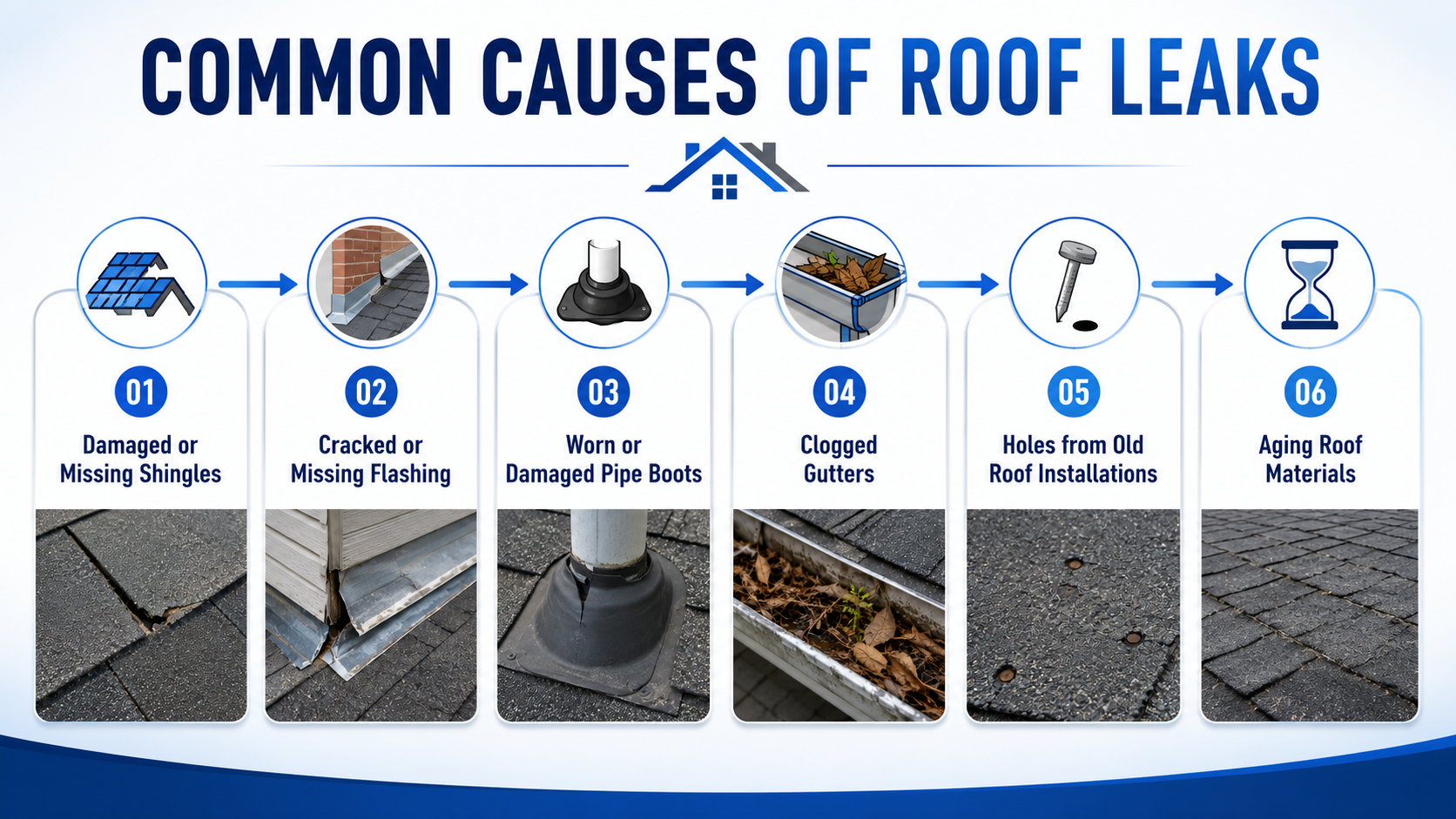
Roof leaks usually happen because one or more roofing components fail over time. Identifying the exact cause helps you fix the source of the leak instead of only repairing the visible water damage.
Here are the most common causes of roof leaks:
Cracked, curled, loose, or missing shingles expose the roof underlayment to rain. Once the protective shingle layer is compromised, water can easily penetrate the roof system.
Flashing seals vulnerable areas around chimneys, skylights, vents, and roof valleys. Over time, temperature changes can cause the metal to crack, separate, or loosen, allowing water to seep underneath.
The rubber boot around plumbing vent pipes naturally deteriorates with age and UV exposure. Cracks in the seal create a direct path for water to enter your attic and ceilings.
Leaves, twigs, and debris prevent gutters from draining properly. Standing water backs up under the roof edge and can seep beneath shingles, eventually causing leaks and water damage.
Old satellite dishes, antennas, solar mounts, or improperly sealed nail holes often leave small roof penetrations. Even tiny openings can allow rainwater to enter over time.
Most asphalt shingle roofs last about 20–25 years. As the roof ages, shingles become brittle, lose protective granules, and develop cracks, making leaks much more likely.
Finding the exact source of a roof leak is often harder than it looks because water travels. The drip in your living room ceiling may originate from a penetration several feet away, following the path of least resistance along the rafters or through the insulation before it drips down.
Follow this process to locate it:
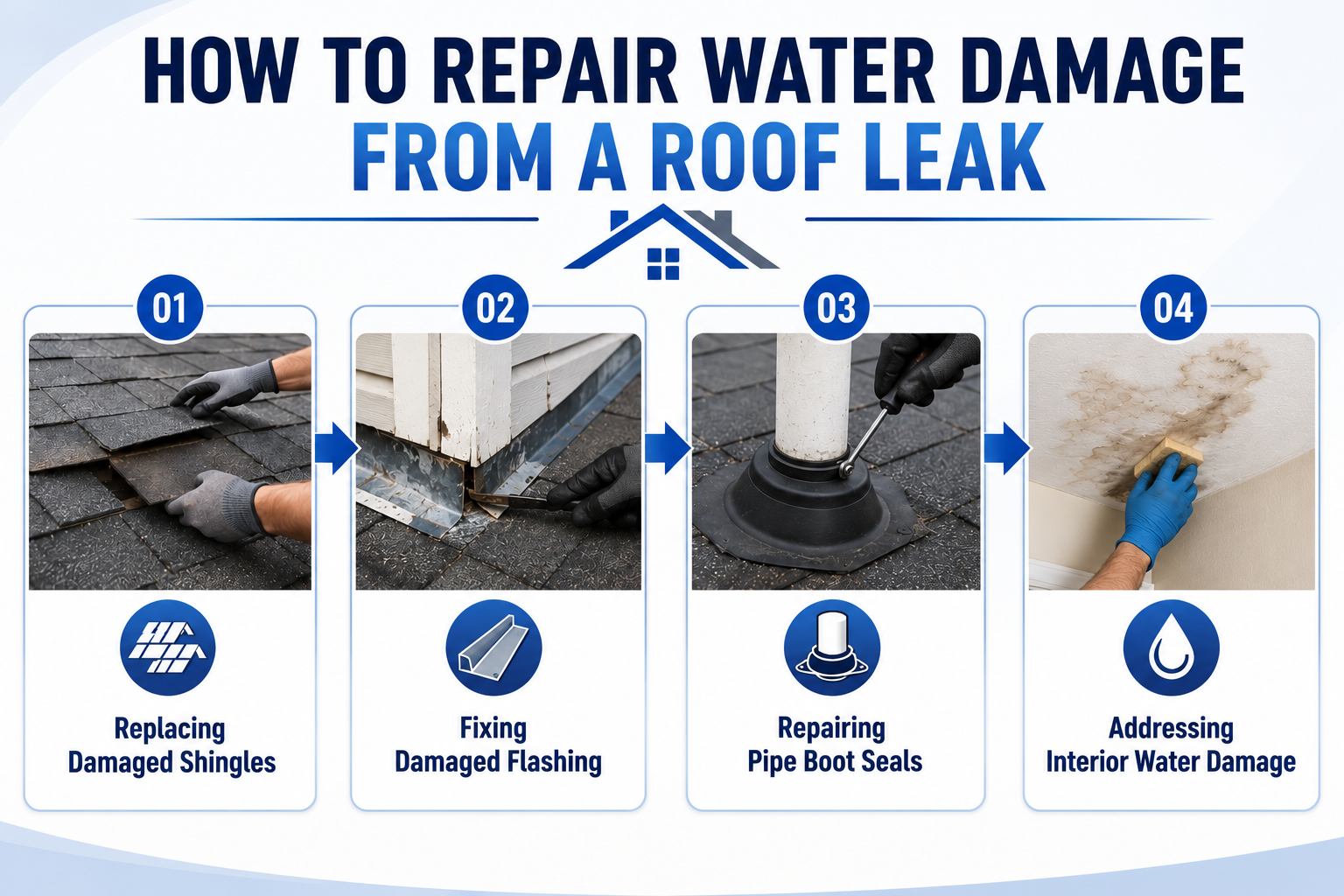
Once the source is confirmed, repairs should be made promptly. Both the roof itself and any interior damage need to be addressed; ignoring either one leads to recurring problems.
To replace a damaged shingle, carefully lift the edges of surrounding shingles and remove the nails securing the damaged one. Slide the new shingle into position, align it with the surrounding row, and secure it with four roofing nails just below the adhesive strip. Press the overlapping shingles back down to seal.
For small cracks in flashing, apply a generous bead of roofing sealant and smooth it flat with a putty knife. For larger sections that have lifted, separated, or corroded, the entire flashing piece must be removed and replaced. Reusing compromised flashing over a sealant patch is a temporary fix that will fail again.
Pipe boots are easy to overlook but are a surprisingly common source of leaks. If the rubber collar around a vent pipe has cracked or shrunk away from the pipe, the entire boot should be replaced, not just patched. Replacement boots are inexpensive and slide over the pipe before being secured under the surrounding shingles.
Interior repairs require more than just drying the surface. Damp drywall and insulation must be fully dried within 24–48 hours to prevent mold growth. Use fans, dehumidifiers, and open windows to accelerate drying. Any insulation that has become saturated should be removed and replaced, as it will not recover its thermal performance once wet. If mold is already present, it must be treated and the affected material removed before walls or ceilings are closed back up.
A repair is the right call when the damage is localized, and the rest of the roof is in good condition. Consider a full replacement if you’re dealing with leaks in multiple areas, if your roof is 20–25 years old, or if a contractor identifies widespread shingle deterioration. Continuously patching an aging roof is often more expensive in the long run than replacing it outright.
The most effective roof leak repair is the one you never have to make. Consistent preventive maintenance dramatically extends your roof’s lifespan and keeps small vulnerabilities from becoming major water damage events.
DIY roof repairs are appropriate for minor, accessible, and clearly identified problems — like replacing a single shingle on a low-slope roof. But there are situations where professional help isn’t optional; it’s necessary.
Call a licensed contractor when:
With GAF Master Elite Certification (top 2% nationwide), 10,000+ projects since 2012, workmanship warranties up to 25 years, documented drone inspections, three Angie’s List Super Service Awards, and 24/7 emergency response across 60+ cities in NC, SC, and TN, Statewide Roofing Specialist is the Piedmont Triad’s most trusted choice for homeowners who demand lasting protection and real accountability.
Call us today. Don’t wait for a small leak to become a major restoration project; stay ahead of the damage.
A roof leak is more than a nuisance; it can compromise your home’s structure, indoor air quality, and long-term value if left unresolved. Knowing how to recognize early warning signs, respond quickly, and address the underlying cause helps minimize repair costs and prevent further damage.
Whether you need a simple repair or a complete roof replacement, having an experienced roofing professional assess the problem ensures a lasting solution.
If you’ve noticed signs of a roof leak or water damage, contact Statewide Roofing Specialist today for a professional inspection and reliable repairs before the problem becomes more expensive.
Yes. Even a minor leak can allow moisture to spread into insulation, framing, and drywall over time, leading to structural deterioration, mold growth, and significantly higher repair costs if ignored.
Coverage depends on the cause. Insurance typically covers sudden, accidental damage from storms or fallen trees but usually excludes leaks resulting from age, neglect, or lack of maintenance.
Most minor roof leak repairs can be completed within a few hours. More extensive damage involving structural repairs, interior restoration, or roof replacement may require several days.
Small leaks may not require you to leave your home, but you should avoid affected areas, especially near electrical fixtures or sagging ceilings, until the damage has been professionally inspected.
A professional roof inspection is recommended at least once a year and after severe storms to identify hidden damage early and prevent costly leaks before they worsen.