Oct 13, 2026
Green Bay Hail Damage Roof Replacement: GAF Timberline HDZ in Barkwood



Keytakeway
|
Do you know the secret to avoiding a $16,000 roof replacement?
The secret isn’t just about the quality of the shingles or how thick your insulation is. While those factors matter, there’s one measurement that dictates everything from fast drainage to fighting off structural decay: the angle of your roof.
This angle, technically called the Roof Pitch, is integral to defining a building’s overall architecture.
More importantly, it is responsible for your roof’s two most critical jobs: draining water and ensuring its long-term survival.
In this guide, you’ll learn the rise-over-run formula, discover how pitch prevents costly ice dams, and see why the slope is a big factor in your roof’s lifespan.
By the end, you’ll know the ideal roof pitch for your home’s climate and materials, giving you the knowledge you need to protect your investment for decades.
Roof pitch is the steepness or slope of the roof. It doesn’t just make the building look good; the pitch is essential because it impacts everything from drainage and durability to energy use.
Builders quantify the pitch using a simple ratio, such as 6:12, which is verbally expressed as “six in twelve.”
The first number is the rise—how many inches the roof goes up. The second number is the run—the horizontal distance the roof covers, which is always 12 inches (one foot). For example, a 4:12 pitch means the roof rises 4 inches for every 12 inches it runs across.
This simple ratio allows builders and homeowners to accurately discuss the slope, whether it’s a high pitch (a steep slope) or a low pitch (a shallow slope).

When it comes to drainage, the rule is simple: the steeper the pitch, the better the drainage.
A steeper roof pitch (higher ratio, like 8:12) uses gravity to its full advantage, allowing rain and melting snow to slide off quickly and efficiently, directly into the rain gutters, which are a critical part of the drainage system.
Whereas a low-slope roof (a lower ratio, like 2:12) has slower runoff. This can cause “ponding” or “pooling,“ where water sits on the roof surface for too long.
Because this water stays put, it gets more time to seep through the shingles, find weak spots, and cause leaks.
Faster drainage (steeper pitch), on the other hand, minimizes the time water has to find those weak spots.
NOTE: Debris & organic growth on the roof can also impact the drainage.
Steeper pitches are better at shedding debris like leaves and pine needles. On flatter roofs, this debris can build up, hold moisture, and encourage the growth of moss, algae, or mould, which further deteriorates the roofing material.
In addition to providing quicker drainage, the steepness of the roof can also determine roofing material and how often you’ll need to maintain it.
Simply put, a roof with a steeper pitch leads to a longer lifespan for your materials (shingles, tiles, etc.).
Why? Because the rapid drainage we discussed means the materials stay dry more often. This reduces the constant wear and tear caused by three main causes:

In the places that get a lot of snow and ice, the choice of the right pitch is also essential for safety and the structural health of the roof.
This is where a steeper pitch (think 6:12 or more) really shines. It uses gravity as a tool. Snow simply can’t get a grip and slides off before it has a chance to accumulate. That lack of buildup prevents dangerous stress on the roof’s frame and helps you dodge two massive issues:
The only real downside is that, in a hurricane, that big angled roof can act like a sail and catch the wind, so it needs to be framed extra tough.
The benefits of choosing the right pitch extend far beyond just drainage and durability. The slope of your roof also plays a major role in your home’s appearance, energy use, and even available space.
A steeper roof pitch means a larger, more usable attic area. This increased vertical height is ideal for:
Yet, a steep slope does not lend itself to outdoor use, whereas the more level surface of a low-pitched roof makes it ideal for amenities such as rooftop decks, gardens, or solar panel installations.
That big attic space from a steep roof is also great for your home’s energy use. It allows for more insulation and, crucially, better airflow (ventilation). This helps your home year-round:
A well-ventilated attic is simply a more efficient, healthier space.
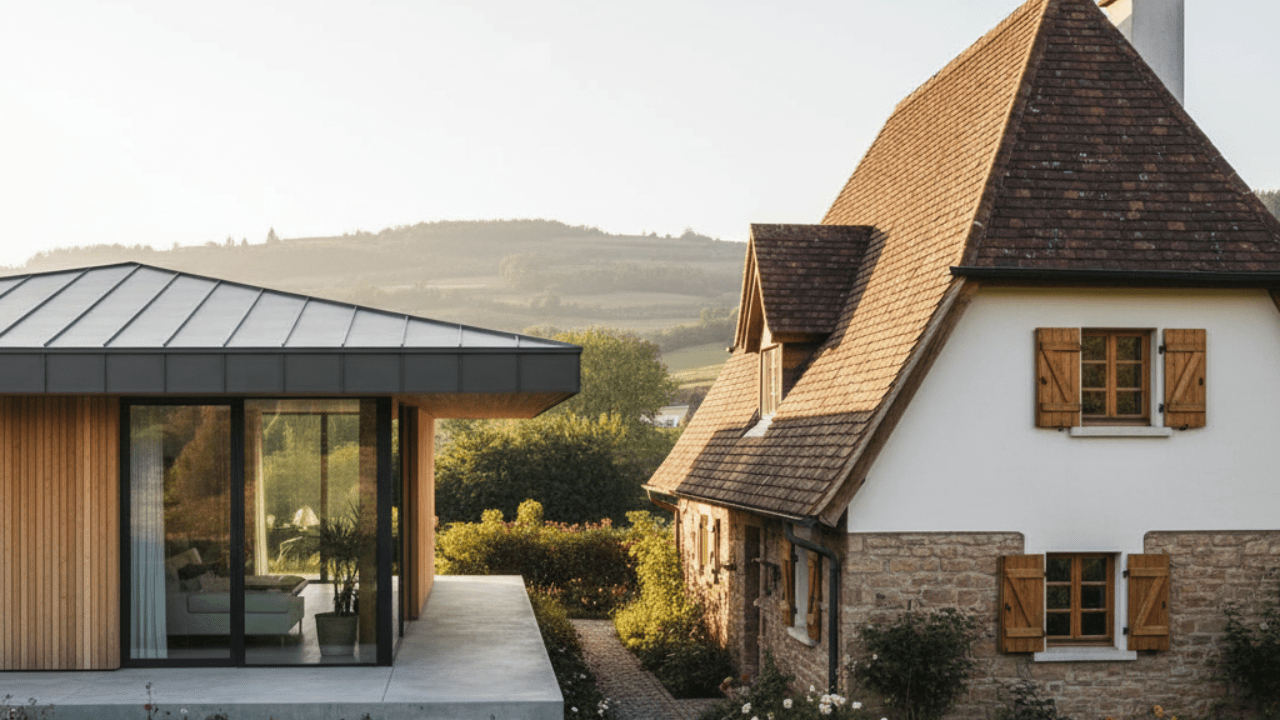
Finally, roof pitch—along with your roof’s color—is a main feature that dictates the look and character of your home.
There’s no such thing as one ‘best’ pitch. It’s easy to think steep pitches are always superior because they drain so well, but that’s not true. Low-pitch roofs aren’t ‘worse.’ They’re just built for different jobs and different types of weather.
So, choosing the right pitch for your home will require balancing several critical factors—climate, material choice, and aesthetic appeal.
Local weather conditions are the biggest influence on your ideal roof pitch:
You can’t just put any material on any roof. Every shingle, tile, and panel has a minimum slope it’s rated for.
Using the wrong material on a roof that’s too flat is just asking for a leak and will definitely void your roofing warranty.
Always check your local building codes, as they may specify a minimum pitch for certain materials or mandate pitch ranges based on historical preservation in certain neighbourhoods.
| Pitch Type | Range | Key Considerations |
| Low-Slope | 1/4:12 to 3:12 | Requires special waterproof membranes (not shingles); common in commercial and modern residential. |
| Conventional | 4:12 to 9:12 | Most common residential range; excellent balance of drainage and cost; supports asphalt shingles. |
| Steep-Slope | 10:12 and up | Optimal for heavy snow/rain; creates max attic space; highest construction cost. |
The “secret” to a roof that lasts isn’t really a secret. It’s just about using the right design for the job. Your roof’s pitch is what controls how it handles water, how long it lasts, and how your house looks.
There’s no one-size-fits-all pitch. A steep roof is a champ in the snow and gives you an attic; a low-pitch roof is great for a modern house in a dry climate. The best choice is always a mix of your weather, your materials, and your personal style.
Don’t wait for pooling water, ice dams, or leaks to become a $16,000 problem. The experts at Statewide Roofing Specialist can assess your roof’s condition and pitch to ensure your home is protected.
Get a free, no-obligation quote today. Call us at 336-936-5245 to speak with a specialist, or click the button below.
It depends on the design.
A steep roof (6:12 or higher) acts like a natural slide. This rapid shedding of snow and ice eliminates the two most costly problems in cold weather:
Structural Load: It prevents heavy, wet snow from accumulating and straining the roof’s framing.
Asphalt shingles, the most common residential material, usually require a minimum pitch of 2:12 to 4:12, depending on the specific manufacturer and local code. Installing them below this minimum will void the warranty, lead to leaks, and cause premature material failure because the water won’t drain fast enough.
The biggest advantage is the usable space and added home value. A steep pitch creates a much larger attic area, which can be easily used for storage or, in many cases, converted into a livable loft or attic room, significantly increasing your home’s square footage.
Low pitches are often chosen for aesthetics (modern/minimalist style) or for practical rooftop amenities. Their flatter surface is ideal for installing: