Oct 13, 2026
Green Bay Hail Damage Roof Replacement: GAF Timberline HDZ in Barkwood



Key Takeaways
|
From 1980 to 2024, North Carolina experienced 121 confirmed weather and climate disasters that caused more than $1 billion in damages each, including hurricanes, severe storms, hail events, and winter weather.
The annual average has increased significantly in recent years, highlighting the growing impact of extreme weather across the state.
For homeowners, that means roofs are exposed to constant stress from hurricane-force winds along the coast, damaging hailstorms in the Piedmont, heavy rain, and seasonal storms year-round.
The challenge is that roof damage often begins with small, hard-to-spot issues, such as a lifted shingle, cracked flashing, or granule loss, and can quietly worsen until water starts entering the home.
This detailed roof damage checklist helps North Carolina homeowners identify warning signs early and inspect their roofs before and after severe weather. By following these steps, you can catch minor problems before they lead to costly repairs or a premature roof replacement.
You can identify storm damage on your North Carolina roof by looking for a specific set of warning signs, both outside and inside your home. Many of the most serious damage indicators are visible without ever climbing onto the roof.
Start with this quick 30-second self-check from the ground:
If you see two or more of these signs after a storm, a closer inspection, ideally by a licensed roofing professional, is warranted. North Carolina’s climate combines high humidity, intense UV exposure, hurricane season, and occasional ice, all of which accelerate the progression of minor damage into a structural issue.
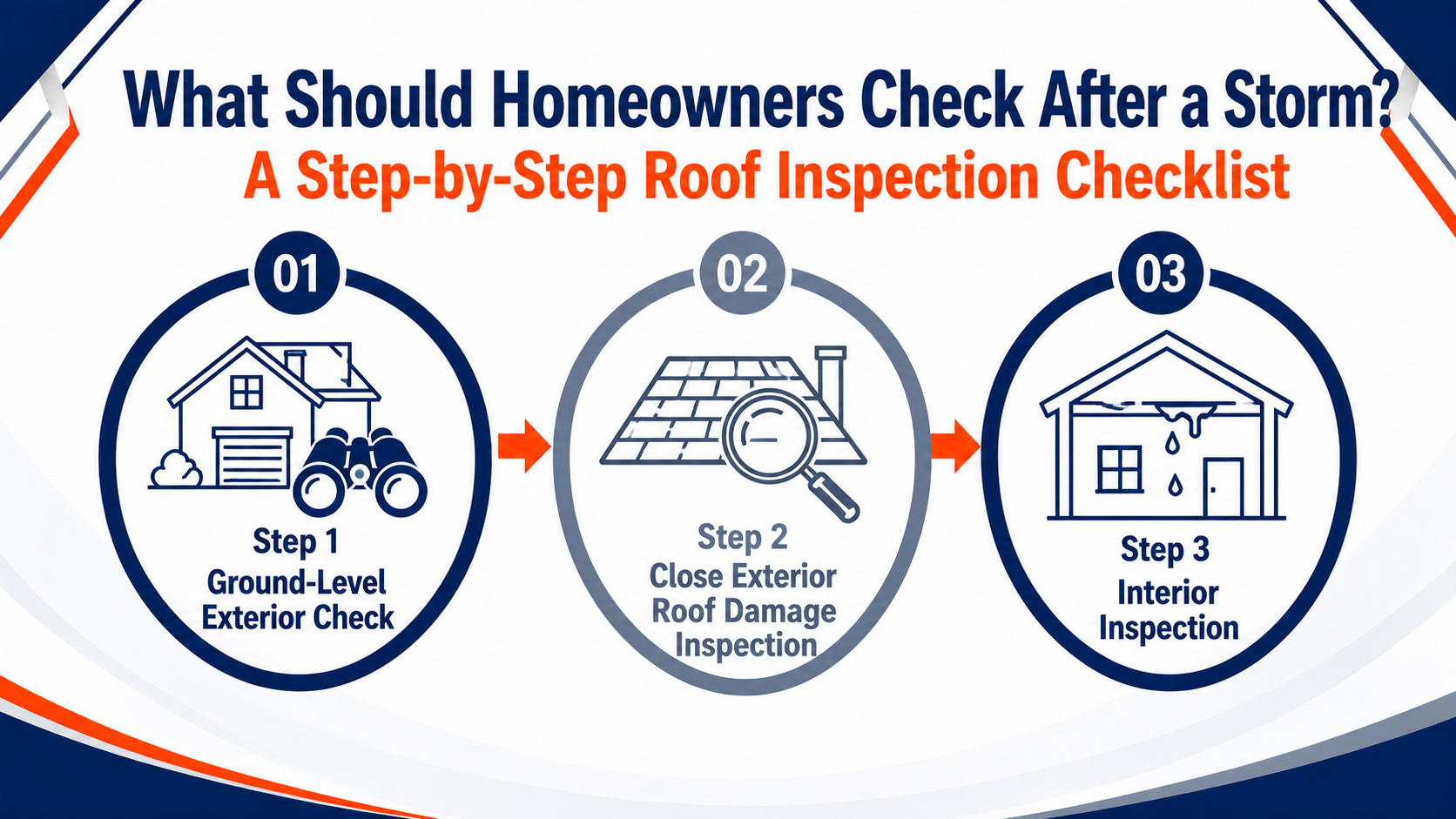
After a storm passes, a systematic roof damage inspection helps you identify every problem area before water can get inside. Work through these three stages in order.
Step 1 — Ground-Level Exterior Check
Begin safely from the ground before approaching the roof at any angle. Walk the full perimeter of your home and look for:
This step alone often reveals the most significant damage and helps you determine whether a professional inspection is urgent.
Step 2 — Close Exterior Roof Damage Inspection
If it is safe to access a ladder and view the roof from the edge, look for these specific damage signs:
Roof valleys and flashing points are where water tends to concentrate during heavy rain. Any compromise in these areas poses an immediate risk of leakage.
Step 3 — Interior Inspection
Roof damage often reveals itself inside before it becomes visible from the outside. After a storm, walk through your attic and living spaces and check for:
Interior water stains are one of the clearest indicators that your roof has been compromised and that the damage has likely been developing longer than the most recent storm.
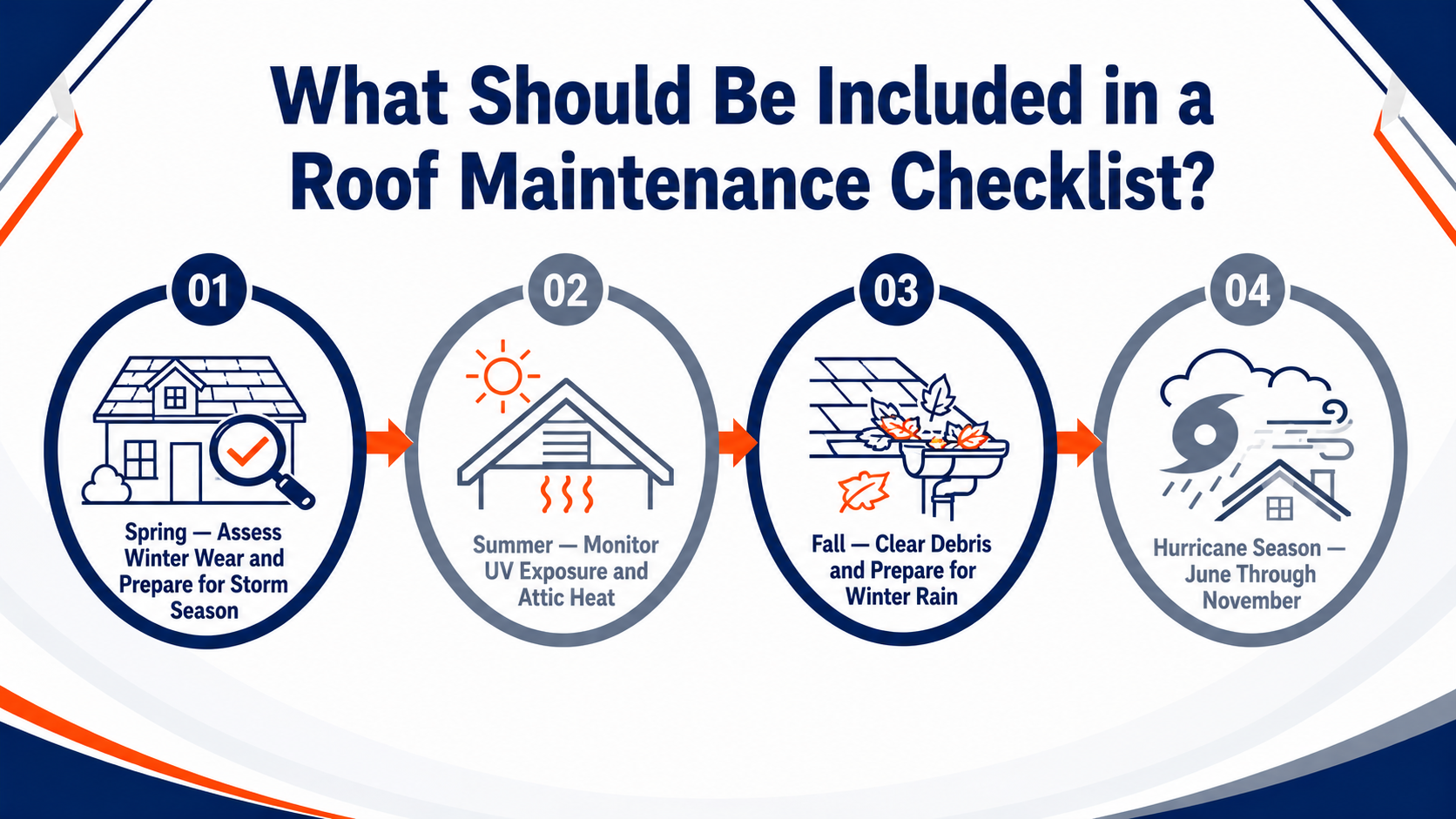
A complete roof maintenance checklist covers four seasonal windows. Each season in North Carolina creates different stress on roofing materials, so your maintenance focus should shift accordingly.
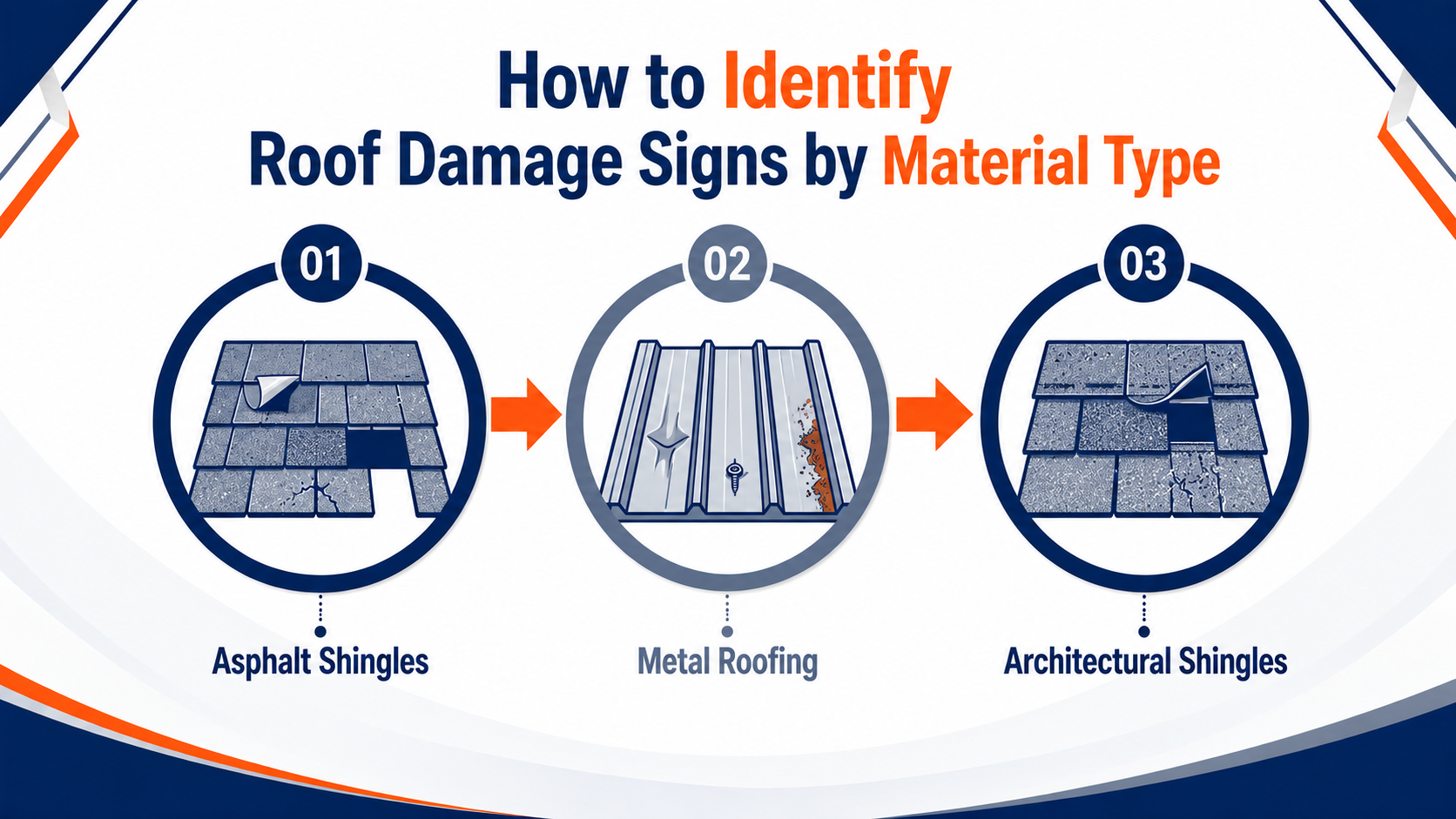
Different roofing materials show storm damage differently. Knowing what to look for on your specific roof type makes inspection faster and more accurate.
Proper documentation dramatically improves the outcome of a roof insurance claim. Adjusters evaluate claims based on evidence; the more thorough your documentation, the stronger your position.
Follow this roof damage documentation checklist immediately after a storm:
One important detail many homeowners overlook: photograph your gutters before cleaning them. Granule accumulation in gutters is evidence of storm-related shingle deterioration that adjusters look for, and cleaning them first removes that proof.
Call a licensed roofing contractor immediately after a storm if you notice any of the following conditions. These go beyond what a homeowner can safely assess or repair independently:
At Statewide Roofing Specialist, we provide professional post-storm roof inspections across the Piedmont Triad, from Greensboro to Winston-Salem to High Point. As a GAF Master Elite-certified contractor, we also assist homeowners with storm-damage documentation to support their insurance claims. Call us to schedule your inspection.
Staying ahead of roof damage in North Carolina means consistently inspecting, thoroughly documenting, and knowing when to call for professional help. Use this checklist twice a year and after every significant storm to protect your home before small issues become costly repairs. Your roof works year-round; your maintenance plan should too. When you need a trusted, experienced roofing contractor in North Carolina, Statewide Roofing Specialist is ready to help you inspect, repair, and protect your investment with the professionalism your home deserves.
North Carolina roofs should be professionally inspected at least twice a year, once in spring to assess winter and wind damage, and once in fall before the heavy rain season. Additional inspections are recommended immediately after any storm producing winds above 50 mph, significant hail, or widespread damage in your area.
Homeowners insurance typically covers sudden, storm-related roof damage caused by wind, hail, falling debris, or lightning. It generally does not cover damage resulting from age, wear, poor maintenance, or pre-existing conditions. Documenting damage promptly with photos and professional inspection reports is the most effective way to support a successful claim.
From the ground, look for missing or displaced shingles, granule buildup in gutters, bent or sagging gutters, and visible debris on the roof surface. Inside the home, check for ceiling stains, musty attic odors, and daylight visible through gaps in the attic. These ground-level signs reliably indicate whether a closer professional inspection is needed.
The most frequently observed damage patterns in North Carolina include wind-lifted shingles along roof edges and ridges, granule loss from UV exposure during hot summers, flashing separation around chimneys and vents, and hail-impact bruising on asphalt shingles. Homes near the coast also commonly experience accelerated corrosion of metal components due to salt-air exposure.
Asphalt shingles in North Carolina typically last 20–25 years, though the state’s combination of summer heat, hurricane-force winds, and humidity can shorten that lifespan without regular maintenance. Metal roofing can last 40–70 years under the same conditions. Roofs that receive biannual inspections and prompt repairs consistently outlast those that are only addressed when a leak appears.