SUMMARY

  • Prolonged heat, high humidity, and moisture intrusion accelerate roof wear, leading to common problems such as hidden leaks, shingle damage, flashing failures, mold growth, and structural deterioration.
  • Many roofing issues develop gradually and remain unnoticed until severe damage appears, making regular inspections essential for early detection and cost control.
  • Extreme warning signs like active leaks, sagging rooflines, daylight in the attic, bald shingles, and mold indicate serious roof failure and may require emergency repair.

Across the Piedmont Triad, homeowners are experiencing more frequent and severe weather conditions that place continuous stress on residential structures. As storms become stronger and seasonal weather patterns more extreme, the roof has become one of the most vulnerable parts of a home. For this reason, roof condition is no longer just a routine maintenance concern; it plays a key role in protecting a homeowner’s long-term financial stability.

This shift is closely connected to rising insurance costs across North Carolina. Between 2020 and mid-2025, average homeowners’ insurance rates increased by 44.4% statewide, reflecting a growing number of weather-related damage claims. As severe weather events become more common, the cost of repairs has increased, and insurers have adjusted premiums accordingly.

As a result, the condition of a home’s roof has taken on greater importance. Insurance providers are now closely reviewing –

  • roof age,
  • visible damage,
  • and maintenance history when approving or renewing coverage.

So, knowing these common roofing problems has therefore become important.

How North Carolina’s Weather Affects Your Roof?

In cities such as Charlotte, Winston-Salem, and Greensboro, long periods of summer heat place extra strain on roofing materials. Dark-colored roofs can reach temperatures up to 170°F during peak months.

This heat causes roofing materials to expand during the day and contract at night. Humidity further accelerates roof wear. North Carolina has an average annual humidity of 67%, and summer dew points often reach 69–70°F. This creates hidden moisture inside attics and roof assemblies. 

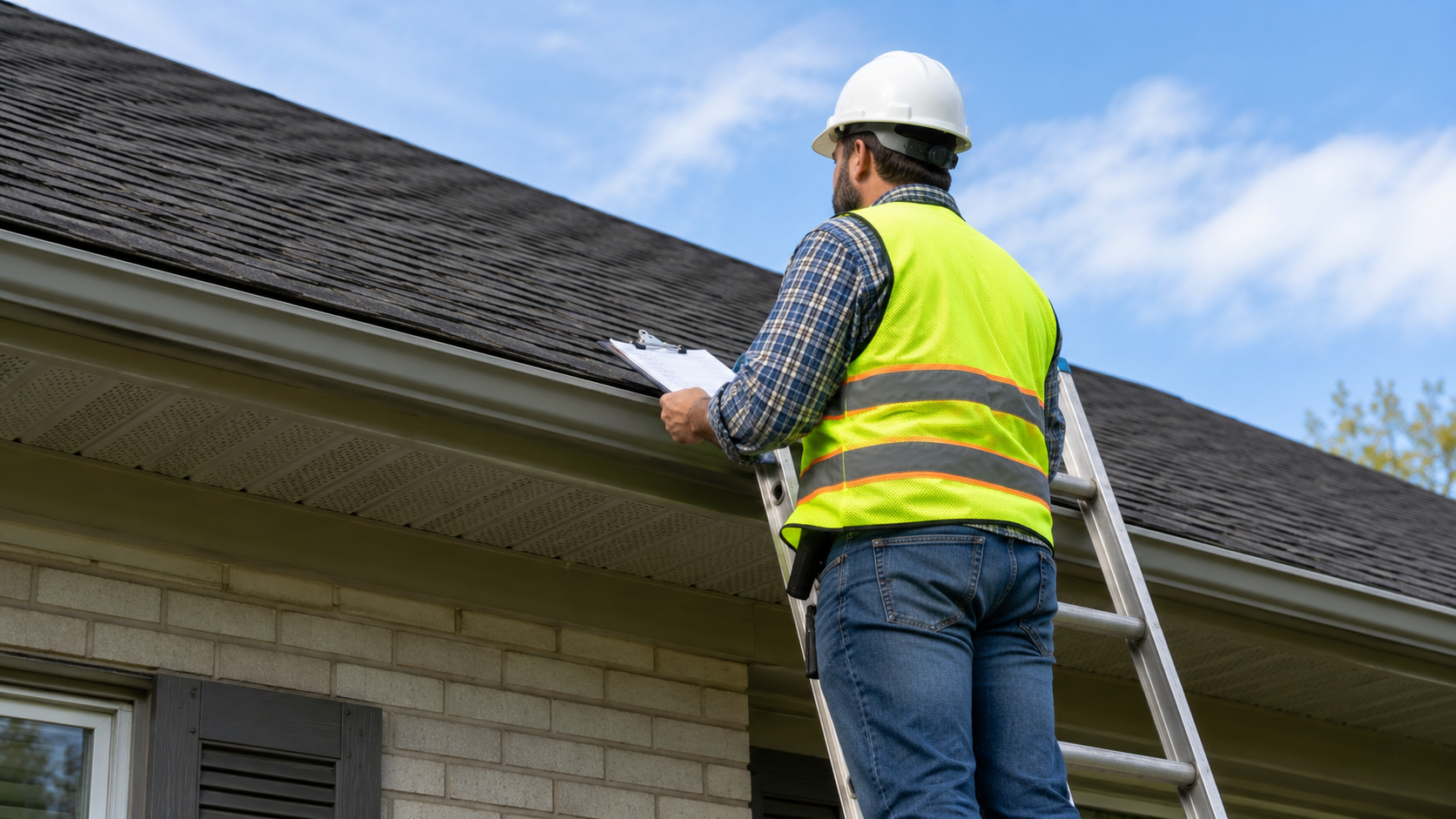
That’s why regular inspections and awareness of these weather impacts are important for maintaining roof integrity.

North Carolina Climate Data (Monthly Averages)Humidity (%)Avg Dew Point (°F)Risk Level for Condensation
May68%57°FModerate
July70%69°FHighest
September73%63°FHigh

12 Most Common Roofing Problems Homeowners Face

1. Roof Leaks That Don’t Always Drip

Sometimes, the water enters the roof and slowly moves through the insulation or the roof decking. This usually happens when there is a crack in shingles or the flashing is damaged. Once inside, water spreads across the roof structure instead of falling straight down. Because the damage remains hidden, leaks can continue for months. This eventually leads to wood rot, insulation failure, and mold growth if not addressed early.

This eventually leads to – 

  • wood rot, 
  • insulation failure, 
  • and mold growth

2. Missing, Lifted, or Damaged Shingles

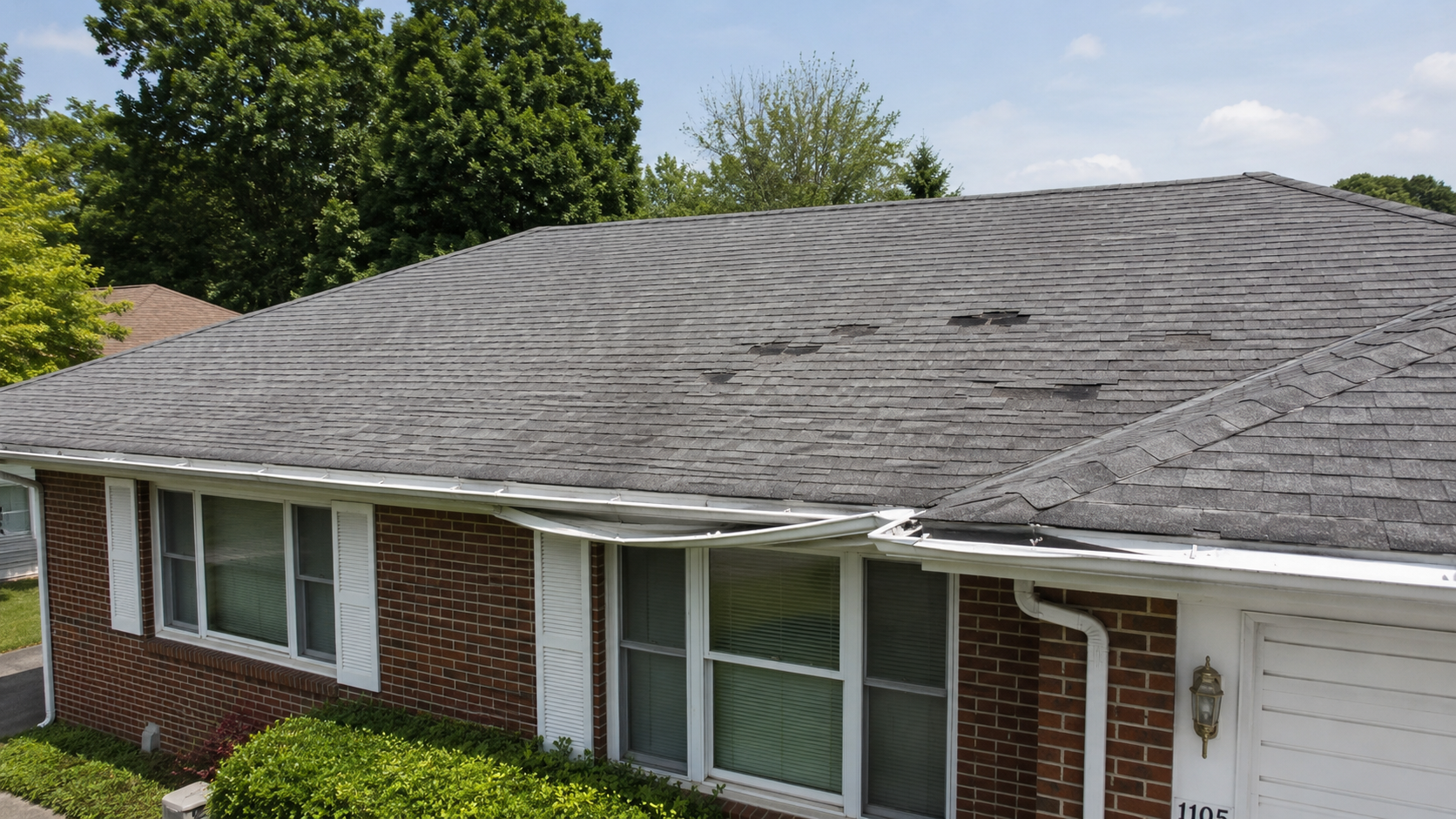
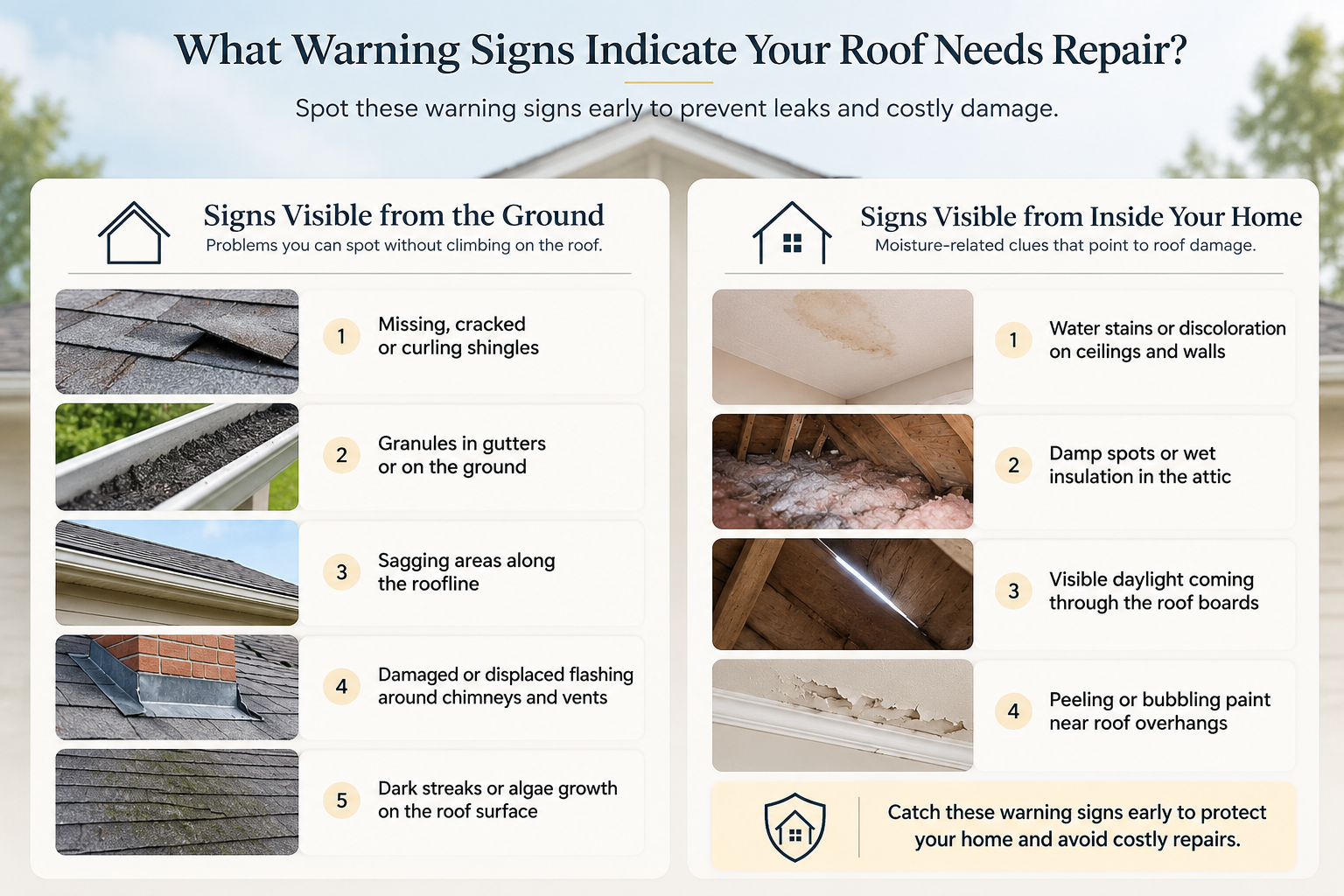
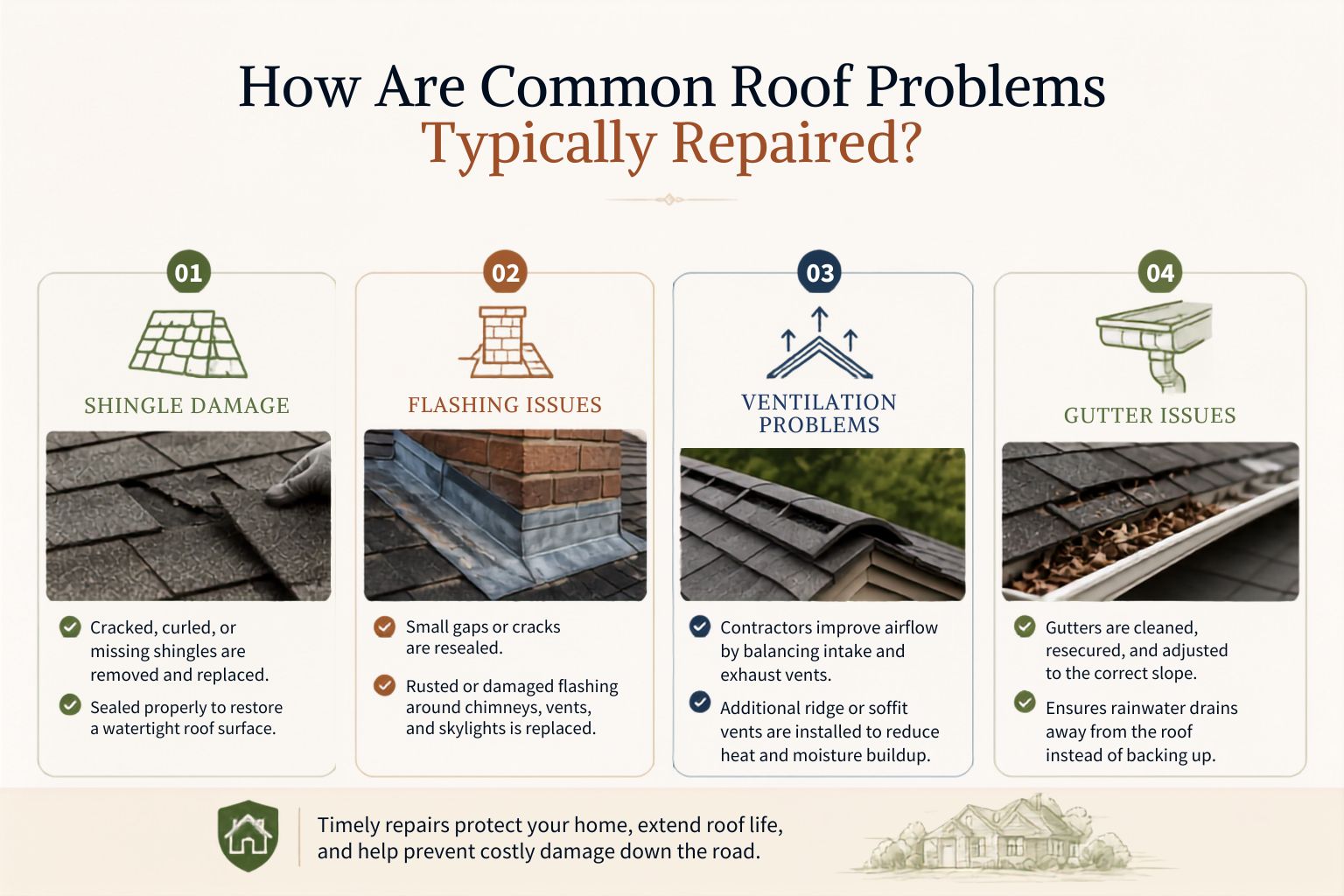
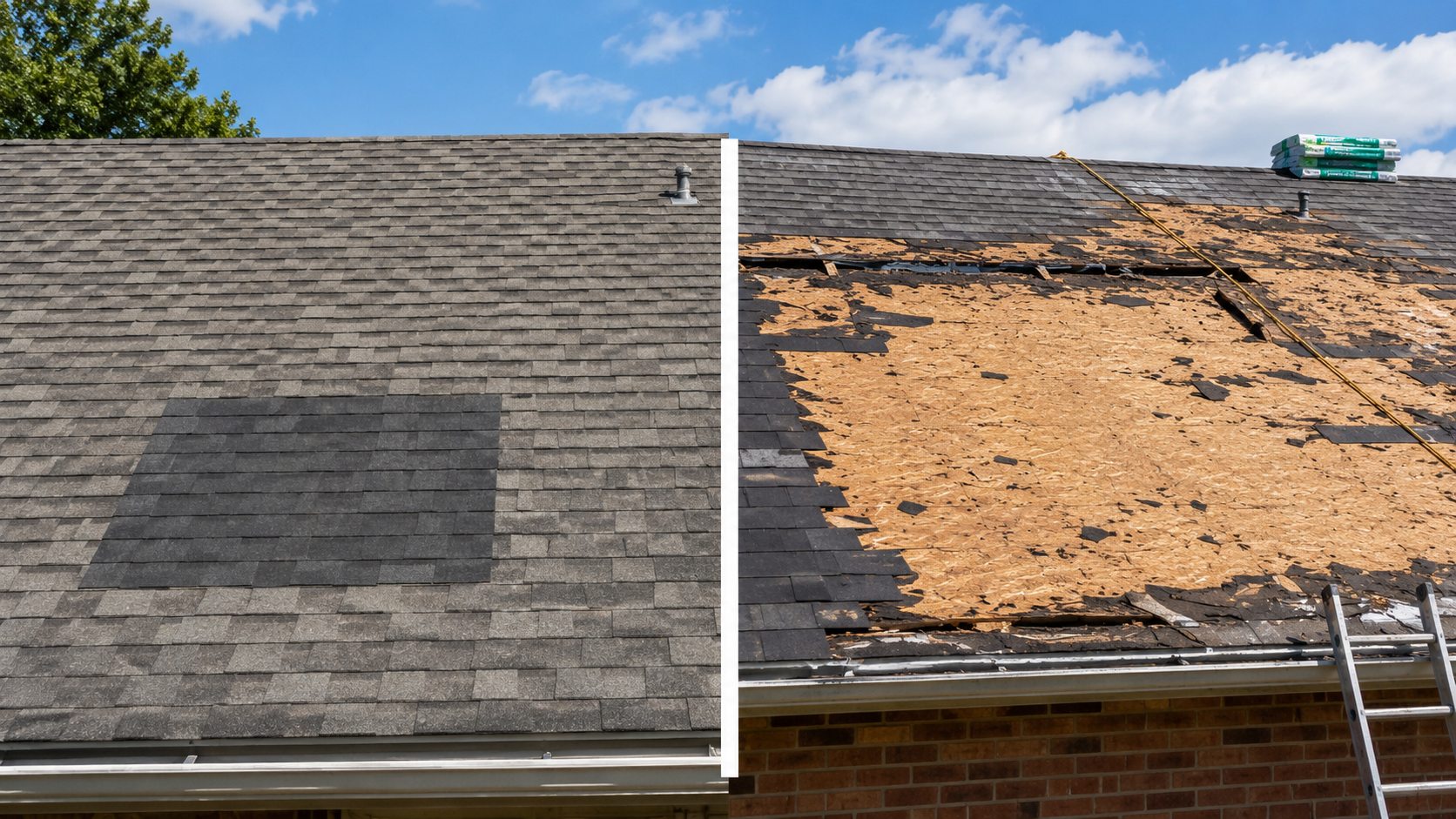
Missing, lifted, or damaged shingles are one of the most common roofing problems in North Carolina. Strong winds, heavy rain, and prolonged sun exposure gradually loosen shingles or tear them away. Once shingles lift or go missing, the roof’s protective layer is compromised. This allows water to seep beneath the surface and reach the roof deck.

Do You Know?- Wind and hail damage are responsible for about 34   percent of property damage claims in the U.S. A large share of these claims involve roof shingles that have lifted, cracked, or blown off.

In fact, in 2023, homeowners filed for more than 1.7  million wind damage claims in the United States. Most of these claims were related to roofing repairs. Even though these statistics are related to the whole country, they are more relevant for North Carolina.

That’s because North Carolina is more prone to strong thunderstorms and hurricane winds.

3.  Flashing Failures Around Chimneys & Vents

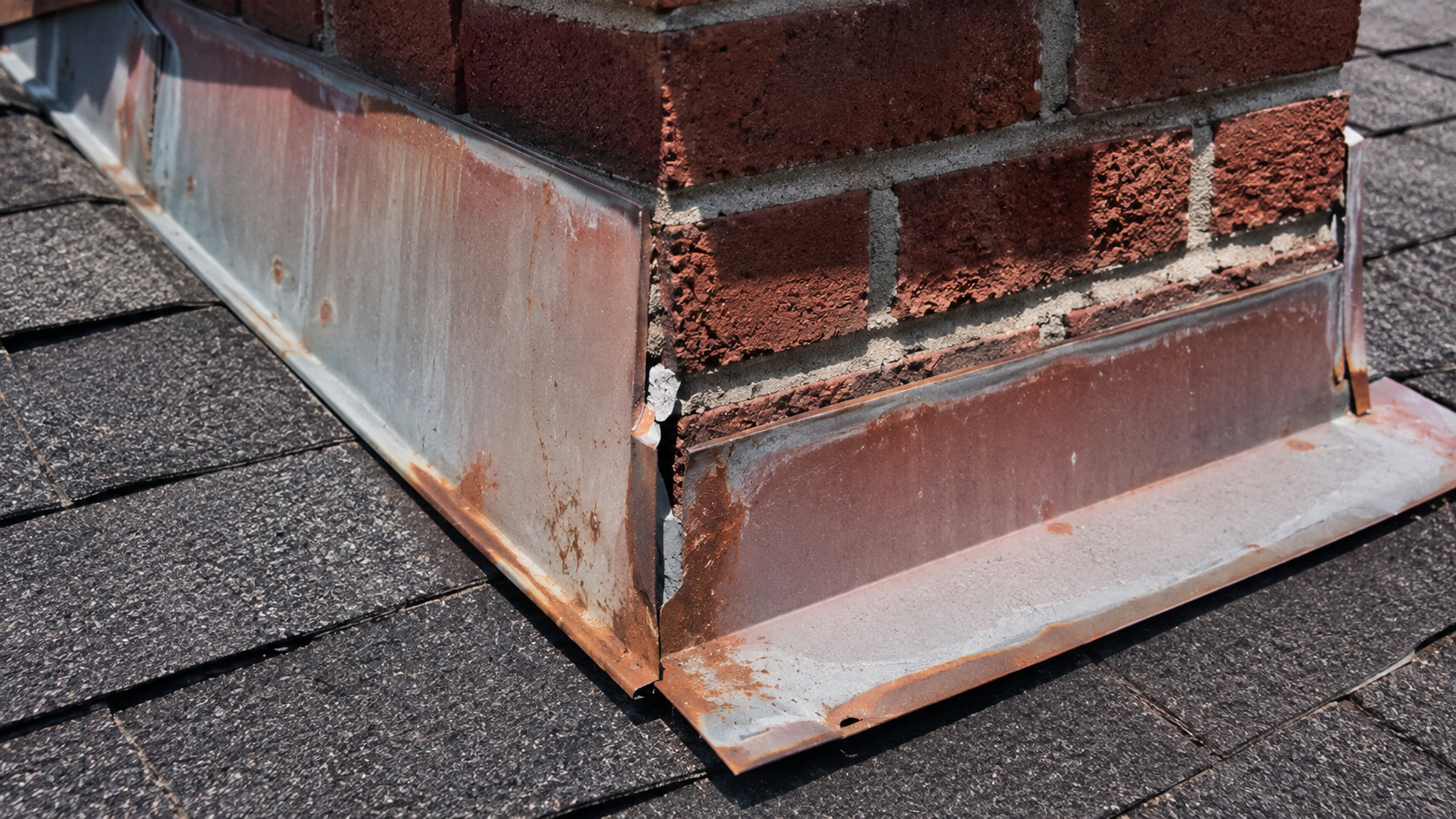
Flashing is the thin metal installed around roof penetrations such as chimneys, vents, skylights, and exhaust pipes. Its main purpose is to seal the gaps where the roof surface meets these structures. But when this flashing fails, the water can easily enter the structure. 

In areas like North Carolina, heat, humidity, and heavy rain speed up this wear by weakening sealants and fasteners. In such cases, the chimneys and vent pipes are especially vulnerable. This makes flashing failure a common source of hidden roof leaks. 

4. Poor Roof Ventilation & Heat Buildup

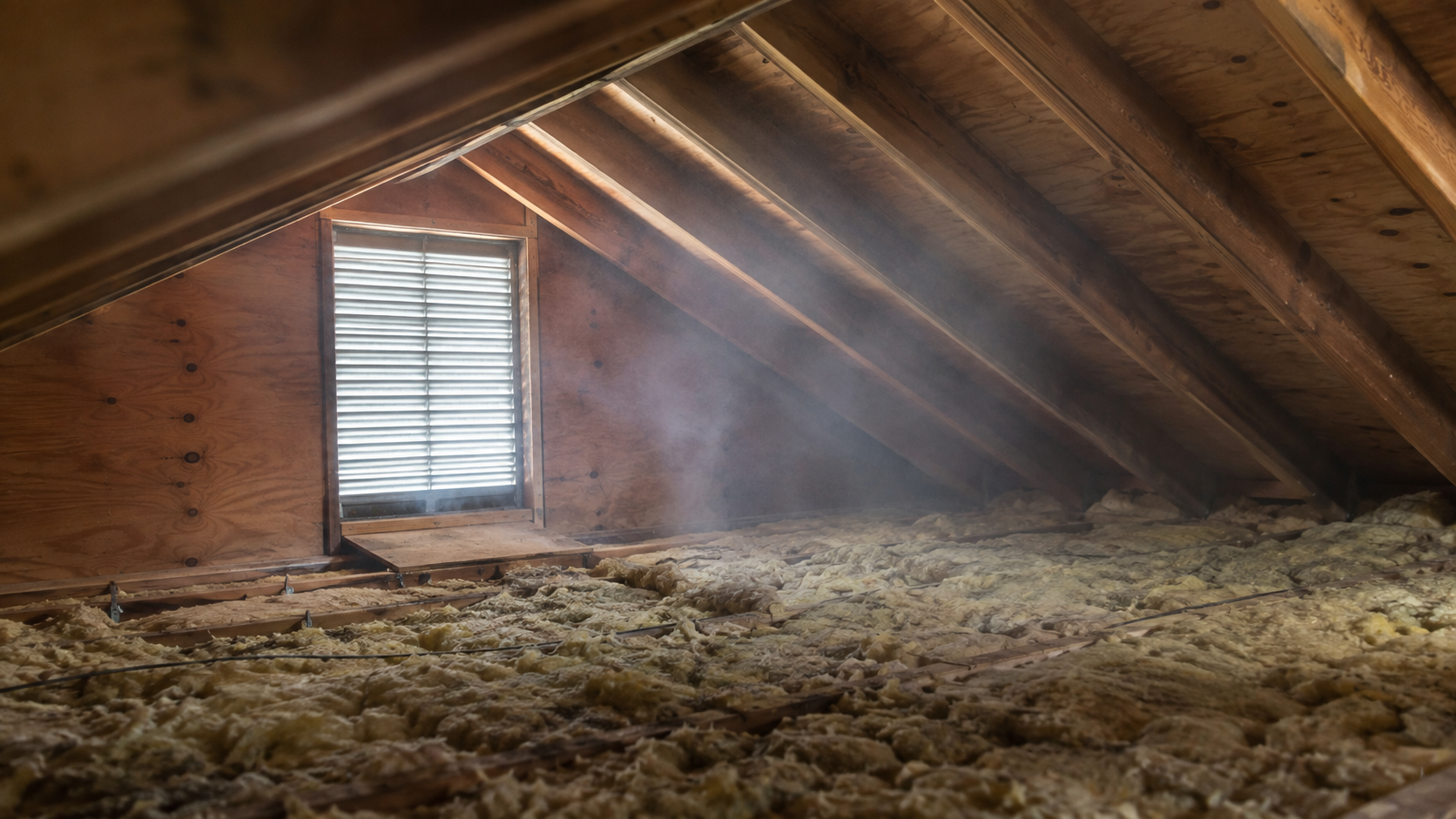
Proper roof ventilation allows the hot, moist air to escape from the attic. But when this ventilation is inadequate, heat and moisture become trapped. This results in increased temperature of the attic, which eventually puts a lot of pressure on the roofing materials.

As a result, the roof decking absorbs excess heat and moisture, which leads to warping over time. This damp environment also increases the risk of mold growth. As these issues compound, the roof’s lifespan shortens and cooling cost rises. 

5. Moss and Algae Growth

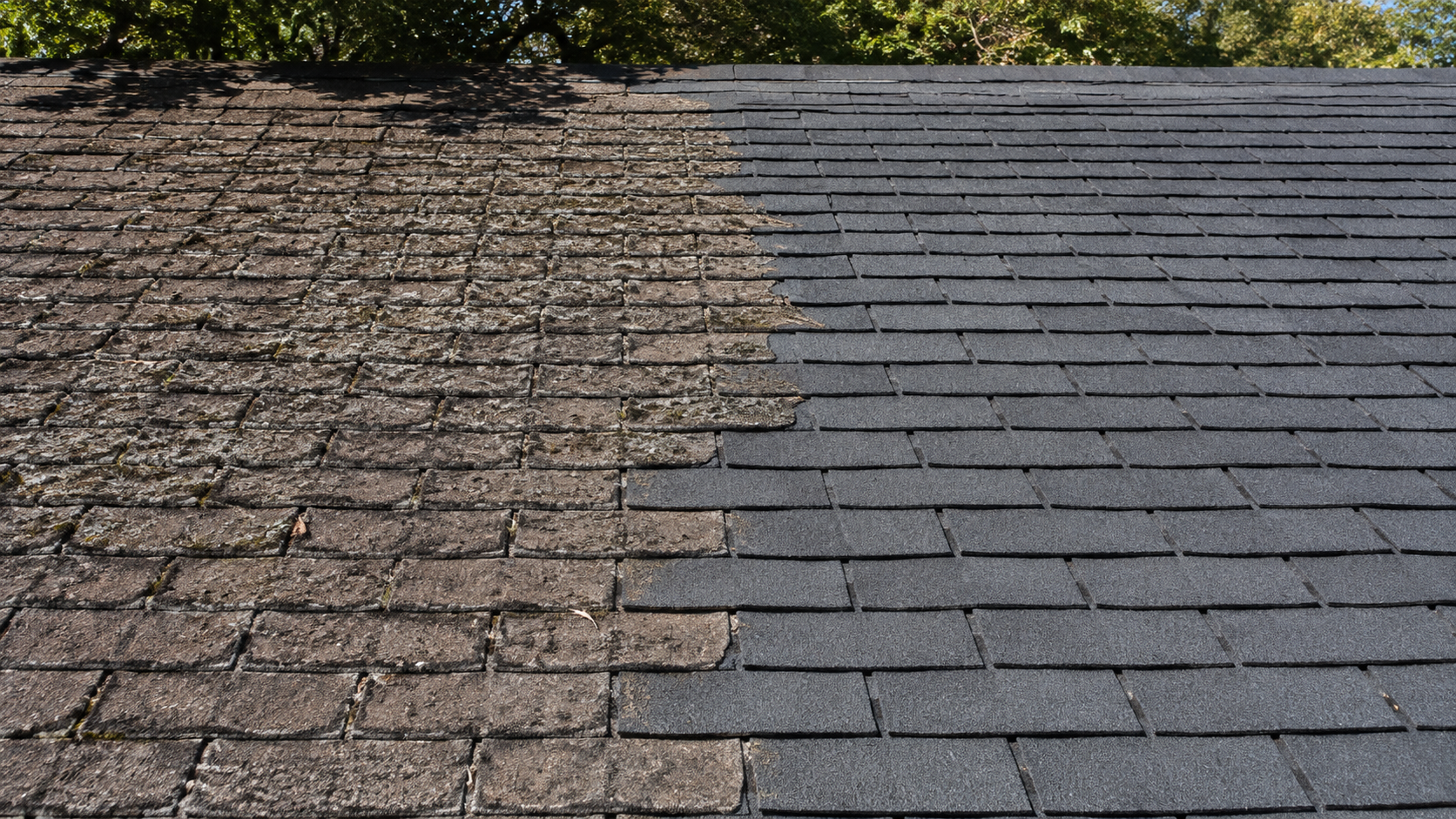
North Carolina’s humid climate and frequent rain create ideal conditions for the growth of moss and algae. While this moss can lift shingles, the algae can darken the roof surface and hold moisture against shingles. Over time, this accelerates shingle deterioration and leads to leakage.

6. Ice Dams Formation and Water Wicking

While ice dams are uncommon in most of North Carolina, they are a real concern in the High Country and Asheville areas. Ice dams form when the upper part of a roof warms due to heat escaping from the attic. This causes the snow to melt. 

The meltwater then flows down to the colder eaves, where it refreezes and forms a ridge of ice. This ice ridge traps additional water, which can “wick” up beneath shingles through capillary action. This reaches the roof decks and causes leaking into the home.

7. Hail and Wind Damage

Severe storms can create dents on shingles, loosen the granules, and damage the overall components, like vents and flashing. Not only this, but the strong winds can lift or tear shingles. This eventually exposes the roof deck to rain. 

With time, such repeated impacts weaken the roofing material,s which causes the high risk of leaks and structural problems. 

8. Natural Aging and UV Decay

Every roof has a limited lifespan because it is constantly exposed to sunlight, rain, wind, and temperature changes. Over time, these factors slowly break down roofing materials, even when no visible damage is present. One of the biggest contributors to this process is ultraviolet (UV) radiation from the sun. UV rays weaken the asphalt in shingles. This causes the protective surface to dry out and lose granules that help deflect heat and water. 

9. Bad Installation

A roof’s performance depends as much on how it’s installed as on the materials used. Even high-quality shingles can fail if they are not laid properly. Common installation mistakes include uneven shingle placement, insufficient nailing, improper flashing, and poorly sealed edges. 

Over time, small installation problems can escalate into major leaks, structural damage, and costly repairs.

10. Too Many Layers

Some homeowners choose to install a new roof over an existing one to save time or money. While this may seem convenient, stacking multiple layers of shingles can create serious problems. Extra layers add weight, putting stress on the roof structure and framing. This increases the risk of curling, cracking, or blow-offs. 

11. Tree Branches

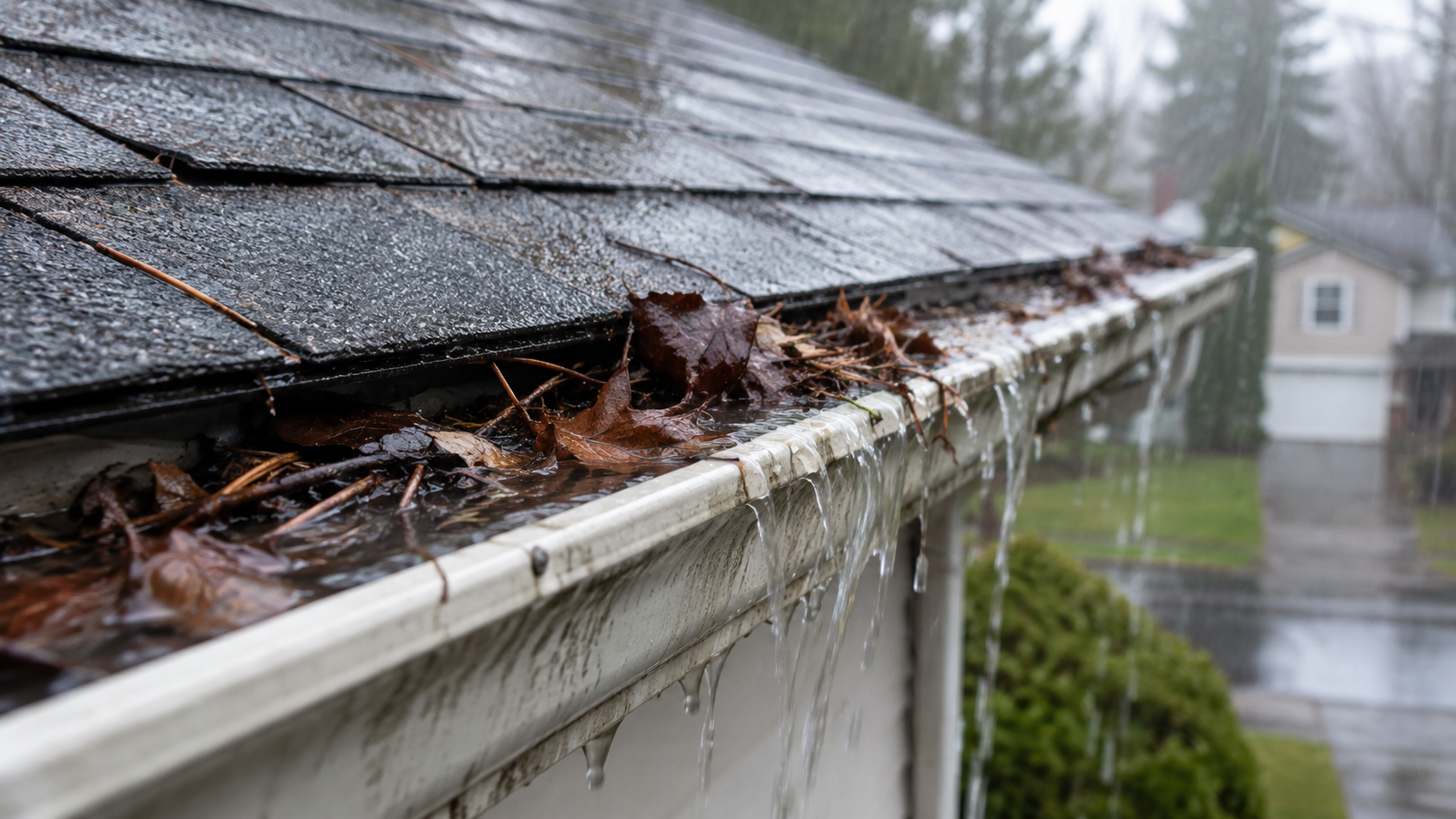
Overhanging tree branches can pose a serious threat to roofs. Wind causes branches to scrape against shingles, wearing down protective granules and creating small cracks. In storms, larger limbs can break and fall, puncturing the roof or damaging flashing and gutters. Leaves and debris from trees also collect on the roof and in drains, trapping moisture against the surface. This can accelerate shingle decay, promote moss and algae growth, and lead to leaks over time.

5 Extreme Warning Signs of Roofing Damage

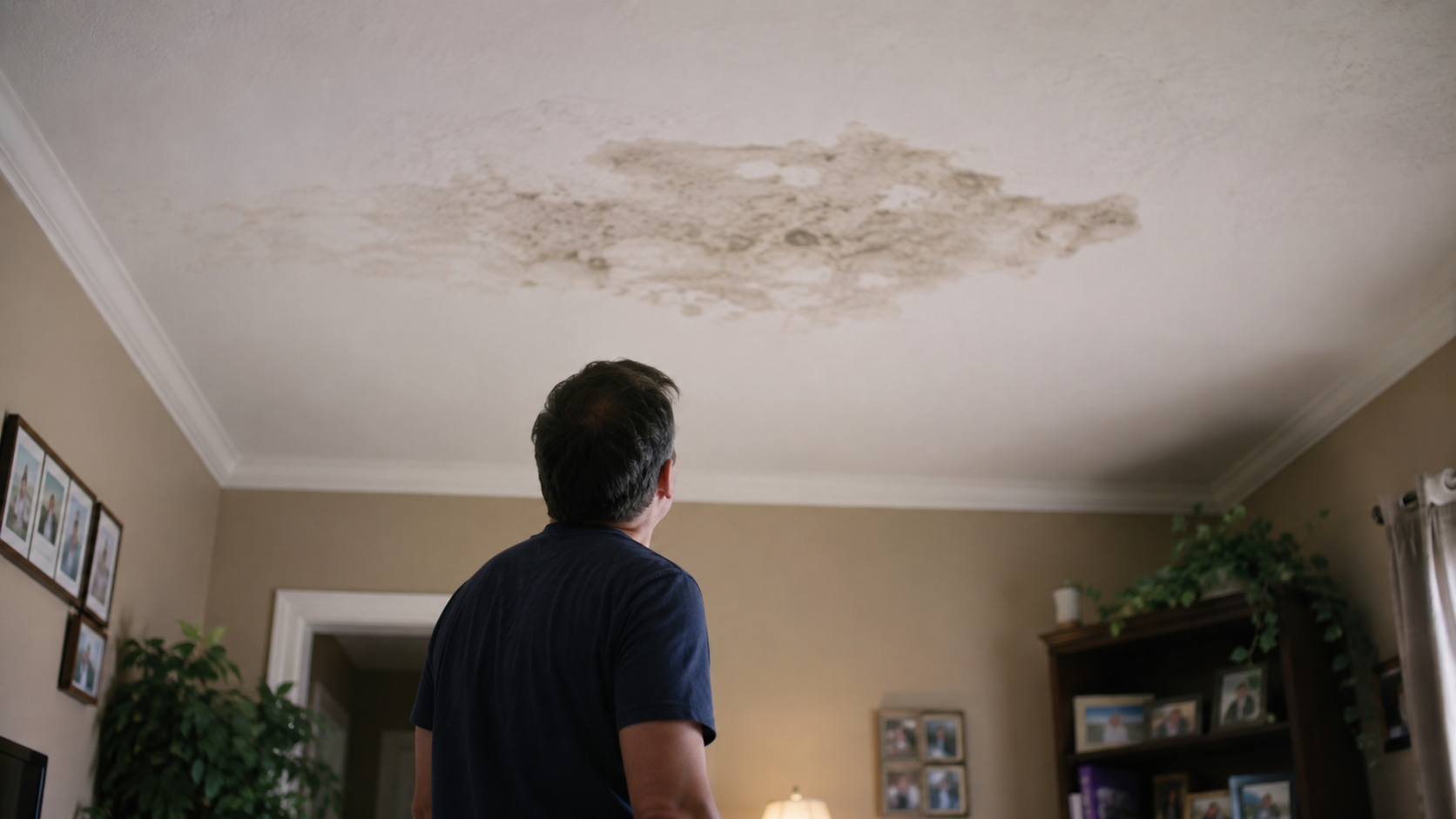
1. Active Dripping or Widespread Water Stains

Active dripping from your ceiling is an immediate red flag that water is entering your home and reaching interior finishes. This usually indicates that roofing materials, flashing, or sealants have already failed. Even small drips can quickly damage drywall, insulation, and electrical components, turning a minor leak into a major repair.

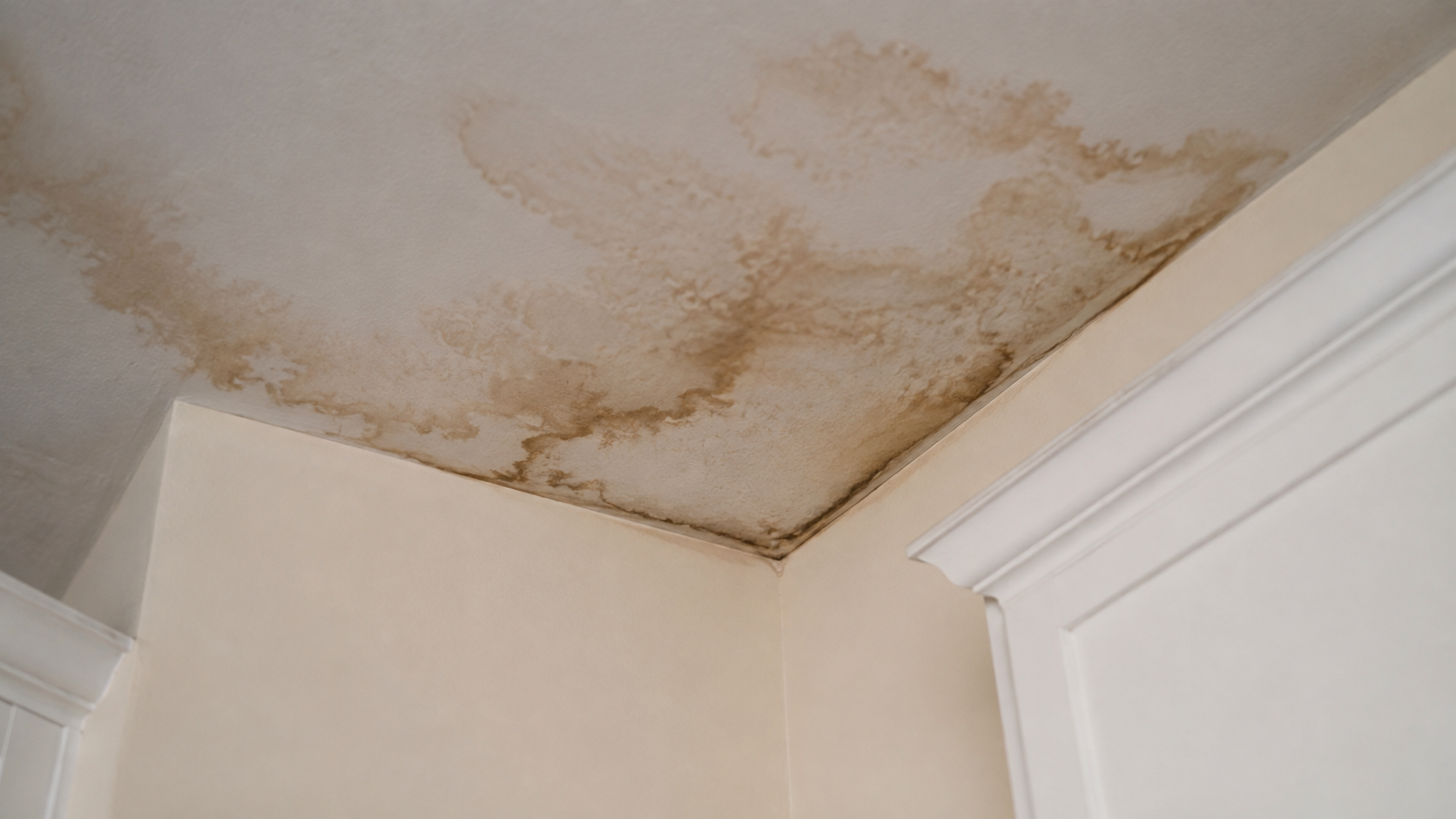
Widespread or growing water stains on ceilings or upper walls signal that moisture has been present for some time, often spreading along framing before becoming visible. Yellow, brown, or discolored patches that continue to expand after rainfall are especially urgent. If stains reappear after repainting, it means the source of the leak is still active. This situation should always be treated as an emergency because continued exposure to moisture can weaken structural elements and promote mold growth.

2. A Sagging Roofline

A sagging roofline is a serious structural warning sign that your roof may no longer be able to support its own weight or additional loads like rain or snow. 

Sagging can appear as a visible dip or wave along the ridge, in the middle of a roof slope, or above specific rooms. This often indicates problems such as rotting roof decking, weakened rafters, damaged trusses, or long-term water intrusion that has compromised the structure. 

In some cases, sagging can also be related to improper construction or previous unpermitted modifications. Unlike cosmetic issues, a sagging roofline suggests that the integrity of your home’s support system is at risk. If ignored, the affected area can worsen, increasing the possibility of partial roof collapse. 

3. Seeing “Daylight” in the Attic

If you can see daylight shining through the roof boards or around roofing components while standing in your attic, it is an urgent sign that the roof covering is no longer fully protecting your home. Small pinholes or thin slivers of light may indicate missing shingles, cracked boards, or gaps around vents, chimneys, or other penetrations. Larger openings or visible outlines of missing sections are even more serious. 

Any path that allows light to pass through can also allow rain, snow, and wind-driven moisture to enter. This exposure can quickly damage insulation, encourage mold, and raise energy costs by letting conditioned air escape. 

4. Excessive “Bald Spots” on Shingles

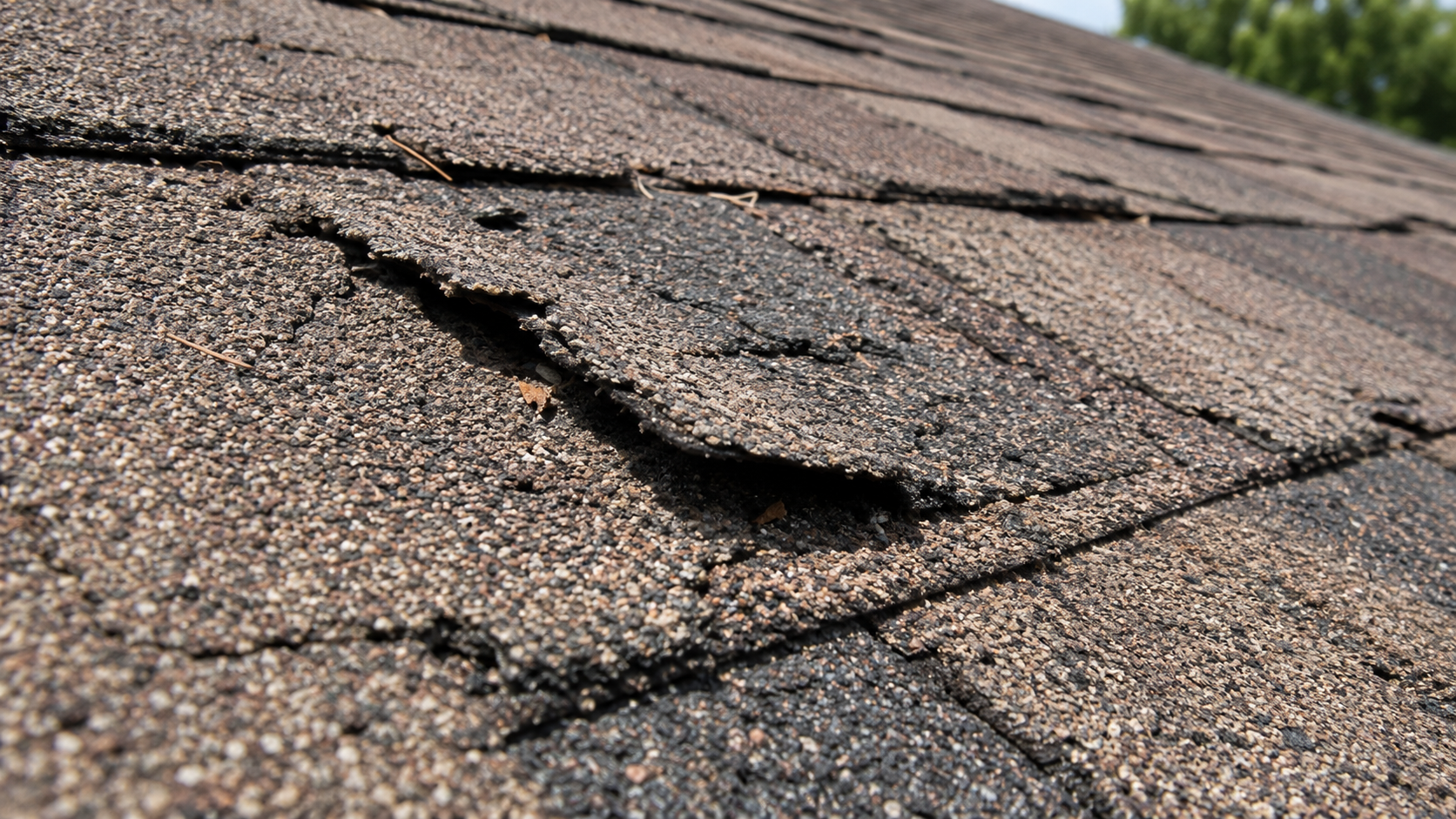
“Bald spots” on asphalt shingles occur when the protective granules have worn away, exposing the underlying asphalt surface. A few small areas on an older roof can be expected, but widespread or rapidly increasing bald spots are a serious warning sign. This speeds up aging, makes shingles more brittle, and increases the chance of cracking, curling, or breaking during wind or hail events. Bald shingles also absorb more heat, which can stress roofing materials and raise attic temperatures.

When many shingles show bare patches, your roof is no longer performing as designed, even if you do not yet see interior leaks. This condition often develops shortly before significant failures such as blown-off shingles or sudden leaks during heavy rain. If you notice extensive bald spots, treat it as a near-term failure indicator and plan for prompt repair or full replacement rather than routine maintenance.

5. Mold Growth or Musty Smells

Mold growth on ceilings, upper walls, or in the attic is a strong signal that moisture has been entering your home for some time, often from a hidden roof leak or chronic condensation problem. Visible mold patches, dark streaks on wood, or fuzzy growth on insulation indicate that conditions have been warm and damp enough to support microbial activity. Even if you cannot see mold, persistent musty or earthy odors, especially in the attic or upstairs rooms, are a serious warning sign. These smells usually mean moisture is trapped in building materials or insulation, even if surfaces appear dry.

Ongoing mold and moisture can 

  • damage wood framing,
  • reduce the effectiveness of insulation,
  • and negatively affect indoor air quality.

This is not just a cleaning issue; it points to an underlying water source that must be found and corrected. If you detect mold or strong musty smells, you should act quickly by arranging both a roof inspection and, if needed, a professional mold or moisture assessment.

When these warning signs appear, emergency roof repair may be necessary to stop active water intrusion and prevent further structural damage.

Smart Decisions: DIY vs. Professional Help

When considering how to fix roof issues, homeowners might consider following two ways: DIY methods or taking professional help. Let’s discuss the risks associated with both methods. 

The Financial Risk of DIY

While minor maintenance like cleaning gutters is safe for homeowners, attempting to patch a roof can be costly.

  • Warranty Voiding: Most manufacturers (like GAF or Owens Corning) only honor warranties if the material is installed by a certified contractor.
  • Safety: Falling from a roof is a leading cause of home injuries.

Insurance Complications: Unprofessional repairs can be flagged by insurance adjusters as “unauthorized alterations,” potentially leading to claim denials for future damage.

The ROI of Professional Help

Insurance Claim Assistance: Professional contractors like Statewide Roofing Specialist have a team of HAAG-certified inspectors who provide forensic-level documentation of damage to present to adjusters. We work directly with your insurance company to provide a detailed report of the damage type and severity, creating solid evidence for your claim and helping you secure the full compensation needed for high-quality repairs.

Value Addition: A new roof provides a 60% to 85% return on investment (ROI) at the time of home sale.

Summing up

Prolonged heat, heavy rainfall, and severe storms can accelerate wear and expose underlying issues that often go unnoticed. Identifying common roofing problems early and responding to clear warning signs helps homeowners reduce repair costs and preserve long-term property value.

At Statewide Roofing Specialist, our approach is built specifically for North Carolina conditions. As a GAF Master Elite contractor, a distinction earned by only 3% of roofing companies nationwide, we back our work with up to 50-year material warranties and 25-year workmanship coverage, delivering protection that goes well beyond industry norms.

Contact us now for all the expert roofing solutions!

Frequently Asked Questions (FAQs)

In North Carolina, the average roof lifespan ranges from 15 to 30 years, depending on the roofing material, installation quality, and local weather conditions. Asphalt shingle roofs typically last 20–25 years, while metal and tile roofs can last longer for more than 70 years with proper maintenance. High humidity, heat, and storm exposure can reduce lifespan without regular inspections.

Signs of hail damage on a roof in North Carolina often include impact marks or bruising on shingles, granule displacement that exposes the underlying asphalt, and cracks or fractures along shingle edges. Property owners may also observe dents in flashing, vents, skylights, or gutters, along with scattered roofing debris following severe storms. If left unaddressed, hail damage can compromise waterproofing and accelerate roof deterioration.

In North Carolina’s humid climate, algae- and mold-resistant asphalt shingles are among the best options, as they contain copper or zinc granules that inhibit biological growth. Metal roofing is also highly effective due to its non-porous surface and ability to shed moisture quickly. Synthetic and composite roofing products offer added resistance to moisture and mold. Regardless of material, proper ventilation and moisture control are essential for long-term mold prevention.

Best practices for roof maintenance in North Carolina include scheduling professional inspections at least once a year and after major storms, keeping gutters and downspouts clear to prevent moisture buildup, and addressing minor repairs promptly to avoid larger issues. Maintaining proper attic ventilation and removing debris or algae growth also helps extend roof lifespan in the state’s hot, humid, and storm-prone conditions.

Terry Cribb - Statewide Roofing Specialist

Terry Cribb is the owner and manager of Statewide Roofing Specialist, a locally owned and operated roofing company based in North Carolina. He founded the business in 2012 and has grown into a trusted name across North Carolina, South Carolina, and Tennessee. With a background in business and management from West Davidson High School, Terry leads a fully licensed and insured team known for honest service, skilled craftsmanship, and a commitment to customer satisfaction.

Speak With a Roofing Specialist Today!

336-480-1824
Call Now
336-480-1824