Oct 13, 2026
Green Bay Hail Damage Roof Replacement: GAF Timberline HDZ in Barkwood



Key Takeaways
|
North Carolina’s average annual humidity stays around 70–80%, with morning humidity often even higher during summer.
For homeowners in the Piedmont Triad, including Winston-Salem, this persistent moisture can quietly affect roofing materials long before a visible leak appears. Humidity can contribute to shingle warping, algae and mold growth, granule loss, flashing problems, and attic moisture.
This means a roof can look fine from the ground while damage is already developing underneath. But how does this moisture actually reach your roof and cause damage over time? Let’s first look at how North Carolina’s humidity affects your roof.
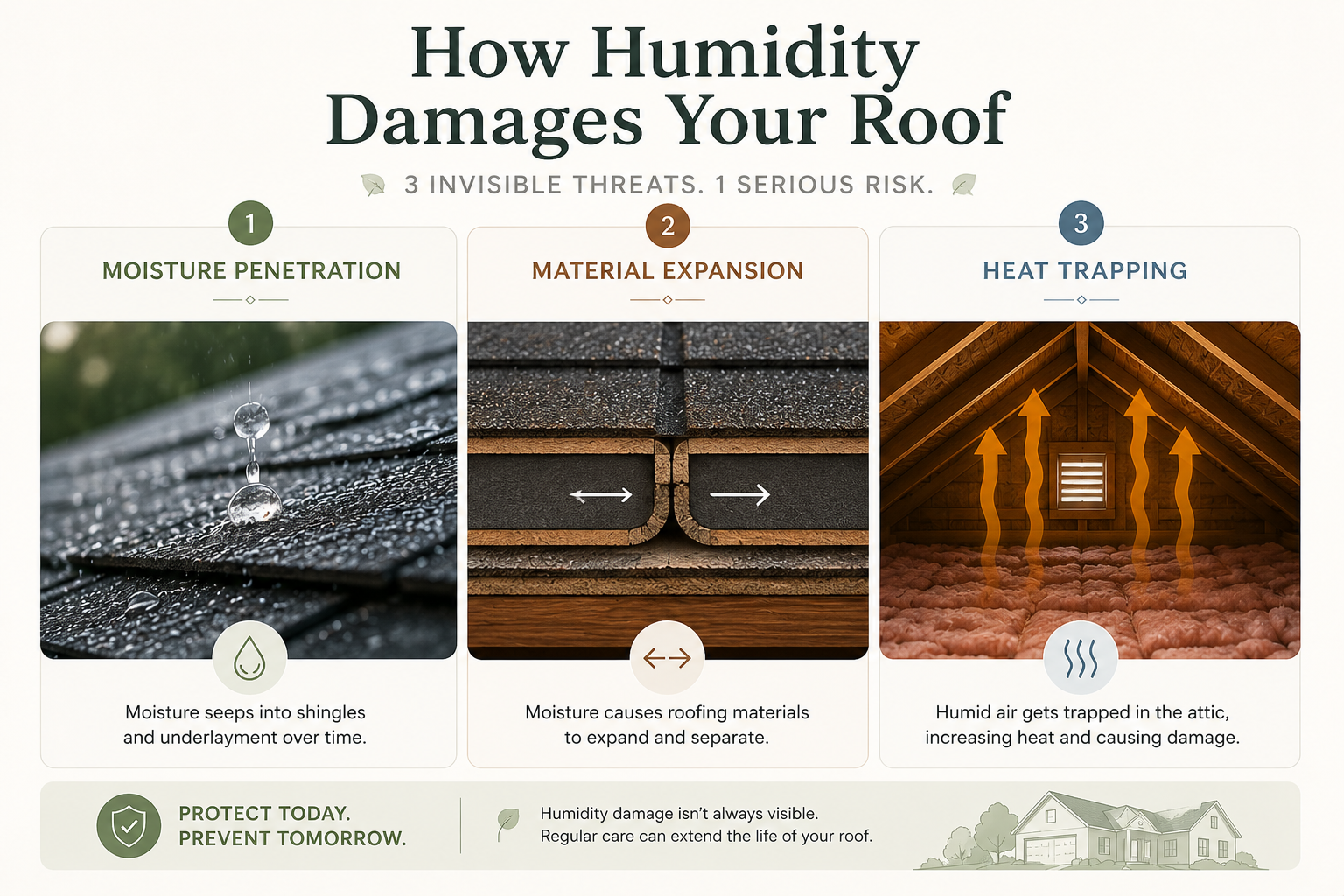
North Carolina humidity damages roofs through three constant mechanisms: moisture penetration, material expansion and contraction, and trapped heat. Together, these forces break down roofing materials faster than most homeowners expect.
North Carolina sits firmly in a humid subtropical climate zone. Raleigh averages around 70% relative humidity year-round, with morning peaks reaching higher during summer months.
Here is how that humidity reaches your roof:
Humidity doesn’t cause one type of damage; it triggers several, often at the same time. Here are the most common problems NC homeowners face.
Humidity creates conditions for moisture to settle underneath shingles. Over time, this causes shingles to warp, blister, or lift at the edges.
Those dark streaks you see on NC roofs? Almost always algae, not dirt.
Granules are the gritty protective layer on asphalt shingles. They shield the asphalt beneath from UV rays and moisture.
This is the most serious consequence of persistent humidity, and the most expensive to fix.
Constant moisture causes roofing materials to expand and contract repeatedly. That movement adds up.
Poor attic ventilation turns your attic into a humidity trap, and that trapped heat attacks your shingles from the inside.
Humidity damage has a specific set of signs that look different from storm or impact damage. Here is what to look for:
| Sign | What It Indicates |
| Dark green, black, or gray streaks on shingles | Algae growth from persistent moisture |
| Wavy, lifted, or blistered shingles | Moisture trapped under or within shingles |
| Granules collecting in gutters | Accelerated shingle wear from humidity and heat |
| Musty smell in the attic or upper floors | Trapped moisture or mold growth in the attic |
| Energy bills rising without explanation | Poor attic ventilation trapping heat |
| Mold or dark staining on attic wood | Active moisture damage inside the attic |
| Soft or spongy roof deck from below | Wood rot from prolonged moisture exposure |
| Rust around nail tips or flashing | Long-term moisture presence corroding metal |
If you recognize two or more of these signs, the damage is likely already in progress, not just starting.
Many homeowners assume any moisture problem comes from a roof leak. But humidity damage works differently, and the distinction matters when you call for a professional assessment.
| Humidity Damage | Roof Leak | |
| Cause | Trapped moisture and poor ventilation | Physical opening in the roof system |
| Onset | Gradual, builds over months or years | Can appear suddenly after a rain event |
| Common signs | Algae, warped shingles, high energy bills, attic mold | Water stains on ceilings, dripping, wet insulation |
| Location | Often starts in the attic and underside of deck | Usually traces to a specific entry point |
| Urgency | High, but rarely an emergency | Immediate attention needed |
Both require professional evaluation. But knowing which one you’re dealing with helps you describe the situation clearly when you call.
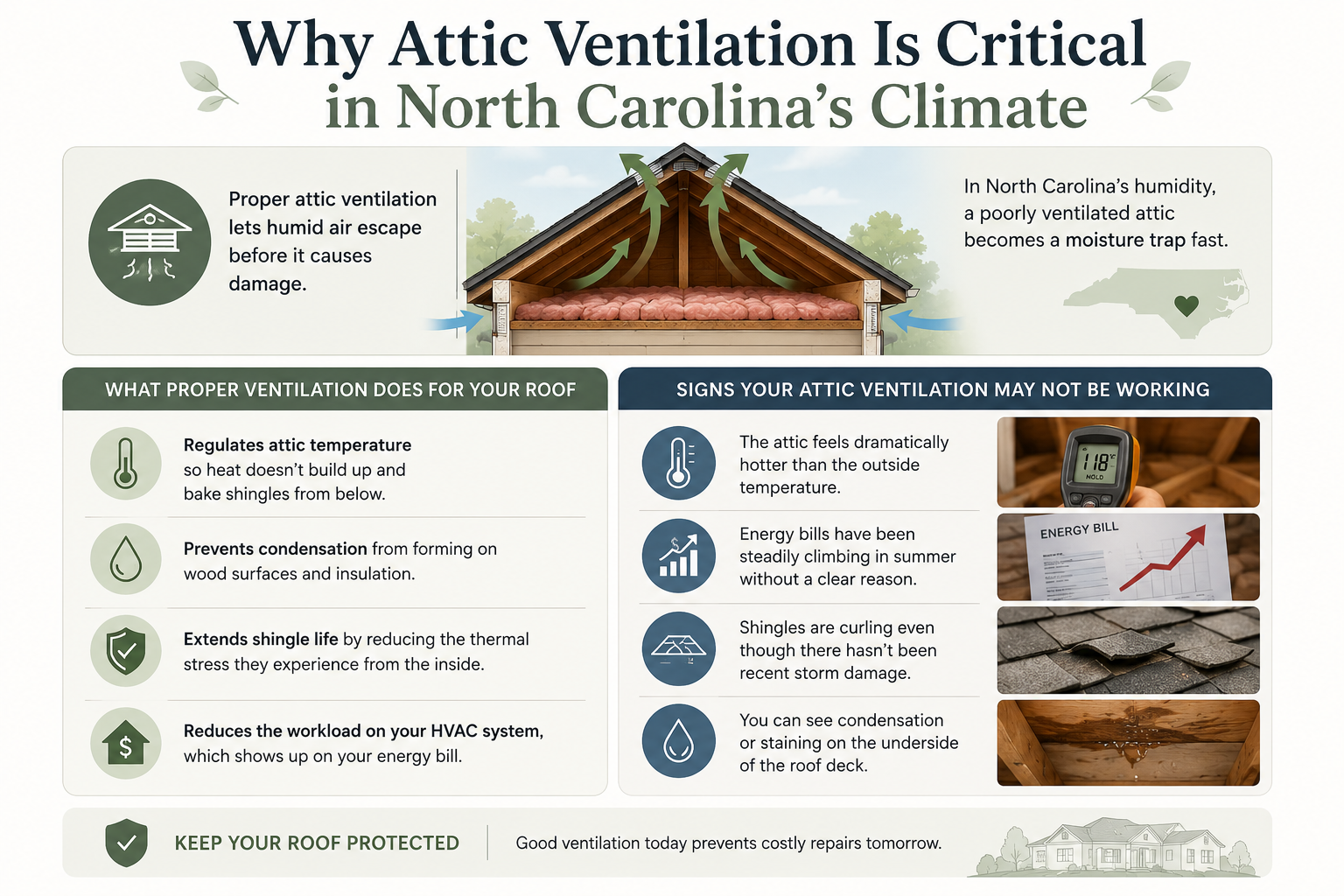
Proper attic ventilation is one of the most effective defenses against humidity damage, and one of the most overlooked.
A properly ventilated attic allows humid air to escape before it condenses on wood surfaces and insulation. In NC’s already-humid climate, a poorly ventilated attic becomes a moisture trap fast.
Here is what proper ventilation does for your roof:
Signs your attic ventilation may not be working:
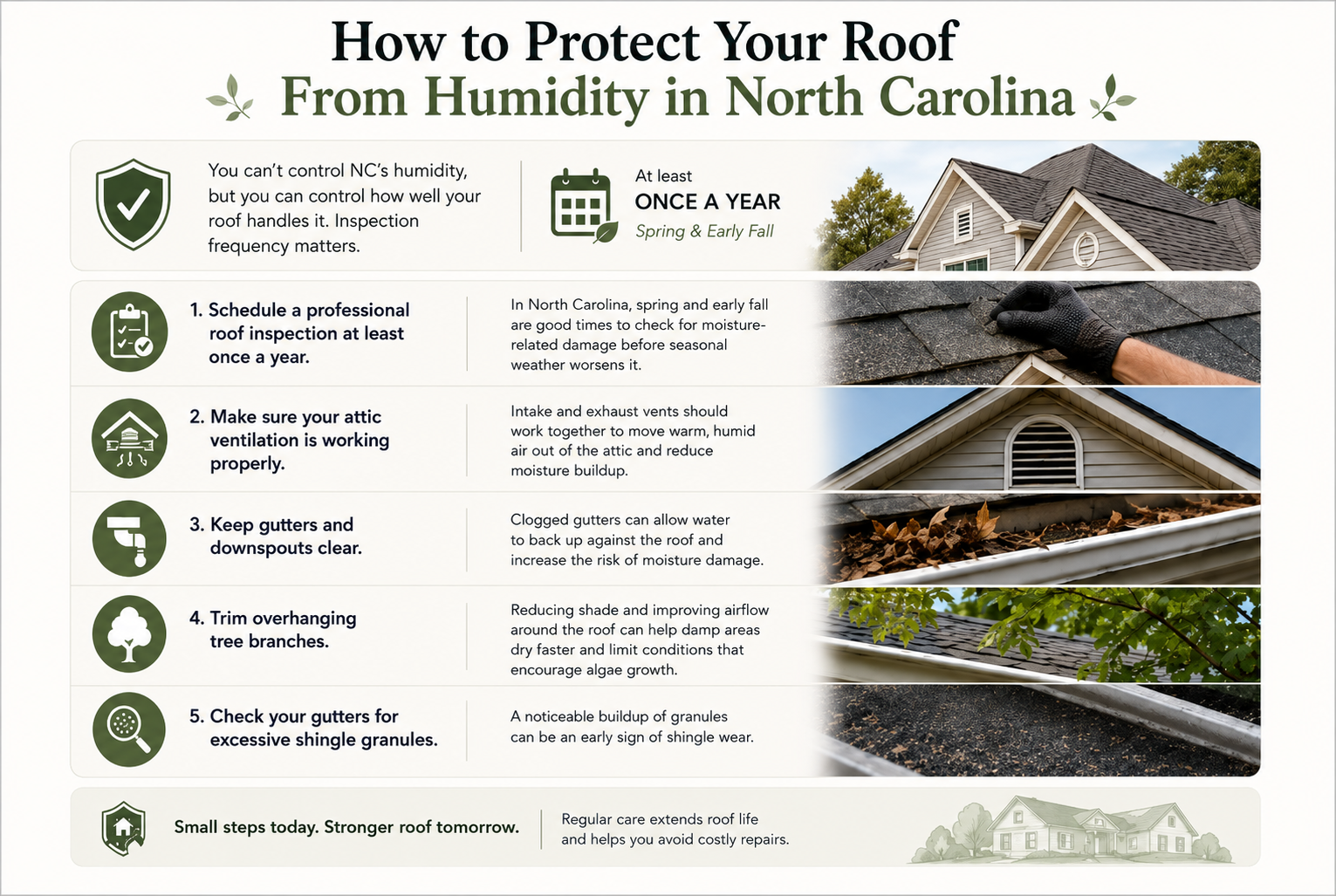
You can’t control NC’s humidity, but you can control how well your roof handles it. And in this climate, inspection frequency matters.
Protection steps that make a measurable difference:
What you can check yourself vs. what needs a professional:
| Check Yourself | Needs a Professional |
| Dark streaks or discoloration on shingles | Attic ventilation condition and effectiveness |
| Granules in gutters or downspouts | Flashing integrity around chimneys and vents |
| Lifted or blistered shingles from ground level | Deck condition and soft or rotted wood |
NC’s humidity is relentless, and the damage it causes rarely announces itself until it’s already expensive.
Statewide Roofing Specialist has completed over 10,000 roofing projects since 2012, holds GAF Master Elite Certification, earned by fewer than 2% of contractors nationwide, and backs roof replacements with warranty options up to 25 years, depending on the roofing system. Their inspectors use drone documentation to find what isn’t visible from the ground, and with 24/7 emergency response across 60+ cities in NC, SC, and TN, help is always close.
Three Angie’s List Super Service Awards. A reputation built across the Piedmont Triad. And a free inspection with no pressure and no commitment.
📞 Call 336-936-5245 or Schedule Your Free Inspection Online
NC’s persistent humidity causes shingles to warp, blister, and lift over time. It also accelerates algae and moss growth that feed on shingle materials, and speeds up granule loss, removing the protective layer that shields shingles from UV rays and further moisture damage.
Yes. Mold and algae only need moisture and a surface, not an active leak. Condensation from poor attic ventilation alone creates the conditions they need to grow, often on the underside of the deck where it’s completely out of sight.
Humidity damage builds gradually through moisture accumulation and poor ventilation, often starting in the attic. A roof leak has a specific entry point and can appear suddenly after rain. Both require professional evaluation but involve different causes and solutions.
At minimum once a year, ideally in spring and early fall. NC’s persistent humidity means small issues compound faster than in drier climates, so catching them early matters significantly.
Algae-resistant asphalt shingles are the most practical choice for most NC homeowners. Proper attic ventilation and regular maintenance matter as much as material selection when it comes to long-term performance in this climate.
Yes. Indoor humidity around 70% is higher than the generally recommended range and can create conditions that encourage condensation, mold growth, and moisture damage. In North Carolina’s humid climate, proper attic ventilation and moisture control are especially important for protecting the roof and home.