Oct 13, 2026
Green Bay Hail Damage Roof Replacement: GAF Timberline HDZ in Barkwood



Key Takeaways
|
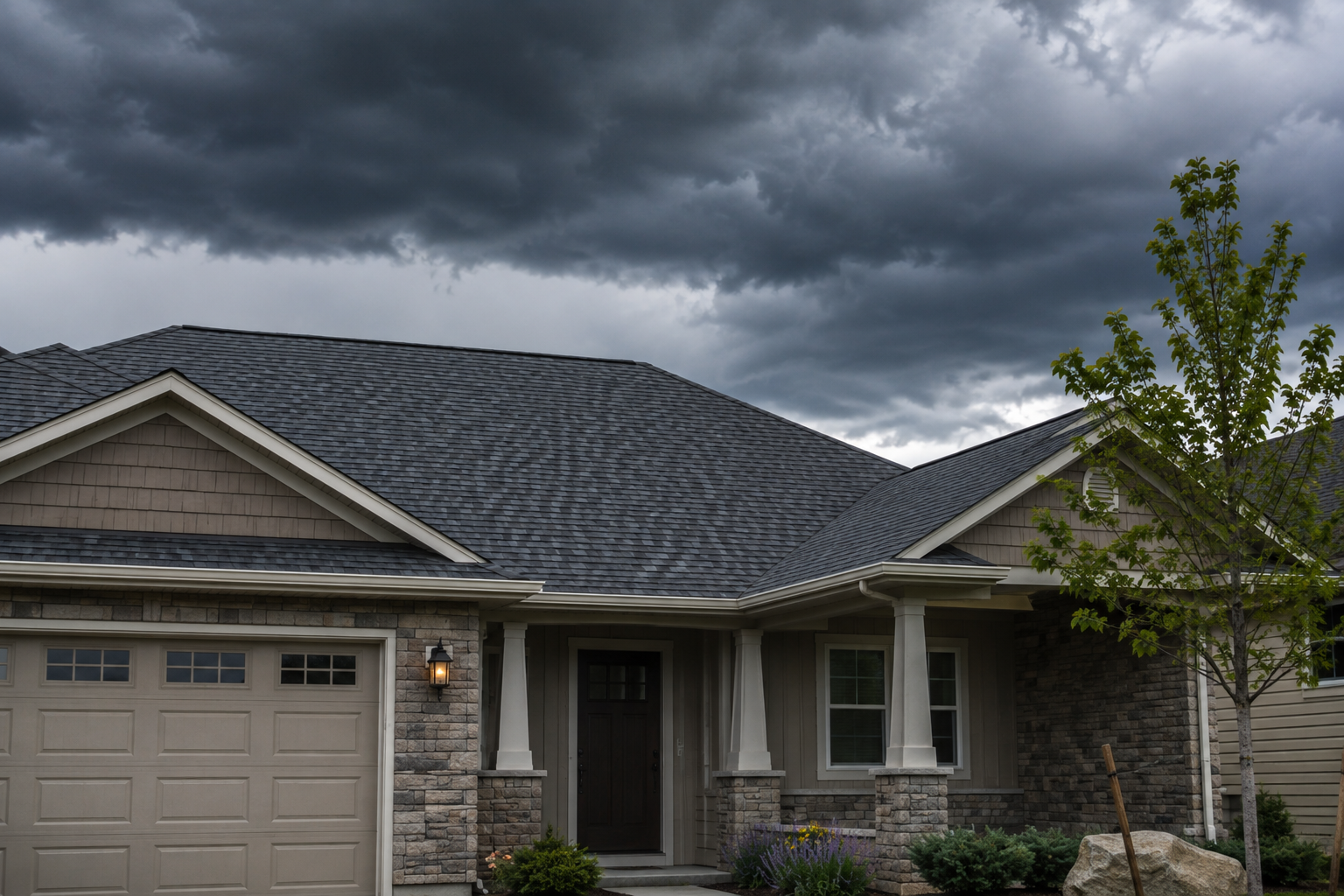
You hear the forecast: severe storms moving in this weekend. Your first thought jumps straight to your roof: will it hold up, or will you be dealing with a leak by Monday? That worry is fair. Severe storms are one of the most common causes of costly property damage in the U.S. every year, and they’re only becoming more frequent. Here’s the reassuring part: a roof’s ability to withstand a storm often comes down to something entirely within your control: regular maintenance. Here’s exactly what that maintenance should include, why each task matters, and how to know it’s actually working.
Regular roof maintenance reduces storm damage by closing off the small gaps and weak points that high winds and heavy rain exploit before they become major failures.
According to the Insurance Institute for Business & Home Safety (IBHS), for every inch of rain that hits an exposed roof deck, the equivalent of nine bathtubs of water can pour into a home. A small maintenance gap, a missing shingle, or a failed seal is often the difference between a dry attic and a flooded one.
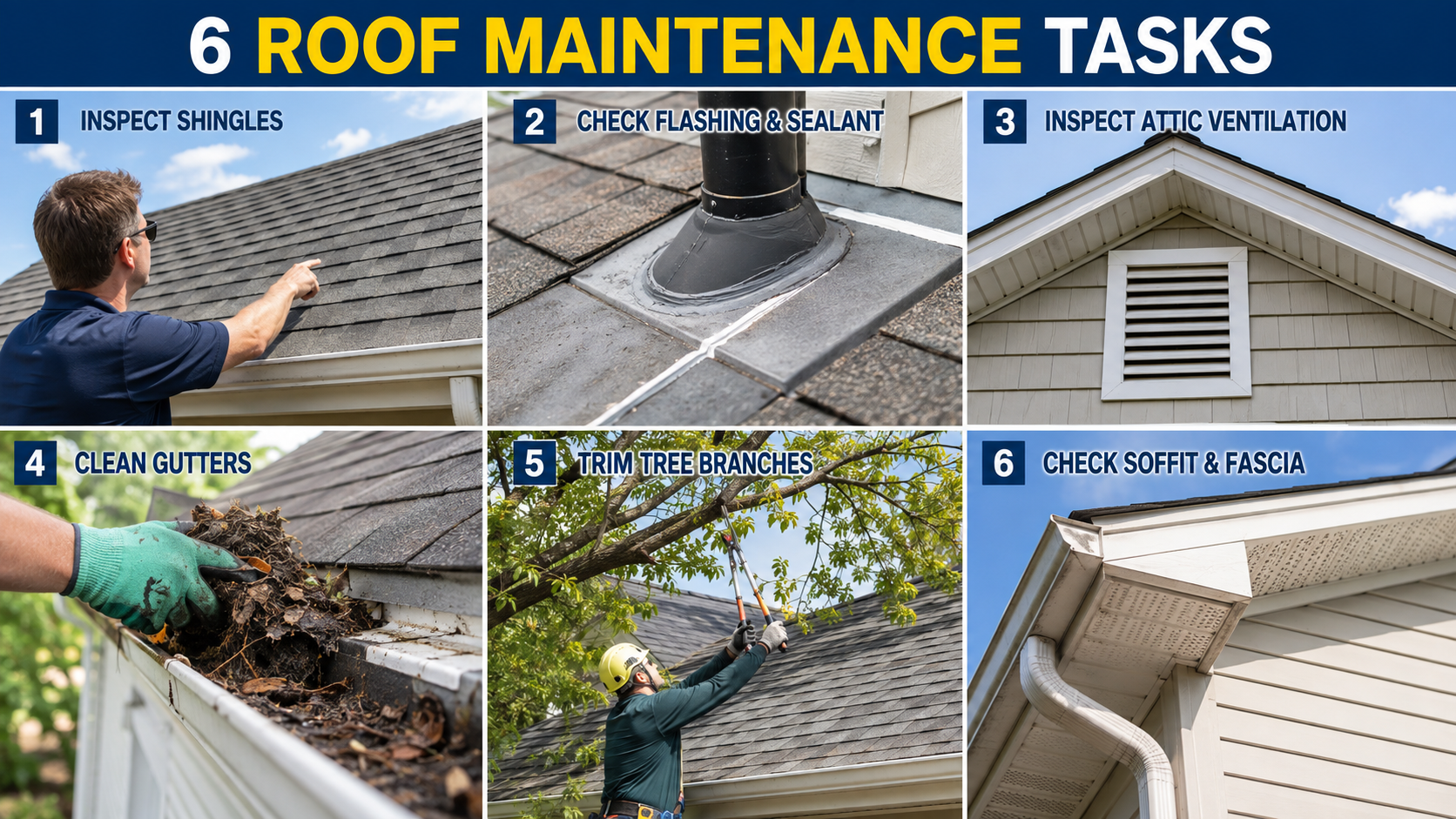
The most important pre-storm maintenance tasks are checking your shingles, flashing, ventilation, gutters, and nearby trees for anything that could fail under high wind or heavy rain.
| Maintenance Task | Why It Matters for Storm Protection | DIY or Pro |
| Shingle inspection | Loose or curling shingles are the first thing wind lifts and tears away | DIY (ground-level) |
| Flashing and sealant check | Cracked seals let wind-driven rain directly into the roof deck | Pro recommended |
| Attic ventilation check | Poor airflow weakens roofing materials from the inside out over time | Pro recommended |
| Gutter cleaning | Clogged gutters force water to back up under roof edges | DIY |
| Tree trimming | Overhanging branches become storm-driven projectiles and abrasion points | DIY (for reachable limbs) |
| Soffit and fascia check | Damaged soffits/fascia let wind and water into the roof structure | Pro recommended |
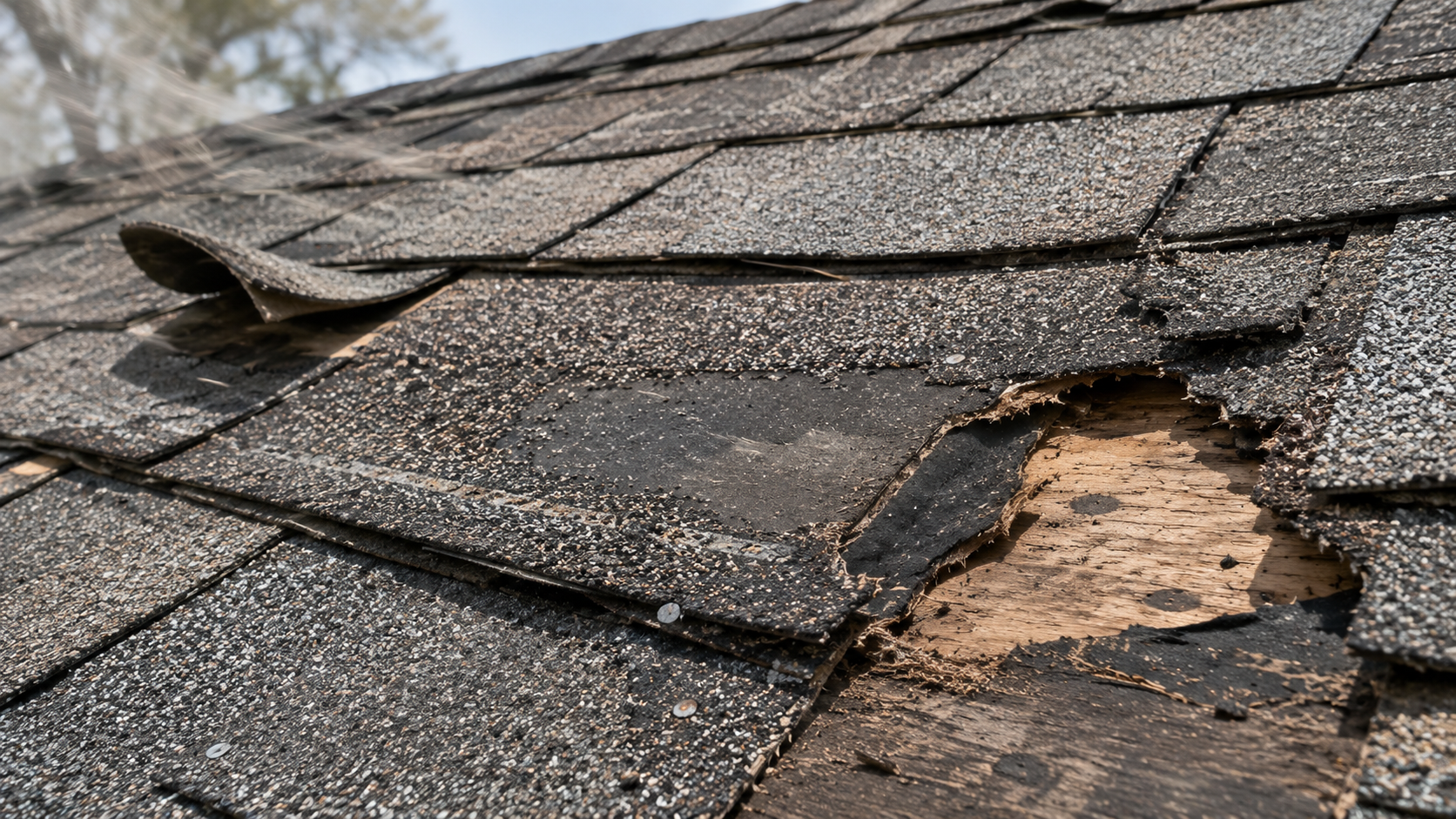
Loose shingles increase storm damage risk because high winds can catch the lifted edge and tear the shingle away, exposing the roof deck underneath to water.
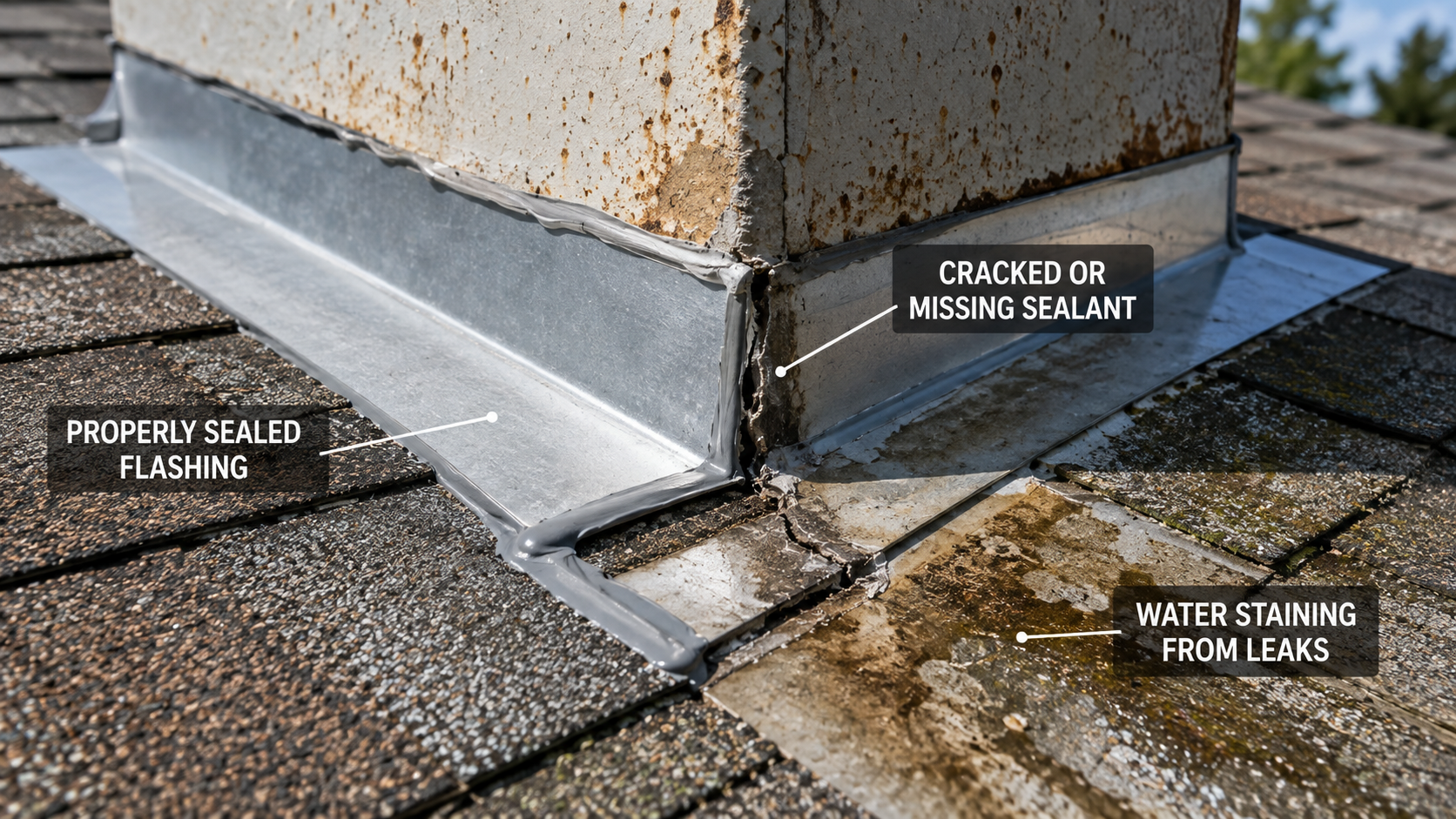
Roof sealants should be checked before storm season because dried-out or cracked sealant around flashing and penetrations is one of the most common points where wind-driven rain enters a home.
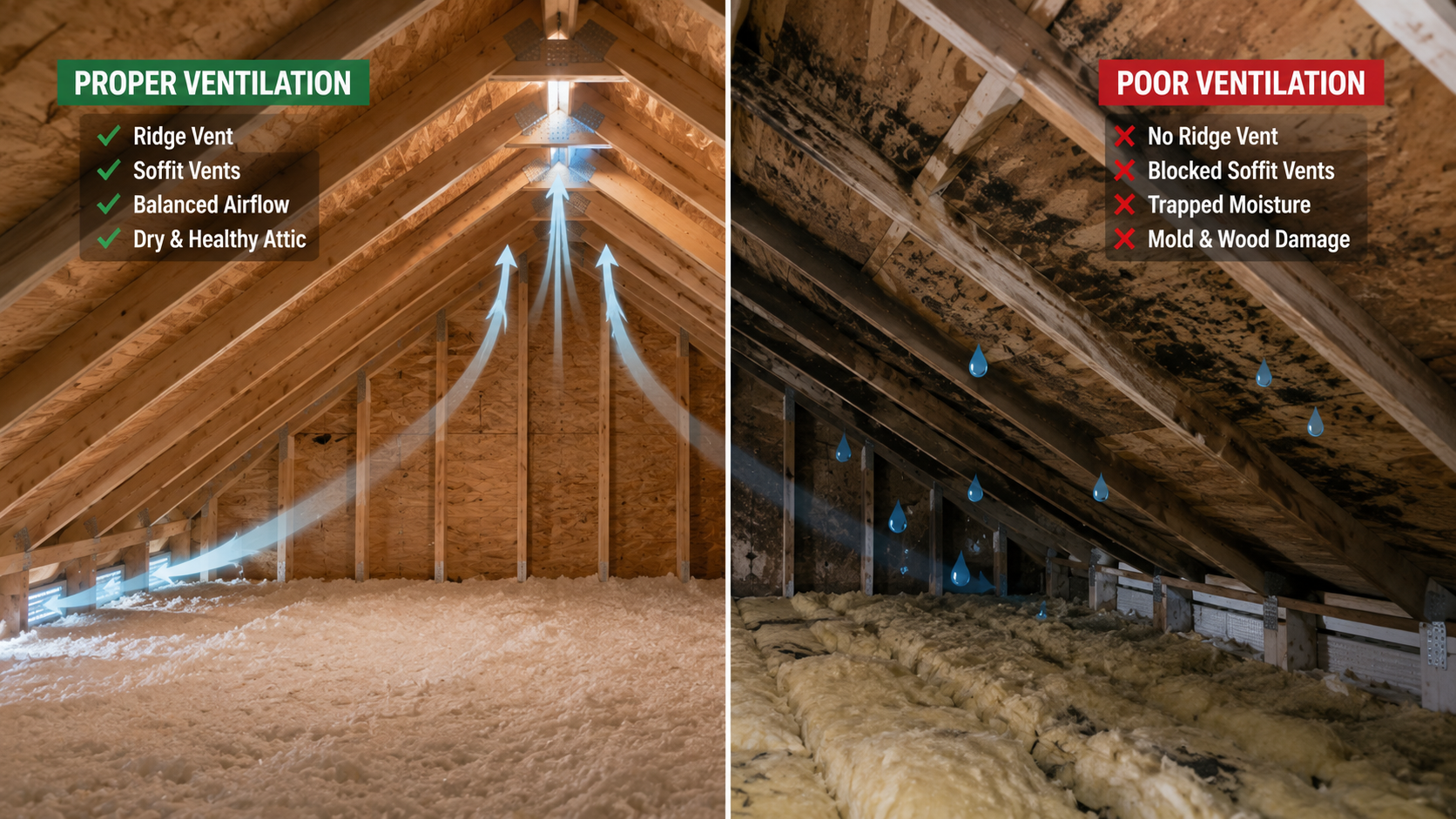
Attic ventilation helps protect a roof during storms by regulating temperature and moisture, which keeps roofing materials from weakening prematurely.
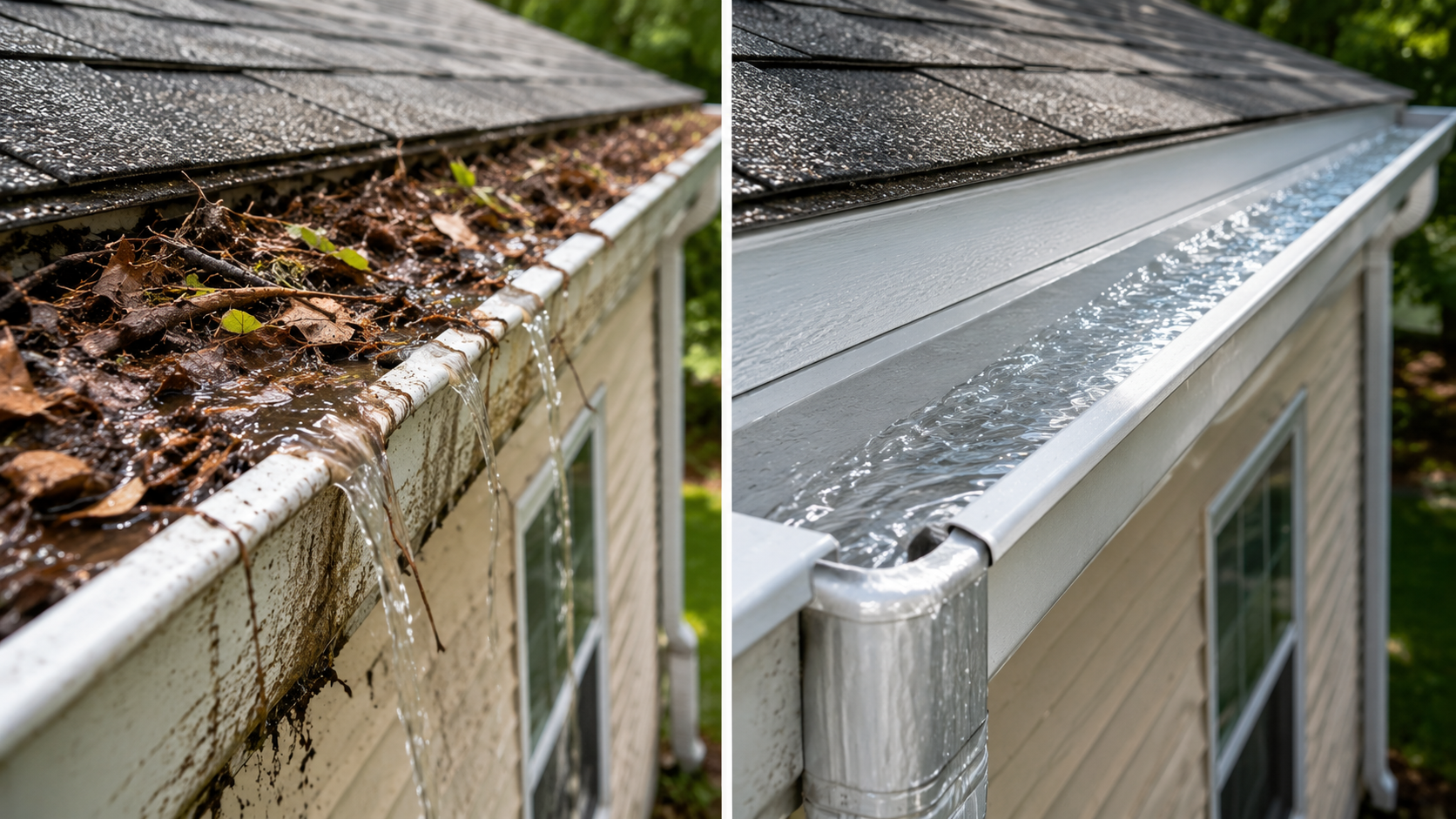
Yes, clogged gutters can cause roof damage during severe weather by preventing rainwater from draining properly, which forces it to back up under roofing materials at the edge.
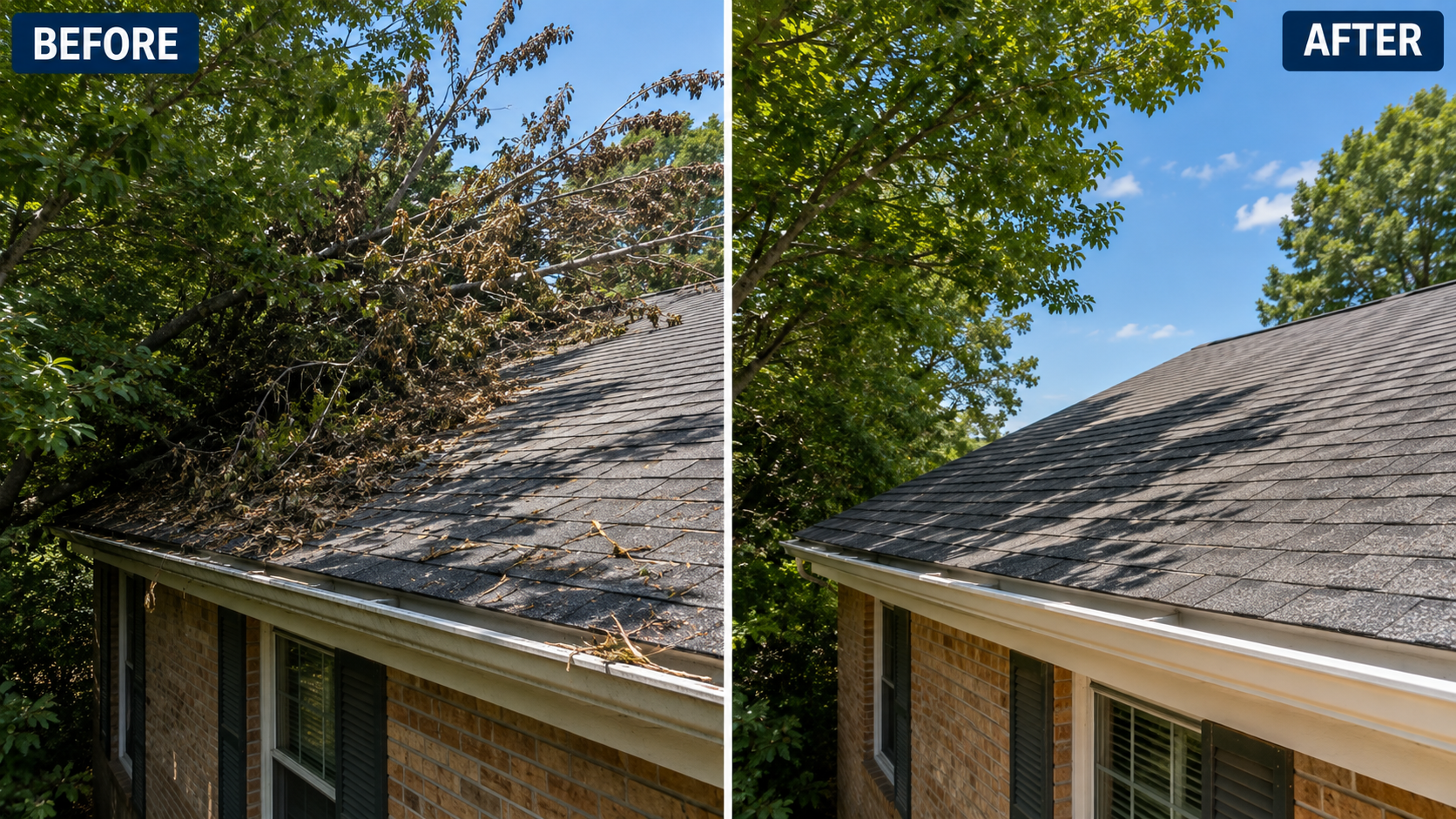
Yes, trimming nearby trees reduces the risk of roof damage during storms by removing branches that can break off in high winds and strike or abrade the roof surface.
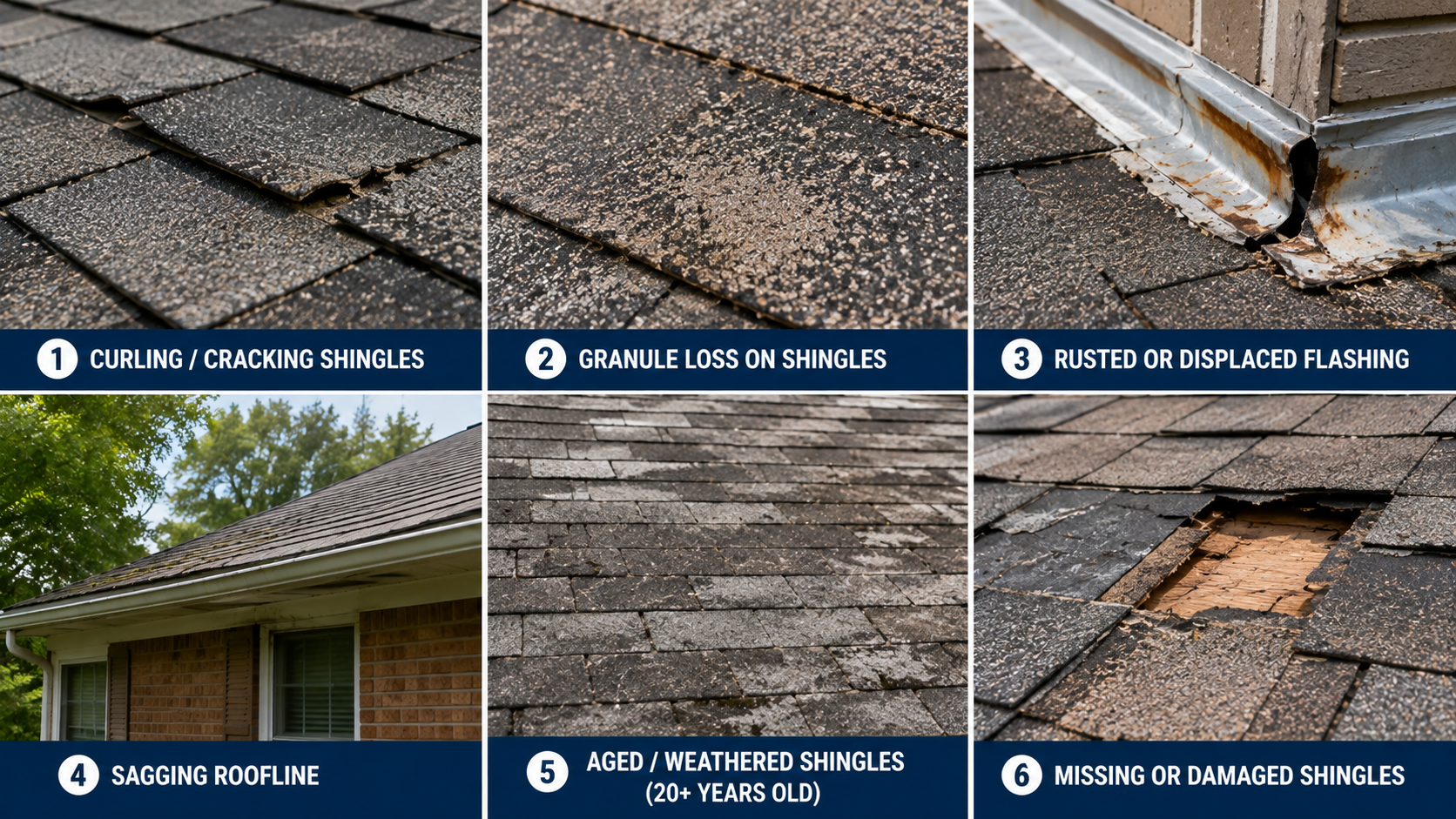
A roof is vulnerable to storm damage if it shows visible wear like curling shingles, granule loss, damaged flashing, or if it’s simply getting older.
Most of these signs can be spotted safely from the ground with a pair of binoculars. Save close-up inspection and repair work for a professional with the right safety equipment.
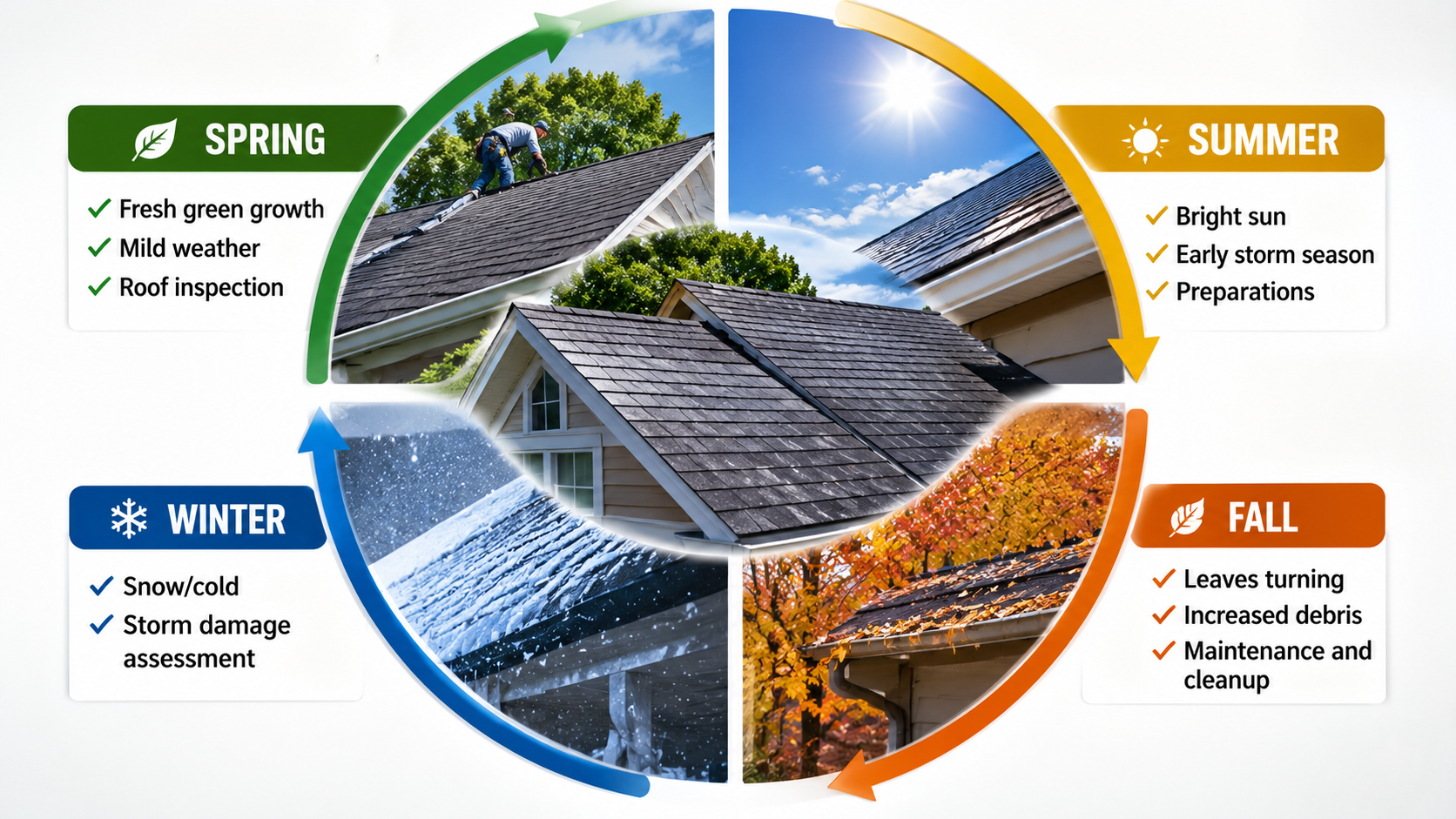
The best time to perform roof maintenance is during spring and fall, with an extra check scheduled just before your region’s peak storm season begins.
A roof should be professionally inspected at least once or twice a year, with additional ground-level checks after any severe weather event.
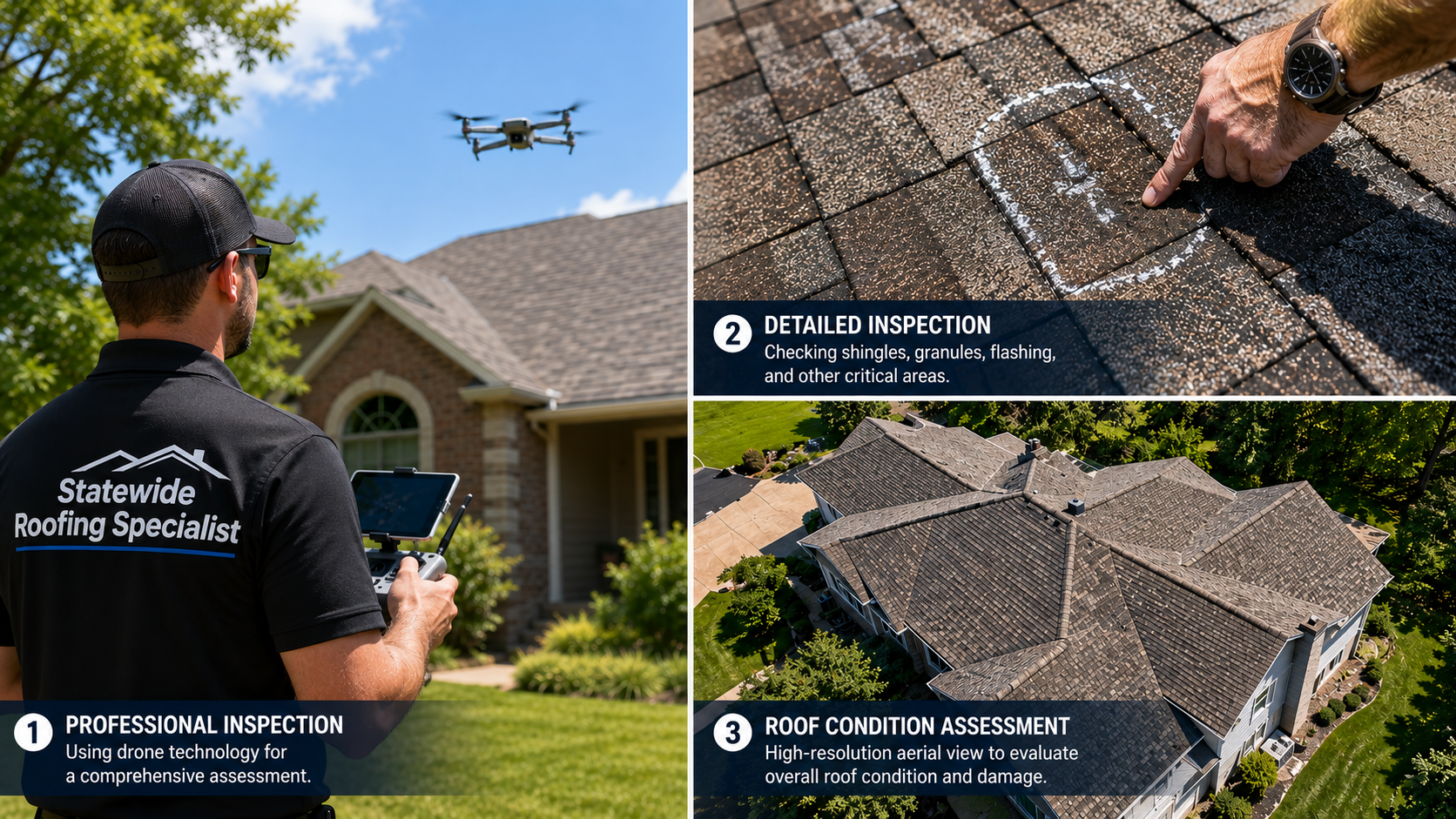
Yes, professional roof maintenance is almost always worth it compared to storm repair costs, since small preventive fixes are far less expensive than repairing storm damage after the fact.
According to NOAA’s National Centers for Environmental Information, severe storms have caused more billion-dollar disaster events in the U.S. than any other weather category since 1980, and the annual average has more than doubled over the last five years compared to the long-term average. Roof maintenance isn’t just a good habit; it’s a response to a real, growing risk.
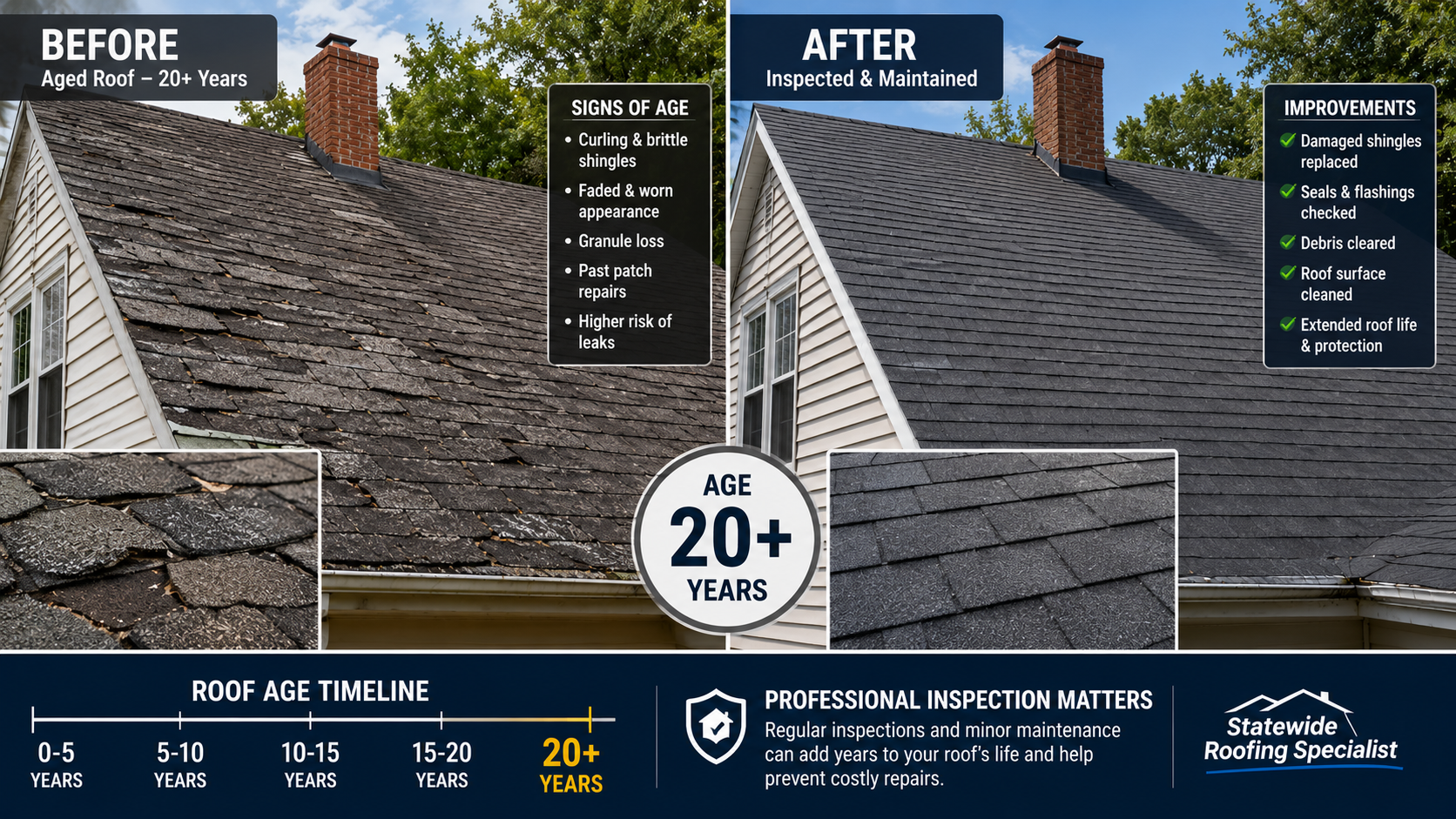
Homeowners can prepare an older roof for storm season by scheduling more frequent professional inspections and addressing small issues before they compound.
Not sure whether your roof needs a repair or a full replacement? Our guide on understanding common roof problems, warning signs, and repair walks through exactly how to tell the difference.
Regular maintenance is the single most effective way to reduce storm damage to your roof, and Statewide Roofing Specialist can help you stay ahead of it. Our team offers:
Ready to get your roof storm-ready? Call 336-936-5245 to schedule a free inspection today.
Regular maintenance closes small gaps, loose shingles, cracked flashing, clogged gutters- that high winds and heavy rain would otherwise exploit into major roof failures.
Checking shingles, flashing, sealants, attic ventilation, gutters, and nearby trees are the most important pre-storm tasks, since each one addresses a common storm-damage entry point.
Inspect your roof professionally once or twice a year, plus a ground-level check after any major storm, to catch developing issues before they worsen.
Yes. Preventive maintenance costs are almost always lower than storm repair costs, and maintenance records can also strengthen your position with your insurance company.
Older roofs benefit from more frequent professional inspections, since age reduces wind resistance and flexibility even when no damage is visible from the ground.